

Andere Kunden interessierten sich auch für
 Totem y tabú-Un recuerdo infantil de Leonardo da Vinci28,99 €
 Leonardo da Vinci's Mental Models17,99 €
 Letters To Leonardo18,99 €
 Reflections on War and Death16,99 €
![Reflections on War and Death - [Paperback]]( "Reflections on War and Death - [Paperback]") Reflections on War and Death - [Paperback]11,99 €
Reflections on War and Death - [Paperback]11,99 € Reflections of a Police Psychologist22,99 €
 Reflections of a Neuropsychologist56,99 €




![Reflections on War and Death - [Paperback]](https://bilder.buecher.de/produkte/73/73525/73525216m.jpg "Reflections on War and Death - [Paperback]")

Leonardo da Vinci, A Memory of His Childhood Sigmund Freud Leonardo da Vinci and A Memory of His Childhood (German: Eine Kindheitserinnerung des Leonardo da Vinci) is a 1910 essay by Sigmund Freud about Leonardo da Vinci. It consists of a psychoanalytic study of Leonardo's life based on his paintings.In the Codex Atlanticus Leonardo recounts being attacked as an infant in his crib by a bird. Freud cites the passage as:"It seems that it had been destined before that I should occupy myself so thoroughly with the vulture, for it comes to my mind as a very early memory, when I was still in the cradle, a vulture came down to me, he opened my mouth with his tail and struck me a few times with his tail against my lips."According to Freud, this was a childhood fantasy based on the memory of sucking his mother's nipple. He backed up his claim with the fact that Egyptian hieroglyphs represent the mother as a vulture, because the Egyptians believed that there are no male vultures and that the females of the species are impregnated by the wind. In most representations the vulture-headed maternal deity was formed by the Egyptians in a phallic manner, her body which was distinguished as feminine by its breasts also bore the penis in a state of erection.However, the translation "Geier" (vulture), which Maria Herzfeld had used for "nibbio" in 1904 in the first edition of her book Leonardo da Vinci, der Denker, Forscher und Poet, was not exactly the kite Leonardo da Vinci had meant: a small hawk-like bird of prey, common in the Vinci area, which is occasionally a scavenger. This disappointed Freud because, as he confessed to Lou Andreas-Salomé in a letter of 9 February 1919, he regarded the Leonardo essay as "the only beautiful thing I have ever written". The psychologist Erich Neumann, writing in Art and the Creative Unconscious, attempted to repair the theory by incorporating the kite.Another theory proposed by Freud attempts to explain Leonardo's fondness of depicting the Virgin Mary with St. Anne in the picture The Virgin and Child with St. Anne. Leonardo, who was illegitimate, was raised by his blood mother initially before being "adopted" by the wife of his father Ser Piero. The idea of depicting the Mother of God with her own mother was therefore particularly close to Leonardo's heart, because he, in a sense, had 'two mothers' himself. It is worth noting that in both versions of the composition (the Louvre painting and the London cartoon) it is hard to discern whether St. Anne is a full generation older than Mary. Freud also points out that, in the painting, the outline of a vulture can be seen. This is connected to the original fantasy involving the vulture in Leonardo da Vinci's crib.
Sigmund Freud, an Austrian neurologist who lived from 6 May 1856 to 23 September 1939, founded psychoanalysis, a therapeutic approach that involves a patient and a psychoanalyst in a conversation to assess and treat psychiatric diseases. At Vienna General Hospital, Lucian Freud started his medical training in 1882 and began researching the effects of medications on the human body. His study of brain anatomy resulted in the publishing of a significant paper on cocaine's painkilling properties in 1884. His first work, On Aphasia: A Critical Study, was based on research on aphasia and was released in 1891. Freud left his hospital position in 1886 and started a private clinic where he focused on "nervous disorders." In that same year, he wed Martha Bernays, a descendant of Hamburg's head rabbi Isaac Bernays. In his mouth, Freud had a leukoplakia in 1923, a benign growth connected to excessive smoking. He was encouraged to stop smoking by dermatologist Maximilian Steiner, who lied about the significance of the development. By the middle of September 1939, Freud was suffering from jaw cancer, which was making his agony worse. Max Schur persuaded Anna Freud that keeping him alive was futile. On the morning of September 23, 1939, at about three in the morning, he gave Freud dosages of morphine that caused his death.
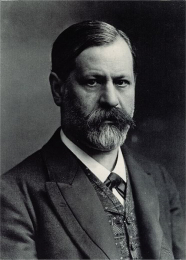
Wikipedia, urheberrechtliche Schutzfrist abgelaufen