


Andere Kunden interessierten sich auch für
 Leonardo da Vinci26,90 €
 The Literary Works of Leonardo da Vinci35,90 €
 Leonardo Da Vinci and His Works26,90 €
 The Literary Works of Leonardo da Vinci39,90 €
 Leonardo Da Vinci34,99 €
 Leonardo da Vinci and His Works26,90 €
 Memoir on a Mappemonde by Leonardo da Vinci12,90 €






Leonardo da Vinci, A Memory of His ChildhoodSigmund Freud Leonardo da Vinci and A Memory of His Childhood (German: Eine Kindheitserinnerung des Leonardo da Vinci) is a 1910 essay by Sigmund Freud about Leonardo da Vinci. It consists of a psychoanalytic study of Leonardo's life based on his paintings.In the Codex Atlanticus Leonardo recounts being attacked as an infant in his crib by a bird. Freud cites the passage as:"It seems that it had been destined before that I should occupy myself so thoroughly with the vulture, for it comes to my mind as a very early memory, when I was still in the cradle, a vulture came down to me, he opened my mouth with his tail and struck me a few times with his tail against my lips."According to Freud, this was a childhood fantasy based on the memory of sucking his mother's nipple. He backed up his claim with the fact that Egyptian hieroglyphs represent the mother as a vulture, because the Egyptians believed that there are no male vultures and that the females of the species are impregnated by the wind. In most representations the vulture-headed maternal deity was formed by the Egyptians in a phallic manner, her body which was distinguished as feminine by its breasts also bore the penis in a state of erection.However, the translation "Geier" (vulture), which Maria Herzfeld had used for "nibbio" in 1904 in the first edition of her book Leonardo da Vinci, der Denker, Forscher und Poet, was not exactly the kite Leonardo da Vinci had meant: a small hawk-like bird of prey, common in the Vinci area, which is occasionally a scavenger. This disappointed Freud because, as he confessed to Lou Andreas-Salomé in a letter of 9 February 1919, he regarded the Leonardo essay as "the only beautiful thing I have ever written". The psychologist Erich Neumann, writing in Art and the Creative Unconscious, attempted to repair the theory by incorporating the kite.Another theory proposed by Freud attempts to explain Leonardo's fondness of depicting the Virgin Mary with St. Anne in the picture The Virgin and Child with St. Anne. Leonardo, who was illegitimate, was raised by his blood mother initially before being "adopted" by the wife of his father Ser Piero. The idea of depicting the Mother of God with her own mother was therefore particularly close to Leonardo's heart, because he, in a sense, had 'two mothers' himself.
Freud writes in his preface: '...a gem. Never before, I believe, has anything been written enabling us to see so clearly into the soul of a young girl'(first published 1915) PrefaceTHE best preface to this journal written by a young girl belonging to the upper middle class is a letter by Sigmund Freud dated April 27, 1915, a letter wherein the distinguished Viennese psychologist testifies to the permanent value of the document: "This diary is a gem. Never before, I believe, has anything been written enabling us to see so clearly into the soul of a young girl, belonging to our social and cultural stratum, during the years of puberal development. We are shown how the sentiments pass from the simple egoism of childhood to attain maturity how the relationships to parents and other members of the family first shape themselves, and how they gradually become more serious and more intimate how friendships are formed and broken.We are shown the dawn of love, feeling out towards its first objects. Above all, we are shown how the mystery of the sexual life first presses itself vaguely on the attention, and then takes entire possession of the growing intelligence, so that the child suffers under the load of secret knowledge but gradually becomes enabled to shoulder the burden. The only alterations she has made have been such as were essential to conceal the identity of the writer and of other persons mentioned in the document. Consequently, surnames, Christian names, and names of places, have been changed. These modifications have enabled the original author of the diary to allow me to place it at the free disposal of serious readers. No attempt has been made to correct trifling faults in grammar and other inelegancies of style. For the most part, these must not be regarded as the expression of a child's incapacity for the control of language. Rather must they be looked upon as manifestations of affective trends, as errors in functioning brought about by the influence of the Unconscious. About the AuthorSigmund Freud (1856-1939) is one of the twentieth century's greatest minds and the founder of the psychoanalytic school of psychology. His many works include The Ego and the Id An Outline of Psycho-Analysis Inhibitions Symptoms and Anxiety New Introductory Lectures on Psycho-Analysis Civilization and Its Discontent, and others.This early work by Sigmund Freud was originally published in 1921 and we are now republishing it with a brand new introductory biography.
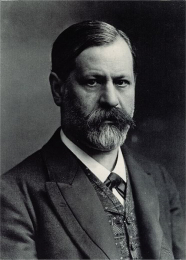
Wikipedia, urheberrechtliche Schutzfrist abgelaufen