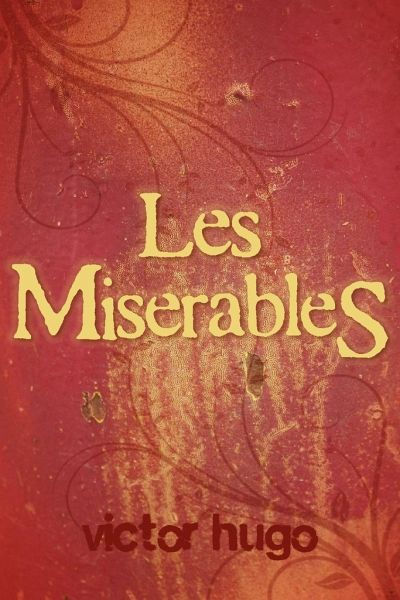
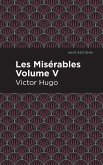
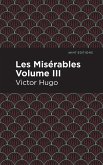
Set in the Parisian underworld and plotted like a detective story, the work follows Jean Valjean, a victim of society who has been imprisoned for 19 years for stealing a loaf of bread. A hardened criminal upon his release, he eventually reforms, becoming a successful industrialist and mayor of a northern town. Despite this he is haunted by an impulsive, regretted former crime and is pursued relentlessly by the police inspector Javert. Valjean eventually gives himself up for the sake of his adopted daughter, Cosette, and her husband, Marius. 'Les Miserables' is a vast panorama of Parisian…mehr
Set in the Parisian underworld and plotted like a detective story, the work follows Jean Valjean, a victim of society who has been imprisoned for 19 years for stealing a loaf of bread. A hardened criminal upon his release, he eventually reforms, becoming a successful industrialist and mayor of a northern town. Despite this he is haunted by an impulsive, regretted former crime and is pursued relentlessly by the police inspector Javert. Valjean eventually gives himself up for the sake of his adopted daughter, Cosette, and her husband, Marius. 'Les Miserables' is a vast panorama of Parisian society and its underworld, and it contains many famous episodes and passages.
Victor Hugo, born in 1802, was a towering figure in French literature and a leading voice of the Romantic movement. His early years were shaped by his father's military career and his mother's royalist leanings, but he soon developed his own revolutionary ideas, which would profoundly influence his work. By the time he published Les Misérables and The Hunchback of Notre Dame, Hugo had already established himself as a literary master known for his vivid depictions of social injustice.Hugo was also deeply involved in politics, advocating for republican ideals and speaking out against the injustices of his time, including the death penalty and slavery. His opposition to Napoleon III led to his exile, during which he produced some of his most famous works. Hugo's commitment to social reform extended beyond his writing, as he championed human rights throughout his life.Returning to France in 1870, Hugo was hailed as a national hero. His works, including poetry, novels, and plays, left an enduring legacy in both literature and politics. He passed away in 1885, and his funeral, attended by millions, marked the nation's profound respect for his life and work.
Es gelten unsere Allgemeinen Geschäftsbedingungen: www.buecher.de/agb
Impressum
www.buecher.de ist ein Internetauftritt der buecher.de internetstores GmbH
Geschäftsführung: Monica Sawhney | Roland Kölbl | Günter Hilger
Sitz der Gesellschaft: Batheyer Straße 115 - 117, 58099 Hagen
Postanschrift: Bürgermeister-Wegele-Str. 12, 86167 Augsburg
Amtsgericht Hagen HRB 13257
Steuernummer: 321/5800/1497
USt-IdNr: DE450055826