
Andere Kunden interessierten sich auch für
licitÃ(c)") La Porte De FÃ(c)licitÃ(c)32,99 €
La Porte De FÃ(c)licitÃ(c)32,99 € Description De L'Arabia D'Apres Les Observations Et Recherches Faites Dans Le Pays Mome37,99 €
 Les nuits de Paris, ou le Spectateur nocturne. ... of 731,99 €
 Histoire Des Guerres Du Calvinisme Et De La Ligue Dans L'auxerrois, Le Sénonais Et Les Autres Contrées Qui Forment Aujourd'hui Le Département De L'yonne...37,99 €
 Lamekis, Ou Les Voyages Extraordinaires D'un Egyptien Dans La Terre Intérieure, Avec La Découverte De L'isle Des Silphides Par M. Le Chevalier De Mouh38,99 €
 Voyages De Milord Céton Dans Les Sept Planettes, Ou Le Nouveau Mentor..38,99 €
 FÃ gel Fenix30,99 €






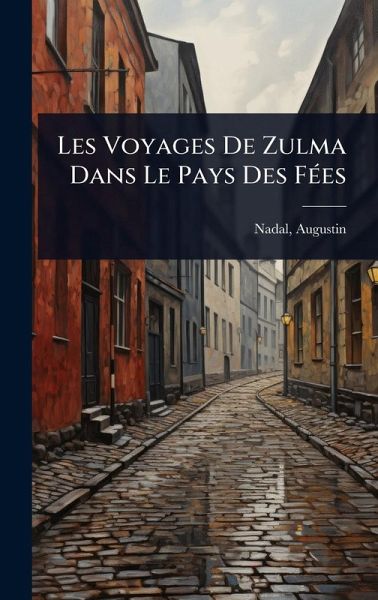
Les Voyages De Zulma Dans Le Pays Des FÃ(c)es, written by Augustin Nadal and published in 1734, is a captivating collection of fairy tales that transports readers to a magical realm. This early 18th-century work showcases the enchanting world of fairies through the travels of Zulma, offering a glimpse into the literary tastes and cultural imagination of the time. Nadal's stories provide a unique perspective on the fairy tale genre, blending elements of fantasy with social commentary relevant to the era. This book is an essential read for scholars and enthusiasts interested in French literature, the history of fairy tales, and the role of women in early narratives. Discover the enduring charm and historical significance of Les Voyages De Zulma Dans Le Pays Des FÃ(c)es. This work has been selected by scholars as being culturally important, and is part of the knowledge base of civilization as we know it. This work was reproduced from the original artifact, and remains as true to the original work as possible. Therefore, you will see the original copyright references, library stamps (as most of these works have been housed in our most important libraries around the world), and other notations in the work. This work is in the public domain in the United States of America, and possibly other nations. Within the United States, you may freely copy and distribute this work, as no entity (individual or corporate) has a copyright on the body of the work. As a reproduction of a historical artifact, this work may contain missing or blurred pages, poor pictures, errant marks, etc. Scholars believe, and we concur, that this work is important enough to be preserved, reproduced, and made generally available to the public. We appreciate your support of the preservation process, and thank you for being an important part of keeping this knowledge alive and relevant.