
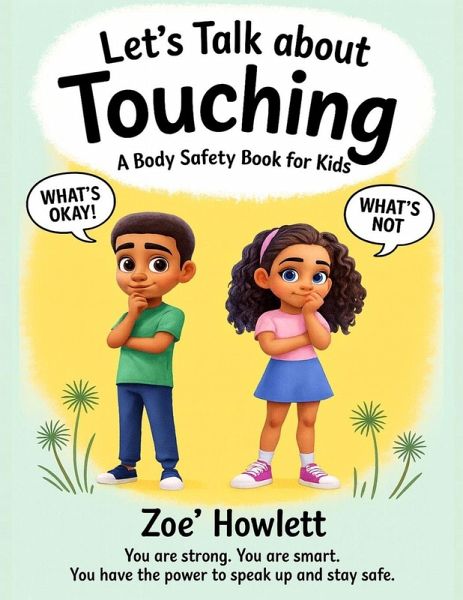
A Safety Book for Kids Ages 5-12 Help children build confidence, set boundaries, and stay safe with this gentle, read-aloud body safety guide. Remember, the goal is to empower, engage and educate, not to scare. In Let's Talk About Touching, kids will learn the difference between safe and unsafe touch, how to recognize tricky behavior, and when and how to say "NO." What safe and unsafe touch looks and feels like How to protect their private parts How to recognize unsafe adults and unsafe secrets What to do if something feels wrong That their body belongs to them and they have the right to speak up Perfect for parents, teachers, counselors, and caregivers who want to teach body autonomy and safety in an age-appropriate way. Guiding Principles for the Book Empower, don't alarm.Use language that builds confidence: "You are strong. You are brave. You can say no." Normalize the conversation.Just like brushing teeth or crossing the street, body safety is everyday learning. Bridge the gap parents often miss.Parents may avoid the topic of body safety but allow kids access to social media where risks are real. Promote awareness, not fear.Instead of focusing on "bad people," the book focuses on children's right to safety and their ability to recognize what feels wrong. About 90% of abuse perpetrators are known and trusted by the victim commonly family members, friends, or caregivers. Roughly 30-38% of abusers are close relatives, while about 50-60% are acquaintances; only about 10% are strangers.