
Andere Kunden interessierten sich auch für
 Lex Romana - Lex Islamica64,99 €
 Lex Romana - Lex Islamica98,90 €
 Lex Romana - Lex Islamica64,99 €
 Lex Romana - Lex Islamica64,99 €
 Lex Romana - Lex Islamica64,99 €
. On Gifts Between Husband and Wife (Digest XXIV, 1, De donationibus inter virum et uxorem)") Lex Aquilia (Digest IX, 2, Ad legem aquiliam). On Gifts Between Husband and Wife (Digest XXIV, 1, De donationibus inter virum et uxorem)60,00 €
Lex Aquilia (Digest IX, 2, Ad legem aquiliam). On Gifts Between Husband and Wife (Digest XXIV, 1, De donationibus inter virum et uxorem)60,00 € At the Origins of Modernity129,99 €




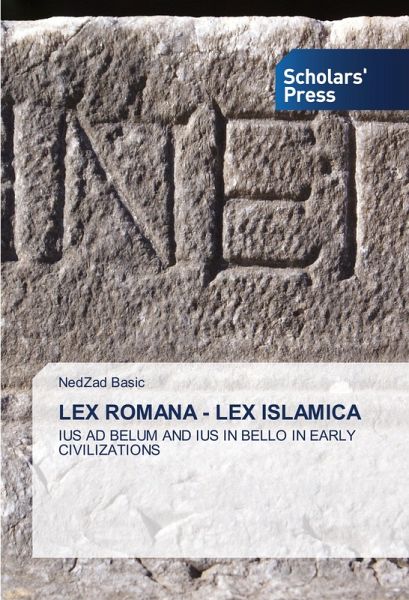
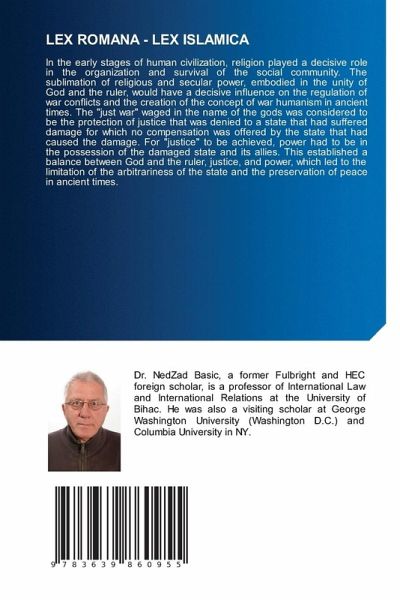
In the early stages of human civilization, religion played a decisive role in the organization and survival of the social community. The sublimation of religious and secular power, embodied in the unity of God and the ruler, would have a decisive influence on the regulation of war conflicts and the creation of the concept of war humanism in ancient times. The "just war" waged in the name of the gods was considered to be the protection of justice that was denied to a state that had suffered damage for which no compensation was offered by the state that had caused the damage. For "justice" to be achieved, power had to be in the possession of the damaged state and its allies. This established a balance between God and the ruler, justice, and power, which led to the limitation of the arbitrariness of the state and the preservation of peace in ancient times.