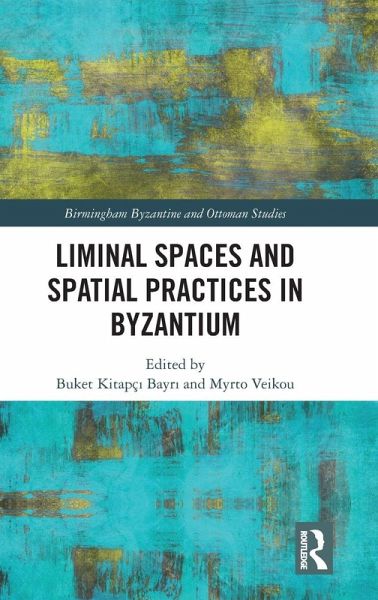
Liminal Spaces and Spatial Practices in Byzantium offers a novel twist, combining intra-/inter-disciplinary research across the humanities and social sciences by transforming two distinct disciplinary concepts (liminality from social anthropology and space from cultural geography) into methodological devices for historical investigation. The focus has been an investigation of conceptions of spatial liminality in the Byzantine world. This book showcases alternatives to binary oppositions such as inside/outside, core/periphery, isolation/connectedness, stability/instability, known/unknown,…mehr
Liminal Spaces and Spatial Practices in Byzantium offers a novel twist, combining intra-/inter-disciplinary research across the humanities and social sciences by transforming two distinct disciplinary concepts (liminality from social anthropology and space from cultural geography) into methodological devices for historical investigation. The focus has been an investigation of conceptions of spatial liminality in the Byzantine world. This book showcases alternatives to binary oppositions such as inside/outside, core/periphery, isolation/connectedness, stability/instability, known/unknown, earthly/heavenly, self/other, and good/bad through delineating liminality as an epistemological tool. In this volume, the authors were invited to offer an analysis of Byzantine spatial experiences (attested through material remains or texts) as a sort of working platform from which to assess in due course the presence of a liminal dimension in medieval spatiotemporal situations. They have sought to understand whether certain types of spaces such as rivers, deserts, islands, forests, mountains, houses, thresholds, gates, monasteries, lighthouses, and bridges accommodate-or even create-liminal situations in the eyes of the people experiencing them. This book will appeal to students and scholars alike interested in Byzantine history and culture.
Buket Kitapç¿ Bayr¿ is a scholar of late Byzantine and Medieval Islamic History (circa 1200-1500). Her previous publication, Warriors, Martyrs, and Dervishes: Moving Frontiers, Shifting Identities in the Land of Rome (13th -15th Centuries) (2020), examines the late medieval cultural transformation of Asia Minor and the Balkans through Byzantine and Turkish frontier epics and hagiographical texts by applying anthropological and literary theories to perceptions of shared space/shared story-world, place-making processes, and identity formation. Myrto Veikou is Assistant Professor of Byzantine Archaeology in the Department of History and Archaeology, University of Patras (Greece). Her first PhD thesis in Byzantine Archaeology was published in 2012 (Byzantine Epirus: A Topography of Transformation: Settlements from the 7th to the 12th Centuries in Southern Epirus and Aetoloacarnania, Greece). Her second PhD thesis in Byzantine Philology and Literary Studies was published as Spatial Paths to Holiness-Literary 'Lived Spaces' in Eleventh-Century Byzantine Saints' Lives (2023).
Inhaltsangabe
Introduction Liminal Spaces Inside and Beyond the Byzantine World Myrto Veikou and Buket Kitapçi Bayri Part I: Natural Space as Liminal Chapter 1 Encounters in Crocodile Waters: The Nile as a Liminal Riverscape in Monastic Egypt Darlene Brooks Hedstrom Chapter 2 Desert Islands: Aspects of the Byzantine Perception of Liminal Space Charis Messis Chapter 3 Liminal Insularity or Islandness? Relational and Comparative Perspectives on Big Islands in the Mediterranean and the Baltic Sea in the Early Middle Ages (Sixth-Tenth Centuries) Luca Zavagno, Christoph Kilger and Max Kusserow Part II: Social Space as Liminal: Public and Private Chapter 4 Myths Transformed: Perceptions of Ancient Sculpture in Byzantine Liminal Spaces Livia Bevilaqua Chapter 5 Liminal Experiences of Byzantine Fortifications Nikolas Bakirtzis and Myrto Veikou Chapter 6 Visiting Late Antique Elite Houses: On Rituals, Routes, and Courtyards through the Lens of Liminality Lale Özgenel Chapter 7 Crossing Private Liminal Spaces: Thresholds and Passageways in the "Urban Mansion" of Sagalassos and Contemporaneous Urban Elite Houses in Late Antique Western Anatolia Inge Uytterhoeven Chapter 8 Existential and Spatial Liminality in Byzantine Monasteries: Insights from the Enclosure Wall and its Gateways Maréva U Part III: Liminality through Movement Chapter 9 Athonite Transhumance Routes between the Ninth and the Sixteenth Centuries: A Network of Liminal Ecosystems, Spaces, and Interactions Guillaume Bidaut Chapter 10 Marking the lim¿n: Lighthouses and Beacons as Spiritual Metaphors Veronica della Dora Chapter 11 Perceptions of Bridges as Liminal Spaces in Byzantium Galina Fingarova
Introduction Liminal Spaces Inside and Beyond the Byzantine World Myrto Veikou and Buket Kitapçi Bayri Part I: Natural Space as Liminal Chapter 1 Encounters in Crocodile Waters: The Nile as a Liminal Riverscape in Monastic Egypt Darlene Brooks Hedstrom Chapter 2 Desert Islands: Aspects of the Byzantine Perception of Liminal Space Charis Messis Chapter 3 Liminal Insularity or Islandness? Relational and Comparative Perspectives on Big Islands in the Mediterranean and the Baltic Sea in the Early Middle Ages (Sixth-Tenth Centuries) Luca Zavagno, Christoph Kilger and Max Kusserow Part II: Social Space as Liminal: Public and Private Chapter 4 Myths Transformed: Perceptions of Ancient Sculpture in Byzantine Liminal Spaces Livia Bevilaqua Chapter 5 Liminal Experiences of Byzantine Fortifications Nikolas Bakirtzis and Myrto Veikou Chapter 6 Visiting Late Antique Elite Houses: On Rituals, Routes, and Courtyards through the Lens of Liminality Lale Özgenel Chapter 7 Crossing Private Liminal Spaces: Thresholds and Passageways in the "Urban Mansion" of Sagalassos and Contemporaneous Urban Elite Houses in Late Antique Western Anatolia Inge Uytterhoeven Chapter 8 Existential and Spatial Liminality in Byzantine Monasteries: Insights from the Enclosure Wall and its Gateways Maréva U Part III: Liminality through Movement Chapter 9 Athonite Transhumance Routes between the Ninth and the Sixteenth Centuries: A Network of Liminal Ecosystems, Spaces, and Interactions Guillaume Bidaut Chapter 10 Marking the lim¿n: Lighthouses and Beacons as Spiritual Metaphors Veronica della Dora Chapter 11 Perceptions of Bridges as Liminal Spaces in Byzantium Galina Fingarova
Es gelten unsere Allgemeinen Geschäftsbedingungen: www.buecher.de/agb
Impressum
www.buecher.de ist ein Internetauftritt der buecher.de internetstores GmbH
Geschäftsführung: Monica Sawhney | Roland Kölbl | Günter Hilger
Sitz der Gesellschaft: Batheyer Straße 115 - 117, 58099 Hagen
Postanschrift: Bürgermeister-Wegele-Str. 12, 86167 Augsburg
Amtsgericht Hagen HRB 13257
Steuernummer: 321/5800/1497
USt-IdNr: DE450055826