- Broschiertes Buch
- Merkliste
- Auf die Merkliste
- Bewerten Bewerten
- Teilen
- Produkt teilen
- Produkterinnerung
- Produkterinnerung
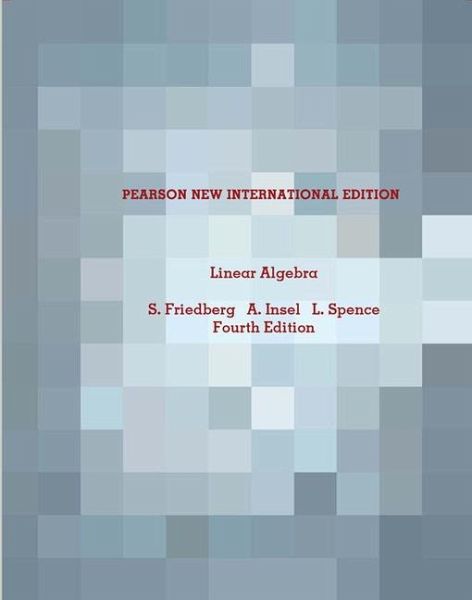
For courses in Advanced Linear Algebra.
This top-selling, theorem-proof text presents a careful treatment of the principle topics of linear algebra, and illustrates the power of the subject through a variety of applications. It emphasizes the symbiotic relationship between linear transformations and matrices, but states theorems in the more general infinite-dimensional case where appropriate.
Andere Kunden interessierten sich auch für
Otto BretscherLinear Algebra with Applications116,99 €
John B. FraleighLinear Algebra65,99 €
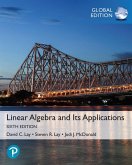
David LayLinear Algebra and Its Applications, Global Edition114,99 €
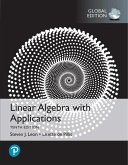
Steven LeonLinear Algebra with Applications, Global Edition114,99 €
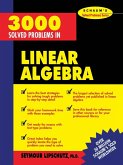
Seymour Lipschutz3,000 Solved Problems in Linear Algebra34,99 €
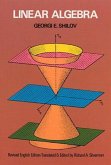
Georgi E. ShilovLinear Algebra27,99 €
Kuldeep Singh (University of Hertfo Senior Lecturer in MathematicsLinear Algebra52,99 €-
-
-
For courses in Advanced Linear Algebra.
This top-selling, theorem-proof text presents a careful treatment of the principle topics of linear algebra, and illustrates the power of the subject through a variety of applications. It emphasizes the symbiotic relationship between linear transformations and matrices, but states theorems in the more general infinite-dimensional case where appropriate.
Produktdetails
- Produktdetails
- Verlag: Pearson Education Limited
- 4 ed
- Seitenzahl: 536
- Erscheinungstermin: 23. Juli 2013
- Englisch
- Abmessung: 276mm x 216mm x 29mm
- Gewicht: 1318g
- ISBN-13: 9781292026503
- ISBN-10: 1292026502
- Artikelnr.: 52960049
- Herstellerkennzeichnung
- Pearson
- St.-Martin-Straße 82
- 81541 München
- salesde@pearson.com
- Verlag: Pearson Education Limited
- 4 ed
- Seitenzahl: 536
- Erscheinungstermin: 23. Juli 2013
- Englisch
- Abmessung: 276mm x 216mm x 29mm
- Gewicht: 1318g
- ISBN-13: 9781292026503
- ISBN-10: 1292026502
- Artikelnr.: 52960049
- Herstellerkennzeichnung
- Pearson
- St.-Martin-Straße 82
- 81541 München
- salesde@pearson.com
1. Vector Spaces.
Introduction. Vector Spaces. Subspaces. Linear Combinations and Systems of
Linear Equations. Linear Dependence and Linear Independence. Bases and
Dimension. Maximal Linearly Independent Subsets.
2. Linear Transformations and Matrices.
Linear Transformations, Null Spaces, and Ranges. The Matrix Representation
of a Linear Transformation. Composition of Linear Transformations and
Matrix Multiplication. Invertibility and Isomorphisms. The Change of
Coordinate Matrix. Dual Spaces. Homogeneous Linear Differential Equations
with Constant Coefficients.
3. Elementary Matrix Operations and Systems of Linear Equations.
Elementary Matrix Operations and Elementary Matrices. The Rank of a Matrix
and Matrix Inverses. Systems of Linear Equations—Theoretical Aspects.
Systems of Linear Equations—Computational Aspects.
4. Determinants.
Determinants of Order 2. Determinants of Order n. Properties of
Determinants. Summary—Important Facts about Determinants. A
Characterization of the Determinant.
5. Diagonalization.
Eigenvalues and Eigenvectors. Diagonalizability. Matrix Limits and Markov
Chains. Invariant Subspaces and the Cayley-Hamilton Theorem.
6. Inner Product Spaces.
Inner Products and Norms. The Gram-Schmidt Orthogonalization Process and
Orthogonal Complements. The Adjoint of a Linear Operator. Normal and
Self-Adjoint Operators. Unitary and Orthogonal Operators and Their
Matrices. Orthogonal Projections and the Spectral Theorem. The Singular
Value Decomposition and the Pseudoinverse. Bilinear and Quadratic Forms.
Einstein's Special Theory of Relativity. Conditioning and the Rayleigh
Quotient. The Geometry of Orthogonal Operators.
Appendices.
Sets. Functions. Fields. Complex Numbers. Polynomials.
Answers to Selected Exercises.
Index.
Introduction. Vector Spaces. Subspaces. Linear Combinations and Systems of
Linear Equations. Linear Dependence and Linear Independence. Bases and
Dimension. Maximal Linearly Independent Subsets.
2. Linear Transformations and Matrices.
Linear Transformations, Null Spaces, and Ranges. The Matrix Representation
of a Linear Transformation. Composition of Linear Transformations and
Matrix Multiplication. Invertibility and Isomorphisms. The Change of
Coordinate Matrix. Dual Spaces. Homogeneous Linear Differential Equations
with Constant Coefficients.
3. Elementary Matrix Operations and Systems of Linear Equations.
Elementary Matrix Operations and Elementary Matrices. The Rank of a Matrix
and Matrix Inverses. Systems of Linear Equations—Theoretical Aspects.
Systems of Linear Equations—Computational Aspects.
4. Determinants.
Determinants of Order 2. Determinants of Order n. Properties of
Determinants. Summary—Important Facts about Determinants. A
Characterization of the Determinant.
5. Diagonalization.
Eigenvalues and Eigenvectors. Diagonalizability. Matrix Limits and Markov
Chains. Invariant Subspaces and the Cayley-Hamilton Theorem.
6. Inner Product Spaces.
Inner Products and Norms. The Gram-Schmidt Orthogonalization Process and
Orthogonal Complements. The Adjoint of a Linear Operator. Normal and
Self-Adjoint Operators. Unitary and Orthogonal Operators and Their
Matrices. Orthogonal Projections and the Spectral Theorem. The Singular
Value Decomposition and the Pseudoinverse. Bilinear and Quadratic Forms.
Einstein's Special Theory of Relativity. Conditioning and the Rayleigh
Quotient. The Geometry of Orthogonal Operators.
Appendices.
Sets. Functions. Fields. Complex Numbers. Polynomials.
Answers to Selected Exercises.
Index.
1. Vector Spaces.
Introduction. Vector Spaces. Subspaces. Linear Combinations and Systems of
Linear Equations. Linear Dependence and Linear Independence. Bases and
Dimension. Maximal Linearly Independent Subsets.
2. Linear Transformations and Matrices.
Linear Transformations, Null Spaces, and Ranges. The Matrix Representation
of a Linear Transformation. Composition of Linear Transformations and
Matrix Multiplication. Invertibility and Isomorphisms. The Change of
Coordinate Matrix. Dual Spaces. Homogeneous Linear Differential Equations
with Constant Coefficients.
3. Elementary Matrix Operations and Systems of Linear Equations.
Elementary Matrix Operations and Elementary Matrices. The Rank of a Matrix
and Matrix Inverses. Systems of Linear Equations—Theoretical Aspects.
Systems of Linear Equations—Computational Aspects.
4. Determinants.
Determinants of Order 2. Determinants of Order n. Properties of
Determinants. Summary—Important Facts about Determinants. A
Characterization of the Determinant.
5. Diagonalization.
Eigenvalues and Eigenvectors. Diagonalizability. Matrix Limits and Markov
Chains. Invariant Subspaces and the Cayley-Hamilton Theorem.
6. Inner Product Spaces.
Inner Products and Norms. The Gram-Schmidt Orthogonalization Process and
Orthogonal Complements. The Adjoint of a Linear Operator. Normal and
Self-Adjoint Operators. Unitary and Orthogonal Operators and Their
Matrices. Orthogonal Projections and the Spectral Theorem. The Singular
Value Decomposition and the Pseudoinverse. Bilinear and Quadratic Forms.
Einstein's Special Theory of Relativity. Conditioning and the Rayleigh
Quotient. The Geometry of Orthogonal Operators.
Appendices.
Sets. Functions. Fields. Complex Numbers. Polynomials.
Answers to Selected Exercises.
Index.
Introduction. Vector Spaces. Subspaces. Linear Combinations and Systems of
Linear Equations. Linear Dependence and Linear Independence. Bases and
Dimension. Maximal Linearly Independent Subsets.
2. Linear Transformations and Matrices.
Linear Transformations, Null Spaces, and Ranges. The Matrix Representation
of a Linear Transformation. Composition of Linear Transformations and
Matrix Multiplication. Invertibility and Isomorphisms. The Change of
Coordinate Matrix. Dual Spaces. Homogeneous Linear Differential Equations
with Constant Coefficients.
3. Elementary Matrix Operations and Systems of Linear Equations.
Elementary Matrix Operations and Elementary Matrices. The Rank of a Matrix
and Matrix Inverses. Systems of Linear Equations—Theoretical Aspects.
Systems of Linear Equations—Computational Aspects.
4. Determinants.
Determinants of Order 2. Determinants of Order n. Properties of
Determinants. Summary—Important Facts about Determinants. A
Characterization of the Determinant.
5. Diagonalization.
Eigenvalues and Eigenvectors. Diagonalizability. Matrix Limits and Markov
Chains. Invariant Subspaces and the Cayley-Hamilton Theorem.
6. Inner Product Spaces.
Inner Products and Norms. The Gram-Schmidt Orthogonalization Process and
Orthogonal Complements. The Adjoint of a Linear Operator. Normal and
Self-Adjoint Operators. Unitary and Orthogonal Operators and Their
Matrices. Orthogonal Projections and the Spectral Theorem. The Singular
Value Decomposition and the Pseudoinverse. Bilinear and Quadratic Forms.
Einstein's Special Theory of Relativity. Conditioning and the Rayleigh
Quotient. The Geometry of Orthogonal Operators.
Appendices.
Sets. Functions. Fields. Complex Numbers. Polynomials.
Answers to Selected Exercises.
Index.