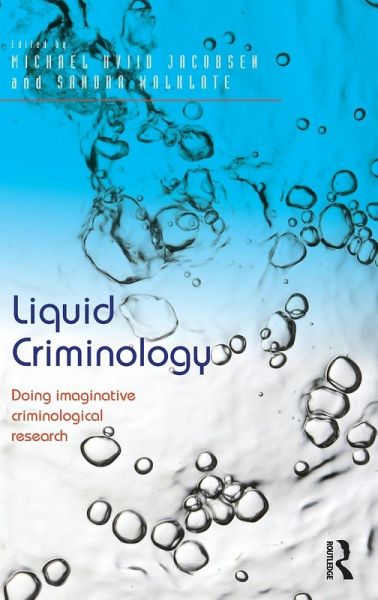
This book explores the ways in which criminological methods can be imaginatively deployed and developed in a world increasingly characterized by the blurred nature of social reality. Whilst recognizing the importance of positivist approaches and research techniques, it advocates a commitment to understanding the ways in which those techniques can be used imaginatively, at times in combination with less conventional methods, discussing the questions concerning risk, ethics and access that arise as a result.
This book explores the ways in which criminological methods can be imaginatively deployed and developed in a world increasingly characterized by the blurred nature of social reality. Whilst recognizing the importance of positivist approaches and research techniques, it advocates a commitment to understanding the ways in which those techniques can be used imaginatively, at times in combination with less conventional methods, discussing the questions concerning risk, ethics and access that arise as a result.
Michael Hviid Jacobsen is Professor of Sociology at Aalborg University, Denmark. He is the editor of The Poetics of Crime and co-editor of The Sociology of Zygmunt Bauman, Encountering the Everyday, The Transformation of Modernity, Utopia: Social Theory and the Future and Imaginative Methodologies: The Poetic Imagination in the Social Sciences. Sandra Walklate is Eleanor Rathbone Chair of Sociology in the Department of Sociology, Social Policy and Criminology at the University of Liverpool, UK, and Adjunct Professor in the School of Justice, Queensland University of Technology, Australia. Her recent publications include Victims: Trauma, Testimony, Justice (with R. McGarry) and The Contradictions of Terrorism (with G. Mythen).
Inhaltsangabe
Preface and Acknowledgements List of Contributors Introduction: Introducing 'Liquid Criminology', (Sandra Walklate and Michael Hviid Jacobsen) Part I Using Conventional Methods Imaginatively 1. Doing Imaginative Criminology, (Pat Carlen) 2. Using Crime Surveys as Tools of Critical Insight and Progressive Change, (Walter S. DeKeseredy) 3. 'Snitches Get Stitches'? Telling Tales on Homicide Detectives, (Louise Westmarland) 4. Forensic Criminology as Research Problem: Using Traditional Processes in a Forensic Context, (Wayne Petherick and Claire Ferguson) Part II Developing Imaginative Methods 5. Studying the Marginalized with Mixed Methods, (Maggie O'Neill) 6. The 'Typical Victim': No Story to Tell and No One to Tell it To, (Ross McGarry) 7. Doing Visual Criminology: Learning from Documentary, Journalism and Sociology, (Eamonn Carrabine) 8. Liquid Crime History: Digital Entrepreneurs and the Industrial Production of 'Ruined Lives', (Barry Godfrey) Part III The Craft and Challenges of Imaginative Liquid Criminology9. 'Risky' Research and Discretion in Pursuing the Criminological Imagination, (Matthew Bacon and Teela Sanders) 10. Gaining Access and Managing Gatekeepers: Undertaking Criminological Research with Those 'Within' the System, (Kate Fitz-Gibbon) 11. The Politics of Doing Imaginative Criminological Research, (Kerry Carrington and Ashleigh Larkin) Conclusion: Revisiting 'Liquid Criminology': Politics, Poetics, Pitfalls and Promises, (Michael Hviid Jacobsen and Sandra Walklate) Postscript: Under the Slab, (Jeff Ferrell) Index
Preface and Acknowledgements List of Contributors Introduction: Introducing 'Liquid Criminology', (Sandra Walklate and Michael Hviid Jacobsen) Part I Using Conventional Methods Imaginatively 1. Doing Imaginative Criminology, (Pat Carlen) 2. Using Crime Surveys as Tools of Critical Insight and Progressive Change, (Walter S. DeKeseredy) 3. 'Snitches Get Stitches'? Telling Tales on Homicide Detectives, (Louise Westmarland) 4. Forensic Criminology as Research Problem: Using Traditional Processes in a Forensic Context, (Wayne Petherick and Claire Ferguson) Part II Developing Imaginative Methods 5. Studying the Marginalized with Mixed Methods, (Maggie O'Neill) 6. The 'Typical Victim': No Story to Tell and No One to Tell it To, (Ross McGarry) 7. Doing Visual Criminology: Learning from Documentary, Journalism and Sociology, (Eamonn Carrabine) 8. Liquid Crime History: Digital Entrepreneurs and the Industrial Production of 'Ruined Lives', (Barry Godfrey) Part III The Craft and Challenges of Imaginative Liquid Criminology9. 'Risky' Research and Discretion in Pursuing the Criminological Imagination, (Matthew Bacon and Teela Sanders) 10. Gaining Access and Managing Gatekeepers: Undertaking Criminological Research with Those 'Within' the System, (Kate Fitz-Gibbon) 11. The Politics of Doing Imaginative Criminological Research, (Kerry Carrington and Ashleigh Larkin) Conclusion: Revisiting 'Liquid Criminology': Politics, Poetics, Pitfalls and Promises, (Michael Hviid Jacobsen and Sandra Walklate) Postscript: Under the Slab, (Jeff Ferrell) Index
Es gelten unsere Allgemeinen Geschäftsbedingungen: www.buecher.de/agb
Impressum
www.buecher.de ist ein Internetauftritt der buecher.de internetstores GmbH
Geschäftsführung: Monica Sawhney | Roland Kölbl | Günter Hilger
Sitz der Gesellschaft: Batheyer Straße 115 - 117, 58099 Hagen
Postanschrift: Bürgermeister-Wegele-Str. 12, 86167 Augsburg
Amtsgericht Hagen HRB 13257
Steuernummer: 321/5800/1497
USt-IdNr: DE450055826