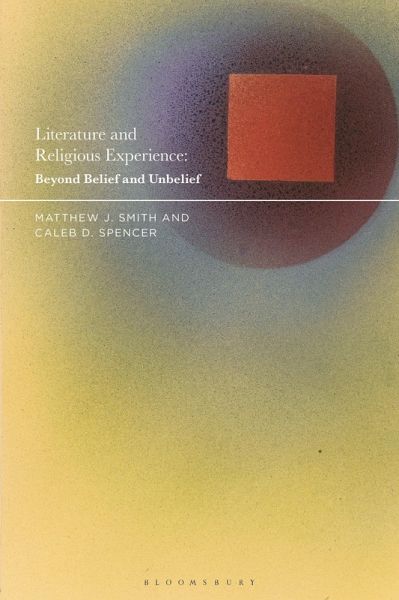
This book challenges the status quo of studies in literature and religion by returning to "experience" as a bridge between theory and practice. Essays focus on keywords of religious experience and demonstrate their applications in drama, fiction, and poetry. Each chapter explores the broad significance of its keyword as a category of psychological and social behavior and tracks its unique articulation by individual authors, including Conrad, Beecher Stowe and Melville. Together, the chapters construct a critical foundation for studying literature not only from the perspectives of theology and…mehr
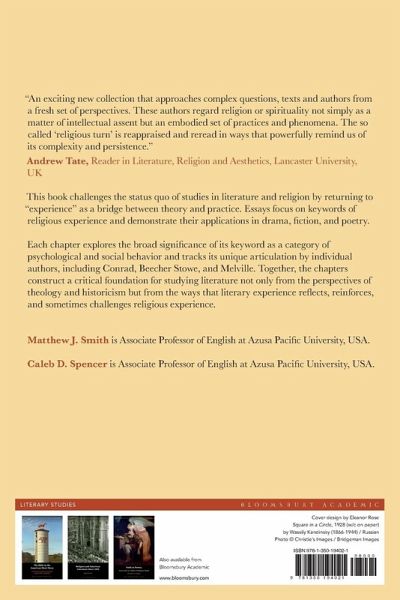
This book challenges the status quo of studies in literature and religion by returning to "experience" as a bridge between theory and practice. Essays focus on keywords of religious experience and demonstrate their applications in drama, fiction, and poetry. Each chapter explores the broad significance of its keyword as a category of psychological and social behavior and tracks its unique articulation by individual authors, including Conrad, Beecher Stowe and Melville. Together, the chapters construct a critical foundation for studying literature not only from the perspectives of theology and historicism but from the ways that literary experience reflects, reinforces, and sometimes challenges religious experience.
Matthew J. Smith is Associate Professor of English at Azusa Pacific University. He is the author of Performance and Religion in Early Modern England: Stage, Cathedral, Wagon, Street (Notre Dame, 2018) and co-editor, with Julia Lupton, of Face to Face in Shakespearean Drama (Edinburgh, 2019). He is guest editor of two special issues of Christianity & Literature: The Sacramental Text Reconsidered (2016) and Sincerity (co-editor, 2017). Caleb D. Spencer is Associate Professor of English at Azusa Pacific University. His essays appear in Religion & Literature, Journal of the Religion and Popular Culture, and Christianity & Literature. He co-edited Sincerity, a special issue of Christianity & Literature (2017). He also serves as Associate Editor of the journal, Christianity & Literature.
Inhaltsangabe
Introduction - Matthew J. Smith, Azusa Pacific University& Caleb D. Spencer, Azusa Pacific University 1. Believing: Postsecular Belief and Unbelief in Marilynne Robinson's Home and James Wood's The Book Against God - Lori Branch, University of Iowa 2. Benediction: Shakespeare's Post-Secular Choreography of Hope and Healing - Julia Reinhard Lupton, University of California, Irvine 3. Exercise: Poetry as Spiritual Exercise: On A. R. Ammons - Kevin Hart, University of Virginia 4. Fantasy: Superstition Fiction and Magic Revival in the Euro-American West and China- Zhange Ni, Virginia Polytechnic University 5. Gift: The (Im)possible Conditions of Grace in Melville's Fiction - Tae Sung, California Baptist University 6. Guidance: Understanding Providence in George MacDonald's Phantastes - Mark Knight, Lancaster University 7. Idolatry: Power, Meaning, and Violence in Conrad and Hesse - Larry D. Bouchard, University of Virginia 8. Interruption: Conversion as Event in Paul of Tarsus and Paul of Burgos - Ryan Szpiech, University of Michigan 9. Kindness: King Lear and Buddhism - Unhae Langis, Independent Scholar 10. Metanoia: Harriet Beecher Stowe's Artful Apprehension of Conversion in Uncle Tom's Cabin - John Gatta, Sewanee, The University of the South 11. One: Poetic Love in Ibn 'Arabi - Jeffrey Sacks, University of California, Riverside 12. Prayer: I will Love You in the Summer Time - Christian Wiman, Yale Divinity School 13. Revelation: From Dante to Mallarmé via Shakespeare's Hamlet: The Negativity of Poetic-Prophetic Revelation in Modernity - William Franke, Vanderbilt University 14. Silence: "Why Do You Hide Your Face?": God's Silence in William Paul Young's The Shack - Christopher Douglas, University of Victoria 15. Turning: Alabaster's Wager & the Experience of Conversion - James Kearney, University of California, Santa Barbara 16. Vision: 'Was it a vision or a waking dream?": Rethinking Romantic Ideology - Gavin Hopps, University of St. Andrews Afterword: Terry Eagleton, Lancaster University
Introduction - Matthew J. Smith, Azusa Pacific University& Caleb D. Spencer, Azusa Pacific University 1. Believing: Postsecular Belief and Unbelief in Marilynne Robinson's Home and James Wood's The Book Against God - Lori Branch, University of Iowa 2. Benediction: Shakespeare's Post-Secular Choreography of Hope and Healing - Julia Reinhard Lupton, University of California, Irvine 3. Exercise: Poetry as Spiritual Exercise: On A. R. Ammons - Kevin Hart, University of Virginia 4. Fantasy: Superstition Fiction and Magic Revival in the Euro-American West and China- Zhange Ni, Virginia Polytechnic University 5. Gift: The (Im)possible Conditions of Grace in Melville's Fiction - Tae Sung, California Baptist University 6. Guidance: Understanding Providence in George MacDonald's Phantastes - Mark Knight, Lancaster University 7. Idolatry: Power, Meaning, and Violence in Conrad and Hesse - Larry D. Bouchard, University of Virginia 8. Interruption: Conversion as Event in Paul of Tarsus and Paul of Burgos - Ryan Szpiech, University of Michigan 9. Kindness: King Lear and Buddhism - Unhae Langis, Independent Scholar 10. Metanoia: Harriet Beecher Stowe's Artful Apprehension of Conversion in Uncle Tom's Cabin - John Gatta, Sewanee, The University of the South 11. One: Poetic Love in Ibn 'Arabi - Jeffrey Sacks, University of California, Riverside 12. Prayer: I will Love You in the Summer Time - Christian Wiman, Yale Divinity School 13. Revelation: From Dante to Mallarmé via Shakespeare's Hamlet: The Negativity of Poetic-Prophetic Revelation in Modernity - William Franke, Vanderbilt University 14. Silence: "Why Do You Hide Your Face?": God's Silence in William Paul Young's The Shack - Christopher Douglas, University of Victoria 15. Turning: Alabaster's Wager & the Experience of Conversion - James Kearney, University of California, Santa Barbara 16. Vision: 'Was it a vision or a waking dream?": Rethinking Romantic Ideology - Gavin Hopps, University of St. Andrews Afterword: Terry Eagleton, Lancaster University
Es gelten unsere Allgemeinen Geschäftsbedingungen: www.buecher.de/agb
Impressum
www.buecher.de ist ein Internetauftritt der buecher.de internetstores GmbH
Geschäftsführung: Monica Sawhney | Roland Kölbl | Günter Hilger
Sitz der Gesellschaft: Batheyer Straße 115 - 117, 58099 Hagen
Postanschrift: Bürgermeister-Wegele-Str. 12, 86167 Augsburg
Amtsgericht Hagen HRB 13257
Steuernummer: 321/5800/1497
USt-IdNr: DE450055826