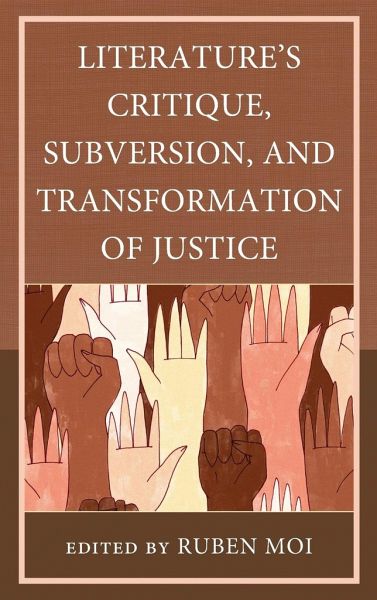
Literature’s Critique, Subversion, and Transformation of Justice explores two of the fundamental institutions in human existence and social democracy that attend to philosophical consideration and critical discussion of how literature interacts with the phenomena of justice.
Literature’s Critique, Subversion, and Transformation of Justice explores two of the fundamental institutions in human existence and social democracy that attend to philosophical consideration and critical discussion of how literature interacts with the phenomena of justice.
Ruben Moi is professor of English and Irish literature at The Arctic University of Norway, where he also leads the Just Literature research group.
Inhaltsangabe
Introduction, Ruben Moi Chapter One: A Vendor of the Body and the Spirit: Justice and Social Control in Shakespeare's The Merchant of Venice, William Dwyer III Chapter Two: Drama and the Search for Justice: The Case of Philip Massinger's Comedy, A New Way to Pay Old Debts (c. 1625/6), Anthony W. Johnson Chapter Three: Aesthetic Justice and Figuration of the Possible, Lene M. Johannessen Chapter Four: Art and Justice in the Age of Neoliberalism, Asbjørn Grønstad Chapter Five: Implicated Readers: Just Storytelling and Violence Against Migrant Women, Cassandra Falke Chapter Six: The Legacy of Seamus Heaney's North, Ruben Moi Chapter Seven: Justice and Moral Development in Siobhan Dowd's Bog Child, Erik Mustad Chapter Eight: Poetic Justice and Translation: Seamus Heaney's Two Greek Plays and the Troubles, Charles Ivan Armstrong Chapter Nine: Art Write Cope and Samí Birgengoansttat, Biret-Jon-Risten-Kirste-Hanna Lill Tove / Lill Tove Fredriksen Chapter Ten: The Lesson of Khaufpur and Morichjhãpi: Temporal Finitude and the Urgency of Environmental Justice in Indra Sinha's Animal's People and Amitav Ghosh's The Hungry Tide, Edvard Lia Chapter Eleven: 'It's just not fear' - Fictional Narratives' Role in the Development of Pupils' Perception of Justice and Morality, Christopher Loe Olsen About the Contributors
Introduction, Ruben Moi Chapter One: A Vendor of the Body and the Spirit: Justice and Social Control in Shakespeare's The Merchant of Venice, William Dwyer III Chapter Two: Drama and the Search for Justice: The Case of Philip Massinger's Comedy, A New Way to Pay Old Debts (c. 1625/6), Anthony W. Johnson Chapter Three: Aesthetic Justice and Figuration of the Possible, Lene M. Johannessen Chapter Four: Art and Justice in the Age of Neoliberalism, Asbjørn Grønstad Chapter Five: Implicated Readers: Just Storytelling and Violence Against Migrant Women, Cassandra Falke Chapter Six: The Legacy of Seamus Heaney's North, Ruben Moi Chapter Seven: Justice and Moral Development in Siobhan Dowd's Bog Child, Erik Mustad Chapter Eight: Poetic Justice and Translation: Seamus Heaney's Two Greek Plays and the Troubles, Charles Ivan Armstrong Chapter Nine: Art Write Cope and Samí Birgengoansttat, Biret-Jon-Risten-Kirste-Hanna Lill Tove / Lill Tove Fredriksen Chapter Ten: The Lesson of Khaufpur and Morichjhãpi: Temporal Finitude and the Urgency of Environmental Justice in Indra Sinha's Animal's People and Amitav Ghosh's The Hungry Tide, Edvard Lia Chapter Eleven: 'It's just not fear' - Fictional Narratives' Role in the Development of Pupils' Perception of Justice and Morality, Christopher Loe Olsen About the Contributors
Es gelten unsere Allgemeinen Geschäftsbedingungen: www.buecher.de/agb
Impressum
www.buecher.de ist ein Internetauftritt der buecher.de internetstores GmbH
Geschäftsführung: Monica Sawhney | Roland Kölbl | Günter Hilger
Sitz der Gesellschaft: Batheyer Straße 115 - 117, 58099 Hagen
Postanschrift: Bürgermeister-Wegele-Str. 12, 86167 Augsburg
Amtsgericht Hagen HRB 13257
Steuernummer: 321/5800/1497
USt-IdNr: DE450055826