
Andere Kunden interessierten sich auch für
 Contemporary Tourist Experience195,99 €
 Routledge Handbook of the Tourist Experience261,99 €
 Multicultural heritage as tourist product in selected regions of Europe18,99 €
 Tourist Experience204,99 €
 Mediating the Tourist Experience177,99 €
 Visitor Attractions and Events177,99 €
 Exploring Culture and Heritage Through Experience Tourism161,99 €
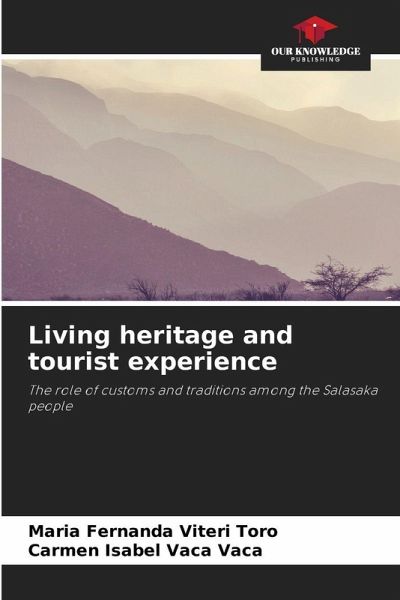
This study addresses the cultural richness of the indigenous community of Salasaka, in Tungurahua, Ecuador. Starting from the problematic node related to the waste of cultural resources and the low levels of productivity, the research is oriented to analyze how customs and traditions influence the construction of meaningful tourist experiences. The research, cross-sectional and based on critical and descriptive theory, was based on a rigorous fieldwork with instruments validated by the National Institute of Cultural Heritage. Through a qualitative analysis based on the dialectics and hermeneutics of tourism, it was revealed that the living heritage of Salasaka is vast, with a strong anchorage in nature and in the Andean cosmovision.the results show that cultural practices and ancestral knowledge can become dynamic axes for experiential tourism, as long as the bearers of this knowledge are recognized as protagonists of economic initiatives.