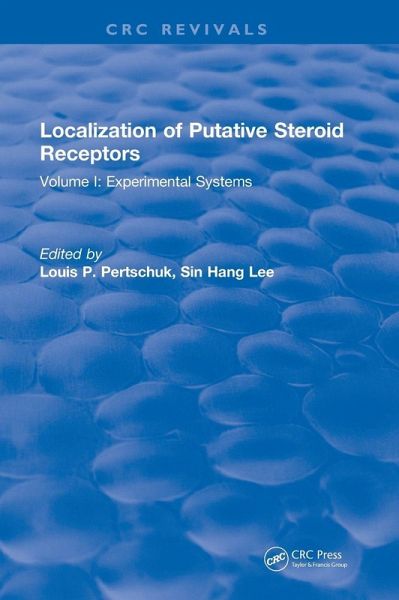
These volumes represent the "state-of-the-art" in morphological methods for detection of steroid receptors. In Volume I we have attempted to collect current available methods and experimental approahes which might be useful in solving present enigmas.
These volumes represent the "state-of-the-art" in morphological methods for detection of steroid receptors. In Volume I we have attempted to collect current available methods and experimental approahes which might be useful in solving present enigmas.
Louis P. Pertschuk, D. O., is Associate Professor of Pathology at State University of New York. Downstate Medical Center, and Attending Pathologist at the Kings County Hospital Center. Brooklyn. New York. Dr. Pertschuk received an A.B. in Biology from New York University in 1946 and graduated from the Philadelphia College of Osteopathic Medicine in 1950. Following a year of internship he entered private general practice until 1970 when he began a residency in pathology at the State University-Kings County Hospital Center. He was a Fellow in Pathology at the Memorial Sloan-Kettering Cancer Center in 1973 and 1974 and was certified in Anatomic Pathology by the American Board of Pathology in 1974. Dr. Pertschuk is a Fellow of the College of American Pathologists and the American Society of Clinical Pathology. He is a member of the American Association of Pathologists, the International Academy of Pathology, the New York Academy of Sciences, and the merican Association for the Advancement of Science. He has published 67 research papers, 43 scientific abstracts, and contributed 19 chapters to various books. His current research interests include the development and study of different methodologies for detection of the sites of action of steroid hormones, especially in human neoplasia.
Inhaltsangabe
1. An overview 2. Radioautographic Localization of Estrogen Receptors in the Rat Uterus: a Tool for the Study of Classical and Nontraditional Mechanisms of Hormone Action 3. Fluoresceinated Estrone Binding by Normal and Neoplastic Cells of Human and Animal Origin 4. Histochemical Study of Estrogen Receptors in the Rat Uterus With a Hydrophilic Fluorescent Estradiol Conjugate 5. Estrogen Receptors and Hormone Responsiveness in Serially Transplanted Mammary Tumors in Rats 6. Flow Cytometric Analysis of Fluorescent Estrogen Binding in Cancer Cell Suspensions 7. Sex Steroid Action Mechanism by Cytochemistry in Normal and Neoplastic Target Tissues 8. Immunohistochemical Studies with Antibodies to the Chicken Oviduct Progesterone Receptor 9. Methods for the Quantification of Histochemical Steroid Binding Assays 10. A Two-State Immunocytochemical Method for Putative Estrogen Receptor Analysis 11. Estradiol-BSA Conjugates for Estrogen Receptor Localization: the Vienna Experience
1. An overview 2. Radioautographic Localization of Estrogen Receptors in the Rat Uterus: a Tool for the Study of Classical and Nontraditional Mechanisms of Hormone Action 3. Fluoresceinated Estrone Binding by Normal and Neoplastic Cells of Human and Animal Origin 4. Histochemical Study of Estrogen Receptors in the Rat Uterus With a Hydrophilic Fluorescent Estradiol Conjugate 5. Estrogen Receptors and Hormone Responsiveness in Serially Transplanted Mammary Tumors in Rats 6. Flow Cytometric Analysis of Fluorescent Estrogen Binding in Cancer Cell Suspensions 7. Sex Steroid Action Mechanism by Cytochemistry in Normal and Neoplastic Target Tissues 8. Immunohistochemical Studies with Antibodies to the Chicken Oviduct Progesterone Receptor 9. Methods for the Quantification of Histochemical Steroid Binding Assays 10. A Two-State Immunocytochemical Method for Putative Estrogen Receptor Analysis 11. Estradiol-BSA Conjugates for Estrogen Receptor Localization: the Vienna Experience
Es gelten unsere Allgemeinen Geschäftsbedingungen: www.buecher.de/agb
Impressum
www.buecher.de ist ein Internetauftritt der buecher.de internetstores GmbH
Geschäftsführung: Monica Sawhney | Roland Kölbl | Günter Hilger
Sitz der Gesellschaft: Batheyer Straße 115 - 117, 58099 Hagen
Postanschrift: Bürgermeister-Wegele-Str. 12, 86167 Augsburg
Amtsgericht Hagen HRB 13257
Steuernummer: 321/5800/1497
USt-IdNr: DE450055826