
Andere Kunden interessierten sich auch für
 The New Futures of Exclusion29,99 €
 Drugs, Identity and Stigma98,99 €
 Drugs, Identity and Stigma98,99 €
 Drink Spiking and Predatory Drugging19,99 €
 Media and Feminist Protest in Iran91,99 €
 Media and Feminist Protest in Iran91,99 €
 Changing Attitudes Towards the Death Penalty76,99 €



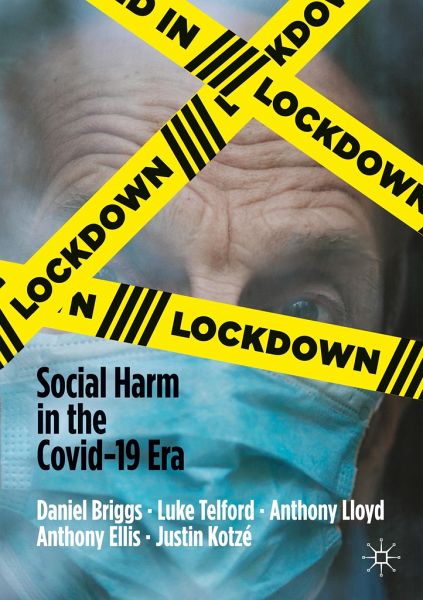
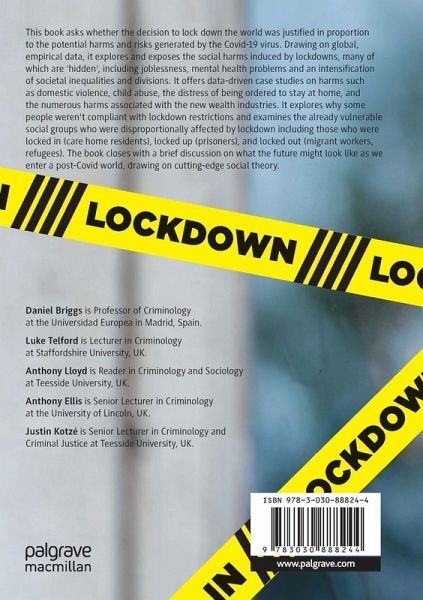
This book asks whether the decision to lock down the world was justified in proportion to the potential harms and risks generated by the Covid-19 virus. Drawing on global, empirical data, it explores and exposes the social harms induced by lockdowns, many of which are 'hidden', including joblessness, mental health problems and an intensification of societal inequalities and divisions. It offers data-driven case studies on harms such as domestic violence, child abuse, the distress of being ordered to stay at home, and the numerous harms associated with the new wealth industries. It explores why some people weren't compliant with lockdown restrictions and examines the already vulnerable social groups who were disproportionally affected by lockdown including those who were locked in (care home residents), locked up (prisoners), and locked out (migrant workers, refugees). The book closes with a brief discussion on what the future might look like as we enter a post-Covid world, drawing on cutting-edge social theory.