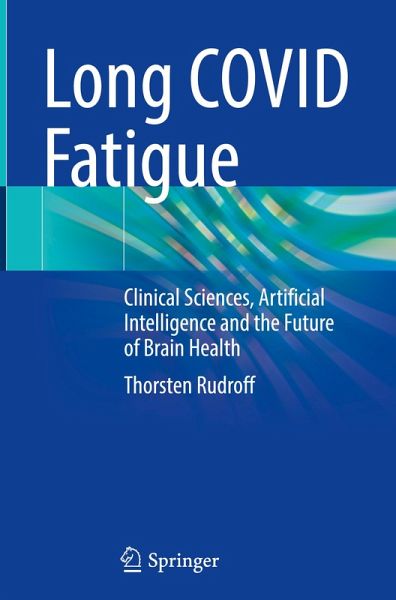
This book offers the first comprehensive analysis of long COVID fatigue using advanced neuroimaging and artificial intelligence (AI). It bridges the gap between basic science and patient care in post-viral syndromes. The volume guides readers from fundamental concepts to future innovations, making complex neurobiological mechanisms accessible to researchers and clinicians. Each chapter builds on the previous, connecting molecular mechanisms to clinical manifestations. The integration of AI in diagnosis and treatment is a pioneering approach in long COVID literature. The book provides detailed…mehr
This book offers the first comprehensive analysis of long COVID fatigue using advanced neuroimaging and artificial intelligence (AI). It bridges the gap between basic science and patient care in post-viral syndromes. The volume guides readers from fundamental concepts to future innovations, making complex neurobiological mechanisms accessible to researchers and clinicians. Each chapter builds on the previous, connecting molecular mechanisms to clinical manifestations. The integration of AI in diagnosis and treatment is a pioneering approach in long COVID literature. The book provides detailed analysis of brain metabolic patterns in long COVID fatigue, insights into protective mechanisms like metabolic heterogeneity in the basal ganglia, practical guidelines for AI-enhanced diagnostic and treatment approaches, and pathways for translating research into clinical practice. It combines rigorous scientific analysis with practical applications, serving as both a reference and a roadmapfor future developments in long COVID research and treatment. The main objectives are to provide a comprehensive understanding of long COVID fatigue mechanisms, present evidence-based approaches for diagnosis and treatment, showcase innovative AI applications in medical imaging, establish a framework for future research, and offer practical clinical management guidelines. This book is tailored for neurologists, neuroscientists, COVID-19 specialists, radiologists, healthcare providers, AI researchers, and graduate students in related fields.
Dr. Thorsten Rudroff is a Professor (Docent) in Experimental Neuroimaging at the Turku PET Centre, University of Turku and Turku University Hospital, Finland. He previously held positions as Associate Professor at the University of Iowa and Assistant Professor at Colorado State University, USA. With over 20 years of experience in neurophysiology research, he has made significant contributions to understanding fatigue and cognitive dysfunction in neurological disorders, particularly in Multiple Sclerosis and Long COVID. His scientific work includes over 85 publications in prestigious journals. Dr. Rudroff received his Ph.D. in Neurophysiology from the University of Constance, Germany, and completed his postdoctoral training at the University of Colorado, Boulder. He is particularly passionate about leveraging artificial intelligence to advance medical research and improve patient outcomes. Dr. Rudroff serves on multiple editorial boards and has received several significant research grants from the National Institutes of Health. His current research focuses on the intersection of neuroimaging, artificial intelligence, and Long COVID, with particular emphasis on developing innovative approaches to understand and treat fatigue symptoms. Furthermore, his focus is on developing AI-driven approaches for early detection of Alzheimer's Disease through neuroimaging biomarkers.
Inhaltsangabe
1. A Mysterious Malaise.- 2. Understanding Fatigue.- 3. Factors contributing to Long COVID Fatigue.- 4. Sex-Based Differences.- 5. Age-Related Considerations.- 6. Children and Long COVID Fatigue.- 7. The Science of Long COVID Fatigue.- 8. Cellular and Neurological Mechanisms in Long COVID Fatigue.- 9. Integration and Clinical Applications.- 10. Neuroimaging as a Window into Long COVID Fatigue.- 11. Neuroimaging Biomarkers in Long COVID Fatigue: Advanced Techniques and Clinical Applications.- 12. Risk Factors and Predictors of Long COVID Fatigue.- 13. Vaccination Status and Long COVID Fatigue.- 14. Diagnosis of Long COVID Fatigue.- 15. Core Treatment Approaches for Long COVID Fatigue.- 16. Pharmacological and Non-Pharmacological Interventions.- 17. Revealing the Complexity of Long COVID Fatigue: Challenges and Promises of Artificial Intelligence.- 18. Final Remarks: Long COVID Fatigue in Brain Health Research: A Call to Action.
1. A Mysterious Malaise.- 2. Understanding Fatigue.- 3. Factors contributing to Long COVID Fatigue.- 4. Sex-Based Differences.- 5. Age-Related Considerations.- 6. Children and Long COVID Fatigue.- 7. The Science of Long COVID Fatigue.- 8. Cellular and Neurological Mechanisms in Long COVID Fatigue.- 9. Integration and Clinical Applications.- 10. Neuroimaging as a Window into Long COVID Fatigue.- 11. Neuroimaging Biomarkers in Long COVID Fatigue: Advanced Techniques and Clinical Applications.- 12. Risk Factors and Predictors of Long COVID Fatigue.- 13. Vaccination Status and Long COVID Fatigue.- 14. Diagnosis of Long COVID Fatigue.- 15. Core Treatment Approaches for Long COVID Fatigue.- 16. Pharmacological and Non-Pharmacological Interventions.- 17. Revealing the Complexity of Long COVID Fatigue: Challenges and Promises of Artificial Intelligence.- 18. Final Remarks: Long COVID Fatigue in Brain Health Research: A Call to Action.
Es gelten unsere Allgemeinen Geschäftsbedingungen: www.buecher.de/agb
Impressum
www.buecher.de ist ein Internetauftritt der buecher.de internetstores GmbH
Geschäftsführung: Monica Sawhney | Roland Kölbl | Günter Hilger
Sitz der Gesellschaft: Batheyer Straße 115 - 117, 58099 Hagen
Postanschrift: Bürgermeister-Wegele-Str. 12, 86167 Augsburg
Amtsgericht Hagen HRB 13257
Steuernummer: 321/5800/1497
USt-IdNr: DE450055826