
Andere Kunden interessierten sich auch für
 The French Disease in Renaissance Italy67,99 €
 The Renaissance of Empire in Early Modern Europe88,99 €
 The Sexual Culture of the French Renaissance42,99 €
 The Renaissance in Italy125,99 €
 Pliny the Elder and the Emergence of Renaissance Architecture183,99 €
 Renaissance Ethnography and the Invention of the Human34,99 €
 Gender, Honor, and Charity in Late Renaissance Florence103,99 €


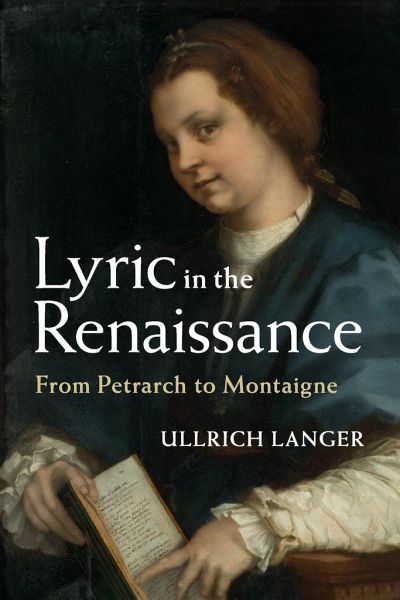
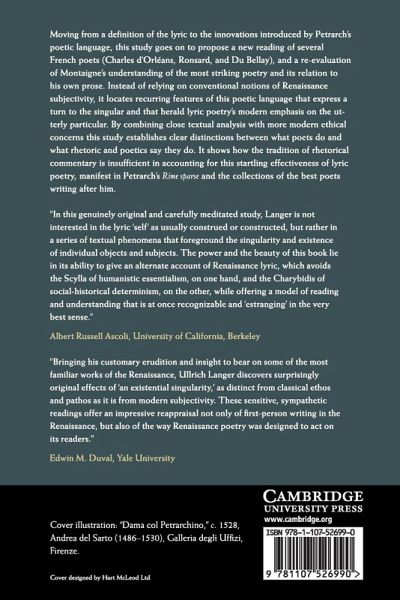
Moving from a definition of the lyric to the innovations introduced by Petrarch's poetic language, this study goes on to propose a new reading of several French poets (Charles d'Orléans, Ronsard, and Du Bellay), and a re-evaluation of Montaigne's understanding of the most striking poetry and its relation to his own prose. Instead of relying on conventional notions of Renaissance subjectivity, it locates recurring features of this poetic language that express a turn to the singular and that herald lyric poetry's modern emphasis on the utterly particular. By combining close textual analysis with more modern ethical concerns this study establishes clear distinctions between what poets do and what rhetoric and poetics say they do. It shows how the tradition of rhetorical commentary is insufficient in accounting for this startling effectiveness of lyric poetry, manifest in Petrarch's Rime Sparse and the collections of the best poets writing after him.