
Andere Kunden interessierten sich auch für
 King Lear8,49 €
 Julius Caesar8,49 €
 Henry the Fourth, Part One8,49 €
 Twelfth Night7,99 €
 Hamlet4,99 €
 Macbeth15,99 €
 The Merchant of Venice14,99 €
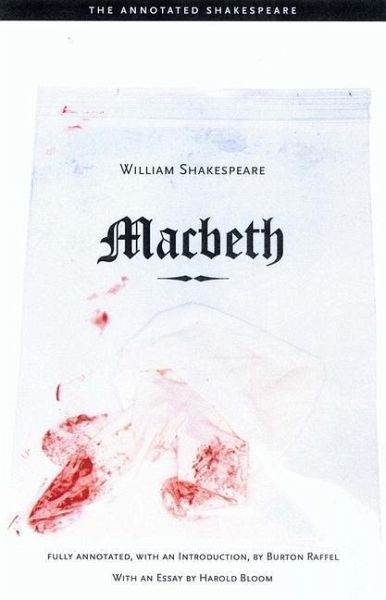
The Annotated Shakespeare series enables readers to fully understand and enjoy the plays of the world's greatest dramatist "To be able to read Macbeth with the eye of one of our profession's top linguists and scholars is a treat for the heart as well as the mind."--Tita French Baumlin, Southwest Missouri State University Perhaps no other Shakespearean drama so engulfs its readers in the ruinous journey of surrender to evil as does Macbeth. A timeless tragedy about the nature of ambition, conscience, and the human heart, the play holds a profound grip on the Western imagination. This extensively annotated edition makes Macbeth completely accessible to twenty-first-century readers and provides a rich resource for students, teachers, and general readers. Burton Raffel's on-page annotations offer generous help with vocabulary and usage of Elizabethan English, pronunciation, prosody, and alternative readings of phrases and lines. And in his introduction he provides religious and social contexts that increase the reader's understanding of the play. In a concluding essay, Harold Bloom argues that Macbeth--his favorite of Shakespeare's high tragedies--is the playwright's most internalized drama.
Burton Raffel (1928-2015) was Distinguished Professor of Arts and Humanities Emeritus and professor of English emeritus, University of Louisiana at Lafayette. Among his many edited and translated publications are Poems and Prose from the Old English, Cligès, Lancelot, Perceval, Erec and Enide, and Yvain. Harold Bloom (1930-2019) was Sterling Professor of Humanities at Yale University and Berg Professor of English at New York University, and was the author of many books, including The Western Canon, Shakespeare: The Invention of the Human, and Where Shall Wisdom Be Found?

Bild: Wikipedia