
117,99 €
inkl. MwSt.
Versandkostenfrei*
Versandfertig in 1-2 Wochen
payback
59 °P sammeln
  • Gebundenes Buch

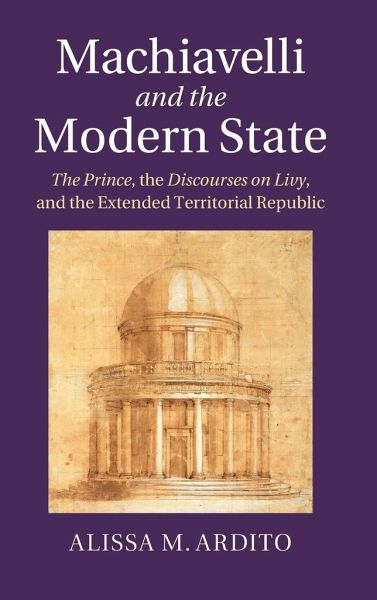
This book offers a significant reinterpretation of the history of republican political thought and of Niccolò Machiavelli's place within it. It locates Machiavelli's political thought within enduring debates about the proper size of republics. From the sixteenth century onward, as states grew larger, it was believed only monarchies could govern large territories effectively. Republicanism was a form of government relegated to urban city-states, anachronisms in the new age of the territorial state. For centuries, history and theory were in agreement: constructing an extended republic was as…mehr

Produktbeschreibung
This book offers a significant reinterpretation of the history of republican political thought and of Niccolò Machiavelli's place within it. It locates Machiavelli's political thought within enduring debates about the proper size of republics. From the sixteenth century onward, as states grew larger, it was believed only monarchies could govern large territories effectively. Republicanism was a form of government relegated to urban city-states, anachronisms in the new age of the territorial state. For centuries, history and theory were in agreement: constructing an extended republic was as futile as trying to square the circle; but then James Madison devised a compound representative republic that enabled popular government to take on renewed life in the modern era. This work argues that Machiavelli had his own Madisonian impulse and deserves to be recognized as the first modern political theorist to envision the possibility of a republic with a large population extending over a broad territory.
Autorenporträt
Alissa M. Ardito is a lecturer and visiting fellow in the Department of Political Science at Yale University. She holds a PhD from Yale University and a JD from the University of Virginia School of Law. She has previously served as a visiting professor in the Department of Political Science at Duke University and has been a visiting scholar at the American Academy in Rome and fellow at Monticello's International Center for Jefferson Studies.