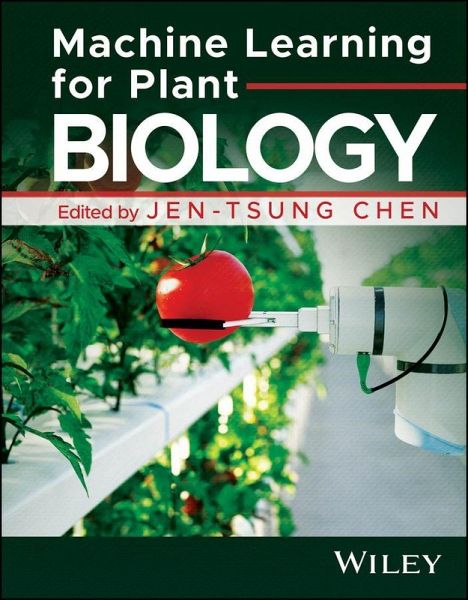
A comprehensive and current summary of machine learning-based strategies for constructing digital plant biology Machine Learning for Plant Biology provides a comprehensive summary of the latest developments in machine learning (ML) technologies, emphasizing their role in analyzing complex biological networks of plants and in modeling the responses of major crops to biotic and abiotic stresses. The combinatorial strategies discussed in this book enable readers to further their understanding of plant biology, stress physiology, and protection. Machine Learning for Plant Biology includes…mehr
A comprehensive and current summary of machine learning-based strategies for constructing digital plant biology Machine Learning for Plant Biology provides a comprehensive summary of the latest developments in machine learning (ML) technologies, emphasizing their role in analyzing complex biological networks of plants and in modeling the responses of major crops to biotic and abiotic stresses. The combinatorial strategies discussed in this book enable readers to further their understanding of plant biology, stress physiology, and protection. Machine Learning for Plant Biology includes information on: * Intelligent breeding for stress-resistant and high-yield crops, contributing to sustainable agriculture, the Sustainable Development Goals (SDGs), and the Paris Agreement * Interactions between plants, pathogens, and environmental stresses through omics approaches, functional genomics, genome editing, and high-throughput technologies * State-of-the-art AI tools, including machine and deep learning models, as well as generative AI * Applications include species identification, systems biology, functional genomics, genomic selection, phenotyping, synthetic biology, spatial omics, plant disease diagnosis and protection, and plant secondary metabolism Machine Learning for Plant Biology is an essential reference on the subject for scientists, plant biologists, crop breeders, and students interested in the development of sustainable agriculture in the face of a changing global climate.
JEN-TSUNG CHEN is a Professor of Cell Biology at the Department of Life Sciences, National University of Kaohsiung, Taiwan, where he teaches courses on cell biology, genomics, proteomics, plant physiology, and plant biotechnology. His research interests include bioactive compounds, chromatography techniques, plant molecular biology, plant biotechnology, bioinformatics, and systems pharmacology. In 2023 and 2024, Elsevier and Stanford University recognized Dr. Chen as one of the "World's Top 2% Scientists".
Inhaltsangabe
Table of contents
1. Edge-based machine learning for computer vision in smart plant biology imaging 2. Machine Learning for Studying Plant Evolutionary Developmental Biology 3. Machine Learning for Plant High-Throughput Phenotyping 4. Machine Learning for Studying Plant Secondary Metabolites 5. Machine Learning for Plant Ecological Research 6. Machine Learning for Modelling Plant Abiotic Stress Responses 7. Machine Learning for Modelling Plant-Pathogen Interactions 8. Machine Learning-Enhanced Plant Disease Detection and Management 9. Machine Learning for Analysing and Integrating Multiple Omics 10. Machine Learning for Plant Single-Cell RNA Sequencing 11. Machine Learning for Plant Genomic Prediction 12. Machine Learning-Assisted Plant Systems Biology 13. Machine learning-driven precision plant breeding 14. Machine Learning-Driven Smart Agriculture 15. Plant Leaf Disease Detection and Classification Using Convolutional Neural Networks 16. The Future Farming: Machine Learning and Crop Health 17. Social Impact of Machine Learning on agricultural Communities 18. Ethical and regulatory considerations of machine learning in modern agriculture