
Andere Kunden interessierten sich auch für
 Making Borders in Modern East Asia43,99 €
 Refugees and Borders in South Asia58,99 €
 Beijing's Power and China's Borders195,99 €
 Refugees and Borders in South Asia176,99 €
 Idealism beyond Borders43,99 €
 The Borders of Race in Colonial South Africa69,99 €
 The Borders of Race in Colonial South Africa46,99 €
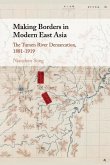

Until the late nineteenth century, the Chinese-Korean Tumen River border was one of the oldest, and perhaps most stable, state boundaries in the world. Spurred by severe food scarcity following a succession of natural disasters, from the 1860s, countless Korean refugees crossed the Tumen River border into Qing-China's Manchuria, triggering a decades-long territorial dispute between China, Korea, and Japan. This major new study of a multilateral and multiethnic frontier highlights the competing state- and nation-building projects in the fraught period that witnessed the Sino-Japanese War, the Russo-Japanese War, and the First World War. The power-plays over land and people simultaneously promoted China's frontier-building endeavours, motivated Korea's nationalist imagination, and stimulated Japan's colonialist enterprise, setting East Asia on an intricate trajectory from the late-imperial to a situation that, Song argues, we call modern.