
Andere Kunden interessierten sich auch für
 Decision Making and Controversies in State Supreme Courts115,99 €
 Making Commercial Law Through Practice 1830-1970120,99 €
 Judges, Decision Making and Empathy178,99 €
 Healthcare Decision-Making and the Law119,99 €
 Popular Law-making; A study of the origin, history, and present tendencies of law-making by statute20,99 €
 Healthcare Decision-Making and the Law42,99 €
 The Mechanics of Law Making61,00 €
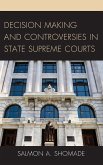
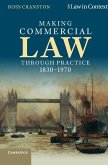
Following on Making Civil Rights Law, which covered Thurgood Marshall's career from 1936-1961, this book focuses on Marshall's career on the Supreme Court from 1961-1991, where he was first Afro-American Justice. The first book on Justice Thurgood Marshall's years on the Supreme Court based on a comprehensive review of the Supreme Court papers of Justices Marshall and William J. Brennan, this work describes Marshall's special approach to constitutional law in areas ranging from civil rights and the death penalty to abortion and poverty. It also describes the Supreme Court's operations during Marshall's tenure, the relations among the justices, and the particular roles played by Chief Justice Warren Burger, Justice Brennan, and Justice Antonin Scalia. The book locates the Supreme Court's actions from 1967 to 1991 in a broader historical and political context, explaining how Marshall's liberalism became increasingly isolated on a Court influenced by nation's drift in a more conservative direction.
Making Constitutional Law: Thurgood Marshall and the Supreme Court, 1961-1991 focuses on the second half of a brilliant and unique career. When tapped by LBJ in 1967 to ascend to the High Court, the seasoned Marshall - as the first African-American Justice - brought desegregation to the bench in word, thought, and deed. But as Mark V. Tushnet illustrates in this book, Marshall, a Great Society liberal, brought many other progressive concepts and convictions. This book, the first to fully utilize the papers of Justices Marshall and William J. Brennan, describes Marshall's approach to constitutional law in areas ranging from civil rights and the death penalty to abortion and affirmative action. Tushnet, who served as a law clerk for Marshall in the early 197Os, gives ample attention to the Court's operations during Marshall's tenure, the relations among the judges, and the particular roles played by Chief Justice Warren Burger, Justice Brennan, and Justice Antonin Scalia. Making Constitutional Law aptly locates the Supreme Court of Marshall's tenure within its rich political and historical contexts, showing how the nation's drift toward conservatism affected the Court's debates and decisions, and how Marshall's ardent liberalism became increasingly isolated. Making Constitutional Law will appeal to students of law, history, politics, and recent American culture.
Making Constitutional Law: Thurgood Marshall and the Supreme Court, 1961-1991 focuses on the second half of a brilliant and unique career. When tapped by LBJ in 1967 to ascend to the High Court, the seasoned Marshall - as the first African-American Justice - brought desegregation to the bench in word, thought, and deed. But as Mark V. Tushnet illustrates in this book, Marshall, a Great Society liberal, brought many other progressive concepts and convictions. This book, the first to fully utilize the papers of Justices Marshall and William J. Brennan, describes Marshall's approach to constitutional law in areas ranging from civil rights and the death penalty to abortion and affirmative action. Tushnet, who served as a law clerk for Marshall in the early 197Os, gives ample attention to the Court's operations during Marshall's tenure, the relations among the judges, and the particular roles played by Chief Justice Warren Burger, Justice Brennan, and Justice Antonin Scalia. Making Constitutional Law aptly locates the Supreme Court of Marshall's tenure within its rich political and historical contexts, showing how the nation's drift toward conservatism affected the Court's debates and decisions, and how Marshall's ardent liberalism became increasingly isolated. Making Constitutional Law will appeal to students of law, history, politics, and recent American culture.