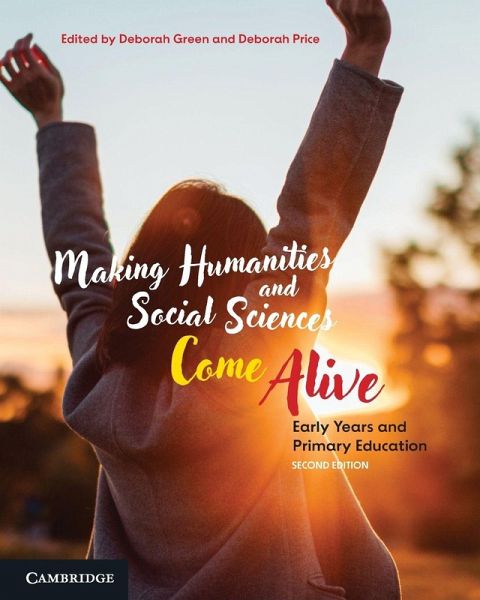
A strong foundation in Humanities and Social Sciences (HASS) helps young learners to think critically, communicate effectively, make decisions and adapt to change. Making Humanities and Social Sciences Come Alive prepares pre-service educators to effectively teach and integrate the crucial learning area of HASS.
A strong foundation in Humanities and Social Sciences (HASS) helps young learners to think critically, communicate effectively, make decisions and adapt to change. Making Humanities and Social Sciences Come Alive prepares pre-service educators to effectively teach and integrate the crucial learning area of HASS.
Part I. Humanities and Social Sciences Curriculum: 1. Making Humanities and Social Sciences come alive: the significance of curriculum in education Deborah Green and Deborah Price; 2. A guided tour of the HASS Australian Curriculum: planning and integrating learning Deborah Green and Deborah Price; 3. HASS in the early years: connecting the Early Years Learning Framework and the Australian Curriculum Jamie Sisson, Philippa Marsh and Samara Madrid Akpovo; 4. Humanities and Social Sciences in the early childhood and primary years Mallihai Tambyah, Deborah Green and Deborah Price; Part II. HASS Concepts and Sub-strands: 5. Conceptual thinking in HASS Malcolm McInerney; 6. The past in the present: bringing Foundation to Year 2 History and Civics education to life Peter Brett and Katia Duff; 7. History and historical inquiry Deborah Henderson; 8. Making Geography come alive by teaching geographical thinking Malcolm McInerney; 9. Civics and Citizenship in the 21st century Andrew Peterson and Grace Emanuele; 10. Bringing Economics and Business into educational settings Anne Glamuzina; Part III. Teaching and Learning in HASS: 11. Inquiry learning: the process is essential to the product Kim Porter and Madeline Fussell; 12. Engaging with ethical understanding in the early years and beyond: the community of inquiry approach Martyn Mills-Bayne; 13. The transformative role of play in education: nurturing creativity and critical thinking through play-based learning Jane Webb-Williams; 14. Using picture books to develop language and literacies in HASS Jann Carroll; 15. Effective assessment practices Susan Jones; Part IV. Integration across Cross-curriculum Priorities: 16. The general capabilities' synergy with HASS Malcolm McInerney, Deborah Green and Deborah Price; 17. Authentic engagement with Aboriginal and Torres Strait Islander content in the F-6 Australian Curriculum Kevin Lowe and Janet Cairncross; 18. Studies of Asia and Australia's engagement with Asia Deborah Henderson; 19. Educating for sustainability: theoretical and practical insights for preservice educators Kathryn Paige, David Lloyd and Samuel Osborne; Part V. HASS for All Learners: 20. values and social justice education Tace Vigliante; 21. Culturally responsive pedagogy: respecting the diversity of learners studying HASS Dylan Chown; 22. HASS for everyone: Inclusive approaches respectful of learner diversity Deborah Price and Deborah Green; Part VI. Community and Global Connections: 23. Using community resources to develop active and informed citizens Jann Carroll; 24. Uncovering hidden gems in the community Mandi Dimitriadis; 25. Enhancing HASS learning with technology Mandi Dimitriadis; 26. Libraries and librarians: at home with HASS Katie Silva; 27. Global education Andrew Peterson and Grace Emanuele; Part VII. Getting Started: 28. Early career teaching in the early years Steven Cameron; 29. Early career teaching in the primary years Deana Fountain.
Part I. Humanities and Social Sciences Curriculum: 1. Making Humanities and Social Sciences come alive: the significance of curriculum in education Deborah Green and Deborah Price; 2. A guided tour of the HASS Australian Curriculum: planning and integrating learning Deborah Green and Deborah Price; 3. HASS in the early years: connecting the Early Years Learning Framework and the Australian Curriculum Jamie Sisson, Philippa Marsh and Samara Madrid Akpovo; 4. Humanities and Social Sciences in the early childhood and primary years Mallihai Tambyah, Deborah Green and Deborah Price; Part II. HASS Concepts and Sub-strands: 5. Conceptual thinking in HASS Malcolm McInerney; 6. The past in the present: bringing Foundation to Year 2 History and Civics education to life Peter Brett and Katia Duff; 7. History and historical inquiry Deborah Henderson; 8. Making Geography come alive by teaching geographical thinking Malcolm McInerney; 9. Civics and Citizenship in the 21st century Andrew Peterson and Grace Emanuele; 10. Bringing Economics and Business into educational settings Anne Glamuzina; Part III. Teaching and Learning in HASS: 11. Inquiry learning: the process is essential to the product Kim Porter and Madeline Fussell; 12. Engaging with ethical understanding in the early years and beyond: the community of inquiry approach Martyn Mills-Bayne; 13. The transformative role of play in education: nurturing creativity and critical thinking through play-based learning Jane Webb-Williams; 14. Using picture books to develop language and literacies in HASS Jann Carroll; 15. Effective assessment practices Susan Jones; Part IV. Integration across Cross-curriculum Priorities: 16. The general capabilities' synergy with HASS Malcolm McInerney, Deborah Green and Deborah Price; 17. Authentic engagement with Aboriginal and Torres Strait Islander content in the F-6 Australian Curriculum Kevin Lowe and Janet Cairncross; 18. Studies of Asia and Australia's engagement with Asia Deborah Henderson; 19. Educating for sustainability: theoretical and practical insights for preservice educators Kathryn Paige, David Lloyd and Samuel Osborne; Part V. HASS for All Learners: 20. values and social justice education Tace Vigliante; 21. Culturally responsive pedagogy: respecting the diversity of learners studying HASS Dylan Chown; 22. HASS for everyone: Inclusive approaches respectful of learner diversity Deborah Price and Deborah Green; Part VI. Community and Global Connections: 23. Using community resources to develop active and informed citizens Jann Carroll; 24. Uncovering hidden gems in the community Mandi Dimitriadis; 25. Enhancing HASS learning with technology Mandi Dimitriadis; 26. Libraries and librarians: at home with HASS Katie Silva; 27. Global education Andrew Peterson and Grace Emanuele; Part VII. Getting Started: 28. Early career teaching in the early years Steven Cameron; 29. Early career teaching in the primary years Deana Fountain.
Es gelten unsere Allgemeinen Geschäftsbedingungen: www.buecher.de/agb
Impressum
www.buecher.de ist ein Internetauftritt der buecher.de internetstores GmbH
Geschäftsführung: Monica Sawhney | Roland Kölbl | Günter Hilger
Sitz der Gesellschaft: Batheyer Straße 115 - 117, 58099 Hagen
Postanschrift: Bürgermeister-Wegele-Str. 12, 86167 Augsburg
Amtsgericht Hagen HRB 13257
Steuernummer: 321/5800/1497
USt-IdNr: DE450055826