Making Work Visible
Herausgeber: Szymanski, Margaret H.; Whalen, Jack
Making Work Visible
Herausgeber: Szymanski, Margaret H.; Whalen, Jack
- Gebundenes Buch
- Merkliste
- Auf die Merkliste
- Bewerten Bewerten
- Teilen
- Produkt teilen
- Produkterinnerung
- Produkterinnerung
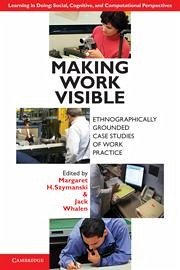
An overview of Xerox's social science tradition, with detailed case studies that show how client engagement was conducted over time.
Andere Kunden interessierten sich auch für
Amos ObiThe Secrets to Visible & Viral Online Presence47,99 €
Ernesto GoreHacer visible lo invisible15,99 €
Christopher SmithReshaping Work45,99 €
Camb Handbk Culture Organizat Work115,99 €
Corporate Social Responsibility42,99 €
Andrew CraneCorporations and Citizenship48,99 €
David H. CropleyThe Psychology of Innovation in Organizations114,99 €-
-
-
An overview of Xerox's social science tradition, with detailed case studies that show how client engagement was conducted over time.
Produktdetails
- Produktdetails
- Verlag: Cambridge University Press
- Seitenzahl: 406
- Erscheinungstermin: 16. Juni 2011
- Englisch
- Abmessung: 235mm x 157mm x 26mm
- Gewicht: 736g
- ISBN-13: 9780521190725
- ISBN-10: 052119072X
- Artikelnr.: 32908649
- Herstellerkennzeichnung
- Libri GmbH
- Europaallee 1
- 36244 Bad Hersfeld
- gpsr@libri.de
- Verlag: Cambridge University Press
- Seitenzahl: 406
- Erscheinungstermin: 16. Juni 2011
- Englisch
- Abmessung: 235mm x 157mm x 26mm
- Gewicht: 736g
- ISBN-13: 9780521190725
- ISBN-10: 052119072X
- Artikelnr.: 32908649
- Herstellerkennzeichnung
- Libri GmbH
- Europaallee 1
- 36244 Bad Hersfeld
- gpsr@libri.de
Introduction Margaret H. Szymanski and Jack Whalen; Part I. Work Practice
Study in Historical Context: 1. Work practice and technology: a
retrospective Lucy Suchman; 2. Engineering investigations: what is made
visible in making work visible? Wes Sharrock and Graham Button; Part II.
Applying Work Practice Methods: 3. Uncovering the unremarkable Peter
Tolmie; 4. Work practices to understand the implications of nascent
technology Francoise Brun-Cottan and Patricia Wall; 5. Tokyo to go: using
field studies to inform the design of a mobile leisure guide for Japanese
youth Diane J. Schiano and Victoria Bellotti; Part III. Practices around
Documents: 6. Exploring documents and the future of work Jennifer Watts
Englert, Mary Ann Sprague, Patricia Wall, Catherine McCorkindale, Lisa
Purvis and Gabriele McLaughlin; 7. New ways of working: the implications of
work practice transitions Mary Ann Sprague, Nathaniel Martin and Johannes
A. Koomen; 8. Behind the scenes: the business side of medical records
Nathaniel Martin and Patricia Wall; 9. Seeing the right colour: technical
and practical solutions to the problem of accurate colour reproduction in
the digital print industry Tommaso Colombino, David Martin, Jacki O'Neill,
Mary Ann Sprague, Jennifer Watts-Perotti, Jutta Willamowski, Frederic
Roulland and Antonietta Grasso; Part IV. The Customer Front: 10. Integrated
customer service: re-inventing a workscape Jack Whalen and Marilyn Whalen;
11. Interactions at a reprographics store Erik Vinkhuyzen; 12.
Ethnography-inspired technology for remote help-giving Jacki O'Neill, Peter
Tolmie, Stefania Castellani, Antonietta Grasso and Frederic Roulland; 13.
Sign of the times at the department store: replacing paper with electronic
signs Johannes A. Koomen; Part V. Learning and Knowledge Sharing: 14.
Communal knowledge sharing: the EUREKA story Jack Whalen and Daniel G.
Bobrow; 15. Designing document solutions for airline maintenance advisories
Patricia Wall and Johannes A. Koomen; 16. Transforming information system
design: enabling users to design Yutaka Yamauchi; 17. Rethinking how
projects are managed: meeting communication across the organizational
hierarchy Erik Vinkhuyzen and Nozomi Ikeya; Part VI. Competency Transfer:
18. Fujitsu learned ethnography from PARC: establishing the social science
center Koji Kishimoto with a preface by Jack Whalen; 19. The work practice
center of excellence Luke Plurkowski, Margaret H. Szymanski, Patricia Wall
and Johannes A. Koomen; 20. Transferring ethnographic competence: personal
reflections on the past and future of work practice analysis Brigitte
Jordan.
Study in Historical Context: 1. Work practice and technology: a
retrospective Lucy Suchman; 2. Engineering investigations: what is made
visible in making work visible? Wes Sharrock and Graham Button; Part II.
Applying Work Practice Methods: 3. Uncovering the unremarkable Peter
Tolmie; 4. Work practices to understand the implications of nascent
technology Francoise Brun-Cottan and Patricia Wall; 5. Tokyo to go: using
field studies to inform the design of a mobile leisure guide for Japanese
youth Diane J. Schiano and Victoria Bellotti; Part III. Practices around
Documents: 6. Exploring documents and the future of work Jennifer Watts
Englert, Mary Ann Sprague, Patricia Wall, Catherine McCorkindale, Lisa
Purvis and Gabriele McLaughlin; 7. New ways of working: the implications of
work practice transitions Mary Ann Sprague, Nathaniel Martin and Johannes
A. Koomen; 8. Behind the scenes: the business side of medical records
Nathaniel Martin and Patricia Wall; 9. Seeing the right colour: technical
and practical solutions to the problem of accurate colour reproduction in
the digital print industry Tommaso Colombino, David Martin, Jacki O'Neill,
Mary Ann Sprague, Jennifer Watts-Perotti, Jutta Willamowski, Frederic
Roulland and Antonietta Grasso; Part IV. The Customer Front: 10. Integrated
customer service: re-inventing a workscape Jack Whalen and Marilyn Whalen;
11. Interactions at a reprographics store Erik Vinkhuyzen; 12.
Ethnography-inspired technology for remote help-giving Jacki O'Neill, Peter
Tolmie, Stefania Castellani, Antonietta Grasso and Frederic Roulland; 13.
Sign of the times at the department store: replacing paper with electronic
signs Johannes A. Koomen; Part V. Learning and Knowledge Sharing: 14.
Communal knowledge sharing: the EUREKA story Jack Whalen and Daniel G.
Bobrow; 15. Designing document solutions for airline maintenance advisories
Patricia Wall and Johannes A. Koomen; 16. Transforming information system
design: enabling users to design Yutaka Yamauchi; 17. Rethinking how
projects are managed: meeting communication across the organizational
hierarchy Erik Vinkhuyzen and Nozomi Ikeya; Part VI. Competency Transfer:
18. Fujitsu learned ethnography from PARC: establishing the social science
center Koji Kishimoto with a preface by Jack Whalen; 19. The work practice
center of excellence Luke Plurkowski, Margaret H. Szymanski, Patricia Wall
and Johannes A. Koomen; 20. Transferring ethnographic competence: personal
reflections on the past and future of work practice analysis Brigitte
Jordan.
Introduction Margaret H. Szymanski and Jack Whalen; Part I. Work Practice
Study in Historical Context: 1. Work practice and technology: a
retrospective Lucy Suchman; 2. Engineering investigations: what is made
visible in making work visible? Wes Sharrock and Graham Button; Part II.
Applying Work Practice Methods: 3. Uncovering the unremarkable Peter
Tolmie; 4. Work practices to understand the implications of nascent
technology Francoise Brun-Cottan and Patricia Wall; 5. Tokyo to go: using
field studies to inform the design of a mobile leisure guide for Japanese
youth Diane J. Schiano and Victoria Bellotti; Part III. Practices around
Documents: 6. Exploring documents and the future of work Jennifer Watts
Englert, Mary Ann Sprague, Patricia Wall, Catherine McCorkindale, Lisa
Purvis and Gabriele McLaughlin; 7. New ways of working: the implications of
work practice transitions Mary Ann Sprague, Nathaniel Martin and Johannes
A. Koomen; 8. Behind the scenes: the business side of medical records
Nathaniel Martin and Patricia Wall; 9. Seeing the right colour: technical
and practical solutions to the problem of accurate colour reproduction in
the digital print industry Tommaso Colombino, David Martin, Jacki O'Neill,
Mary Ann Sprague, Jennifer Watts-Perotti, Jutta Willamowski, Frederic
Roulland and Antonietta Grasso; Part IV. The Customer Front: 10. Integrated
customer service: re-inventing a workscape Jack Whalen and Marilyn Whalen;
11. Interactions at a reprographics store Erik Vinkhuyzen; 12.
Ethnography-inspired technology for remote help-giving Jacki O'Neill, Peter
Tolmie, Stefania Castellani, Antonietta Grasso and Frederic Roulland; 13.
Sign of the times at the department store: replacing paper with electronic
signs Johannes A. Koomen; Part V. Learning and Knowledge Sharing: 14.
Communal knowledge sharing: the EUREKA story Jack Whalen and Daniel G.
Bobrow; 15. Designing document solutions for airline maintenance advisories
Patricia Wall and Johannes A. Koomen; 16. Transforming information system
design: enabling users to design Yutaka Yamauchi; 17. Rethinking how
projects are managed: meeting communication across the organizational
hierarchy Erik Vinkhuyzen and Nozomi Ikeya; Part VI. Competency Transfer:
18. Fujitsu learned ethnography from PARC: establishing the social science
center Koji Kishimoto with a preface by Jack Whalen; 19. The work practice
center of excellence Luke Plurkowski, Margaret H. Szymanski, Patricia Wall
and Johannes A. Koomen; 20. Transferring ethnographic competence: personal
reflections on the past and future of work practice analysis Brigitte
Jordan.
Study in Historical Context: 1. Work practice and technology: a
retrospective Lucy Suchman; 2. Engineering investigations: what is made
visible in making work visible? Wes Sharrock and Graham Button; Part II.
Applying Work Practice Methods: 3. Uncovering the unremarkable Peter
Tolmie; 4. Work practices to understand the implications of nascent
technology Francoise Brun-Cottan and Patricia Wall; 5. Tokyo to go: using
field studies to inform the design of a mobile leisure guide for Japanese
youth Diane J. Schiano and Victoria Bellotti; Part III. Practices around
Documents: 6. Exploring documents and the future of work Jennifer Watts
Englert, Mary Ann Sprague, Patricia Wall, Catherine McCorkindale, Lisa
Purvis and Gabriele McLaughlin; 7. New ways of working: the implications of
work practice transitions Mary Ann Sprague, Nathaniel Martin and Johannes
A. Koomen; 8. Behind the scenes: the business side of medical records
Nathaniel Martin and Patricia Wall; 9. Seeing the right colour: technical
and practical solutions to the problem of accurate colour reproduction in
the digital print industry Tommaso Colombino, David Martin, Jacki O'Neill,
Mary Ann Sprague, Jennifer Watts-Perotti, Jutta Willamowski, Frederic
Roulland and Antonietta Grasso; Part IV. The Customer Front: 10. Integrated
customer service: re-inventing a workscape Jack Whalen and Marilyn Whalen;
11. Interactions at a reprographics store Erik Vinkhuyzen; 12.
Ethnography-inspired technology for remote help-giving Jacki O'Neill, Peter
Tolmie, Stefania Castellani, Antonietta Grasso and Frederic Roulland; 13.
Sign of the times at the department store: replacing paper with electronic
signs Johannes A. Koomen; Part V. Learning and Knowledge Sharing: 14.
Communal knowledge sharing: the EUREKA story Jack Whalen and Daniel G.
Bobrow; 15. Designing document solutions for airline maintenance advisories
Patricia Wall and Johannes A. Koomen; 16. Transforming information system
design: enabling users to design Yutaka Yamauchi; 17. Rethinking how
projects are managed: meeting communication across the organizational
hierarchy Erik Vinkhuyzen and Nozomi Ikeya; Part VI. Competency Transfer:
18. Fujitsu learned ethnography from PARC: establishing the social science
center Koji Kishimoto with a preface by Jack Whalen; 19. The work practice
center of excellence Luke Plurkowski, Margaret H. Szymanski, Patricia Wall
and Johannes A. Koomen; 20. Transferring ethnographic competence: personal
reflections on the past and future of work practice analysis Brigitte
Jordan.