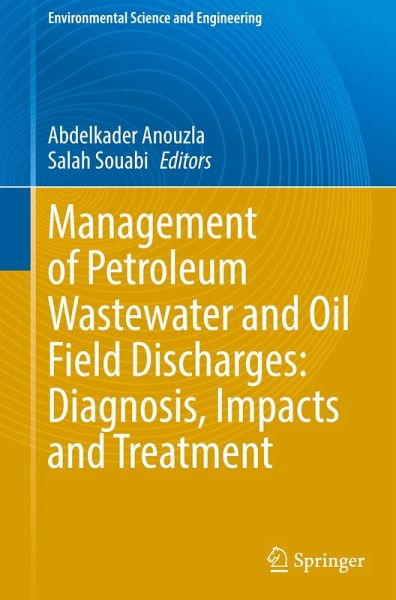
This book extensively elaborates on the most effective practices for managing liquid petroleum discharges, delving into intricate details to comprehensively understand the subject matter. Human activities hurt the environment by contaminating water, air, and soil. The expansion of the Oil Field globally has resulted in the generation of harmful waste materials that have significant consequences on the ecosystem and human health due to the functioning of manufacturing facilities. The emission of harmful pollutants into the atmosphere necessitates a decrease in pollution levels to mitigate the…mehr
This book extensively elaborates on the most effective practices for managing liquid petroleum discharges, delving into intricate details to comprehensively understand the subject matter. Human activities hurt the environment by contaminating water, air, and soil. The expansion of the Oil Field globally has resulted in the generation of harmful waste materials that have significant consequences on the ecosystem and human health due to the functioning of manufacturing facilities. The emission of harmful pollutants into the atmosphere necessitates a decrease in pollution levels to mitigate the impact of climate change, which threatens humans, animals, and vegetation. Therefore, there is a critical need to implement measures that can effectively reduce pollution levels and safeguard the environment for future generations. Although the Industrial Revolution was a great success in terms of technology, society, and the provision of multiple services, it also introduced the production of vast quantities of pollutants emitted into the air, soil, and water. Environmental regulations require adequate and appropriate treatment techniques for hydrocarbon-laden industrial discharges to avoid degradation of environmental quality. The hydrocarbon industry also generates a lot of polluted water (oily water) from Oil Field and gas production. The main pollutants are heavy metals, hydrocarbons, phenols, nitrogenous matter, oils and greases, phosphorus matter, and suspended solids. It is crucial to note that the Oil Field and gas industry, as a major water consumer, also generates a significant amount of water from Oil Field and gas extraction. Unfortunately, these industries often discharge their polluted water into the environment without any prior treatment, highlighting the urgency of the issue. Several industrial units currently use a number of physicochemical, membrane, biological, or combined processes to reduce water pollution. These processes appear to be becoming highly effective tools for purifying and recycling liquid effluents.
Artikelnr. des Verlages: 89536128, 978-3-032-04307-8
Seitenzahl: 648
Erscheinungstermin: 9. November 2025
Englisch
Abmessung: 241mm x 160mm x 41mm
Gewicht: 1070g
ISBN-13: 9783032043078
ISBN-10: 3032043077
Artikelnr.: 75013130
Herstellerkennzeichnung
Springer-Verlag GmbH
Tiergartenstr. 17
69121 Heidelberg
ProductSafety@springernature.com
Autorenporträt
Dr. Abdelkader Anouzla received his Ph.D. in Science & Technology at Hassan II University -Faculty of Science and Technology Mohammedia, specializing in water treatment. Dr. Abdelkader ANOUZLA has published almost 100 peer-reviewed articles and twenty books. As well as being a guest speaker at several conferences, he has also published numerous proceedings.He has experience in water and wastewater, solid waste management, environmental chemistry, pollutants in soil, study and characterization of waste, recycling, and reuse of waste to produce new materials, and air pollution. Anouzla conducts research in the areas of water and waste treatment, wastewater treatment plant operation, leachate discharge treatment, solid waste sorting, technical landfill management, and composting of solid waste and sludge from wastewater treatment plants, the Algae as a Natural Solution for Water-Food-Energy nexus and Microplastic pollution in the environment, digitalization in the water sector, Saving water in business and irrigation, nitrogen pollution, A Sustainable Bioenergy. Dr Salah Souabi Dr Salah Souabi is a professor at the Process and Environmental Engineering Laboratory, Faculty of Sciences and Technologies Mohammedia, Hassan II University of Casablanca, Morocco. He holds a Ph.D. in Chemistry and Microbiology of water from the University of Poitiers, France, and a Ph.D. in water treatment from the University of Moulay Ismail Maknès, Morocco. He has adequate experience in water, wastewater, waste management, and environmental pollution, including executing various R&D projects. He has supervised 28 doctoral students for the award of Ph. D. degrees in water, wastewater treatment, environmental pollution, solid waste management, and operation of plants for wastewater treatment and sustainability. He has published 157 peer-reviewed articles, 30 book chapters, ten edited books, and 310 communications. Prof. Salah Souabi is also a reviewer of scientific journals and a member of the scientific committee of international conferences in addition to 9 edited books. He has visited and delivered invited lectures at different institutes/universities in Morocco and abroad in various countries. Dr. Salah Souabi contribution to the state of the art has been significant in many different specialty areas, including water and waste treatment, wastewater treatment plant operation, leachate discharge treatment, solid waste sorting, technical landfill management, composting of solid waste and sludge from wastewater treatment plants, nitrogen pollution. Prof. Salah Souabi has been helping various provincial governments and industries provide wastewater collection and treatment solutions.
Inhaltsangabe
1. Water Consumption, Wastewater Prediction, Regulations.- 2.Wastewater Treatment: Using AI and Response Surface Methodology to Predict and Optimize.- 3. Treatment of petroleum effluents and effects on the environment.- 4. Oil Field Discharges and Their Impact on Socio-Economic Activities.- 5: AI Technologies for Treating Petroleum Wastewater.- 6-Upstream actions to reduce pollution and recover waste using various techniques: recovery of hydrocarbons by natural or artificial flotation.- 7: Treatment of water contaminated by petroleum products through coagulation and flocculation.- 8: Electrocoagulation process for the treatment of petroleum discharges.- 9. Treatment of petroleum industry effluents by membrane process alone or combined with activated sludge.- 10. Bio-remediation Treatment of Petroleum Wastewater.- 11. Study of the Efficiency of Activated Sludge Treatment Methods.- 12. Treatment of Oil Field Discharges with Freeze-Dried Bacteria, Hydrocarbon Clast Bacteria.- 13. Study of flotation treatment combined with biological treatment.- 14. Water recycling at oil field industry plants.- 15. Treatment methods, xenobiotic composition, human exposure pathways, health and environmental consequences of petrochemical wastewater discharge in the Niger Delta region of Nigeria.- 16. Treatment Treatment of petroleum wastewater by using photochemical oxidation: a case study.- 17. Membrane processes or in conjunction with activated sludge methodologies.- 18. Eco-efficiency and Eco-design for Good Oil Field Waste Management.- 19-Petroleum waste treatment with SBR.- 20. Combined Treatment: Coagulation-Flocculation and Membrane Bioreactor.- 21. Study of pollutant accumulation in sludge produced during treatment.- 22. Investigation of Academic Trends on ISO 26000 with NMF Algorithm and Bibliometric Analysis.- 23. Good practices for the sound management of Oil Field discharges through the application of the ISO14001, 9001, 45000, and 50000 management systems.
1. Water Consumption, Wastewater Prediction, Regulations.- 2.Wastewater Treatment: Using AI and Response Surface Methodology to Predict and Optimize.- 3. Treatment of petroleum effluents and effects on the environment.- 4. Oil Field Discharges and Their Impact on Socio-Economic Activities.- 5: AI Technologies for Treating Petroleum Wastewater.- 6-Upstream actions to reduce pollution and recover waste using various techniques: recovery of hydrocarbons by natural or artificial flotation.- 7: Treatment of water contaminated by petroleum products through coagulation and flocculation.- 8: Electrocoagulation process for the treatment of petroleum discharges.- 9. Treatment of petroleum industry effluents by membrane process alone or combined with activated sludge.- 10. Bio-remediation Treatment of Petroleum Wastewater.- 11. Study of the Efficiency of Activated Sludge Treatment Methods.- 12. Treatment of Oil Field Discharges with Freeze-Dried Bacteria, Hydrocarbon Clast Bacteria.- 13. Study of flotation treatment combined with biological treatment.- 14. Water recycling at oil field industry plants.- 15. Treatment methods, xenobiotic composition, human exposure pathways, health and environmental consequences of petrochemical wastewater discharge in the Niger Delta region of Nigeria.- 16. Treatment Treatment of petroleum wastewater by using photochemical oxidation: a case study.- 17. Membrane processes or in conjunction with activated sludge methodologies.- 18. Eco-efficiency and Eco-design for Good Oil Field Waste Management.- 19-Petroleum waste treatment with SBR.- 20. Combined Treatment: Coagulation-Flocculation and Membrane Bioreactor.- 21. Study of pollutant accumulation in sludge produced during treatment.- 22. Investigation of Academic Trends on ISO 26000 with NMF Algorithm and Bibliometric Analysis.- 23. Good practices for the sound management of Oil Field discharges through the application of the ISO14001, 9001, 45000, and 50000 management systems.
Es gelten unsere Allgemeinen Geschäftsbedingungen: www.buecher.de/agb
Impressum
www.buecher.de ist ein Internetauftritt der buecher.de internetstores GmbH
Geschäftsführung: Monica Sawhney | Roland Kölbl | Günter Hilger
Sitz der Gesellschaft: Batheyer Straße 115 - 117, 58099 Hagen
Postanschrift: Bürgermeister-Wegele-Str. 12, 86167 Augsburg
Amtsgericht Hagen HRB 13257
Steuernummer: 321/5800/1497
USt-IdNr: DE450055826