Bureaucracies, including large corporations and governmental agencies, are based on hierarchy and prone to secrecy. They encourage highly specialized forms of knowledge and structure themselves in compartmentalized ways. In stark contrast, environmental problems cut across all artificial divisions and boundaries. Managing Leviathan illustrates the nature of environmental problems from genetically modified crops to climate change, from urban sprawl to toxic chemicals to trace pharmaceuticals in our water supply. Understanding these problems, and how they might be resolved, requires that we…mehr
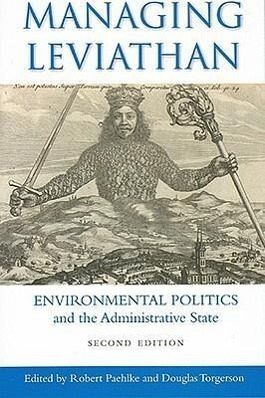
Bureaucracies, including large corporations and governmental agencies, are based on hierarchy and prone to secrecy. They encourage highly specialized forms of knowledge and structure themselves in compartmentalized ways. In stark contrast, environmental problems cut across all artificial divisions and boundaries. Managing Leviathan illustrates the nature of environmental problems from genetically modified crops to climate change, from urban sprawl to toxic chemicals to trace pharmaceuticals in our water supply. Understanding these problems, and how they might be resolved, requires that we transcend the divisions of government, economy, and knowledge. Solutions often also require the mobilization of citizen knowledge and values. Are governments and bureaucracies up to the complex task? How might they adapt to be better suited to meet the new environmental challenges that continuously arise? This extensively revised edition of Managing Leviathan expands from a North American to a global perspective and includes new articles on both European and Australian experiences as well as on transnational environmental issues. The overall pattern is remarkably clear: environmental administration demands integrative thinking and new forms of direct public involvement in governance.
Robert Paehlke is Professor of Environmental and Resource Studies at Trent University. He has previously authored Environmentalism and the Future of Progressive Politics (Yale University Press, 1989 and 1991) and Democracy's Dilemma: Environment, Social Equity and the Global Economy (MIT Press, 2003 and 2004). Douglas Torgerson is Professor and Director, Centre for Theory, Culture and Politics, at Trent University. He is the author of The Promise of Green Politics: Environmentalism and the Public Sphere (Duke University Press, 1999) and past editor of the journal Policy Sciences.
Inhaltsangabe
Acknowledgements Notes on Contributors Preface to the Second Edition Preface to the First Edition Part I: The Environment as an Administrative Problem 1. Environmental Administration: Revising the Agenda of Inquiry and Practice Douglas Torgerson and Robert Paehlke 2. Obsolescent Leviathan: Problems of Order in Administrative Thought Douglas Torgerson 3. Democracy and Environmentalism: Opening a Door to the Administrative State? Robert Paehlke Part II: Techniques and Processes of Environmental Administration 4. Ecological Reason in Administration: Environmental Impact Assessment and Green Politics Robert V. Bartlett 5. Environmental Regulation and Risk-Benefit Analysis: From Technical to Deliberative Policy Making Frank Fischer 6. Designs for Environmental Discourse Revisited: A Greener Administrative State? John S. Dryzek 7. The Ambivalence of Discourse: Beyond the Administrative Mind? Douglas Torgerson Part III: The Politics of Environmental Administration 8. Class, Place, and Citizenship: The Changing Dynamics of Environmental Protection Ted Schrecker 9. We Just Don't Know: Lessons about Complexity and Uncertainty in Canadian Environmental Politics Robert Gibson 10. Environmental Politics and Policy Professionalism: Agenda-Setting, Problem Definition, and Epistemology Douglas Torgerson 11. Depoliticizing Environmental Politics: Sustainable Development in Norway Ingerid S. Straume 12. Democratic Deliberation and Environmental Policy: Opportunities and Barriers in Britain Graham Smith 13. Outside the State: Australian Green Politics and the Public Inquiry into Uranium Timothy Doyle 14. Participation and Agency: Hybrid Identities in the European Quest for Sustainable Development Andrew Jamison 15. Responses to Environmental Threats in an Age of Globalization Jennifer Clapp 16. Green Governance and the Green State: Capacity Building as a Political Project Peter Christoff Conclusion 17. Environmental Politics and the Administrative State Robert Paehlke and Douglas Torgerson Index
Acknowledgements Notes on Contributors Preface to the Second Edition Preface to the First Edition Part I: The Environment as an Administrative Problem 1. Environmental Administration: Revising the Agenda of Inquiry and Practice Douglas Torgerson and Robert Paehlke 2. Obsolescent Leviathan: Problems of Order in Administrative Thought Douglas Torgerson 3. Democracy and Environmentalism: Opening a Door to the Administrative State? Robert Paehlke Part II: Techniques and Processes of Environmental Administration 4. Ecological Reason in Administration: Environmental Impact Assessment and Green Politics Robert V. Bartlett 5. Environmental Regulation and Risk-Benefit Analysis: From Technical to Deliberative Policy Making Frank Fischer 6. Designs for Environmental Discourse Revisited: A Greener Administrative State? John S. Dryzek 7. The Ambivalence of Discourse: Beyond the Administrative Mind? Douglas Torgerson Part III: The Politics of Environmental Administration 8. Class, Place, and Citizenship: The Changing Dynamics of Environmental Protection Ted Schrecker 9. We Just Don't Know: Lessons about Complexity and Uncertainty in Canadian Environmental Politics Robert Gibson 10. Environmental Politics and Policy Professionalism: Agenda-Setting, Problem Definition, and Epistemology Douglas Torgerson 11. Depoliticizing Environmental Politics: Sustainable Development in Norway Ingerid S. Straume 12. Democratic Deliberation and Environmental Policy: Opportunities and Barriers in Britain Graham Smith 13. Outside the State: Australian Green Politics and the Public Inquiry into Uranium Timothy Doyle 14. Participation and Agency: Hybrid Identities in the European Quest for Sustainable Development Andrew Jamison 15. Responses to Environmental Threats in an Age of Globalization Jennifer Clapp 16. Green Governance and the Green State: Capacity Building as a Political Project Peter Christoff Conclusion 17. Environmental Politics and the Administrative State Robert Paehlke and Douglas Torgerson Index
Es gelten unsere Allgemeinen Geschäftsbedingungen: www.buecher.de/agb
Impressum
www.buecher.de ist ein Internetauftritt der buecher.de internetstores GmbH
Geschäftsführung: Monica Sawhney | Roland Kölbl | Günter Hilger
Sitz der Gesellschaft: Batheyer Straße 115 - 117, 58099 Hagen
Postanschrift: Bürgermeister-Wegele-Str. 12, 86167 Augsburg
Amtsgericht Hagen HRB 13257
Steuernummer: 321/5800/1497
USt-IdNr: DE450055826