
Andere Kunden interessierten sich auch für
 MOLAR DISTALIZATION IN ORTHODONTICS40,99 €
 Molar Distalization68,99 €
 MOLAR DISTALIZATION40,99 €
 Molar Distalization60,99 €
 A SYSTEMATIC REVIEW29,99 €
 Mandibular Molar Protraction Strategies in Contemporary Orthodontics29,99 €
 Molar Distalization in Orthodontics56,99 €


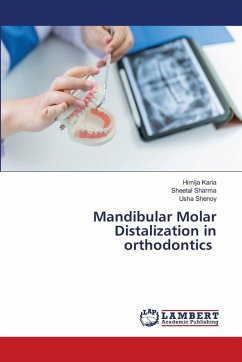
Mandibular molar distalization is a non-extraction orthodontic technique aimed at correcting Class III malocclusion, crowding, and aesthetic concerns by moving mandibular molars posteriorly. It requires precise diagnosis, treatment planning, and biomechanical control due to anatomical challenges such as limited retromolar space and dense mandibular bone. Techniques include removable and fixed appliances, skeletal anchorage with TADs or mini-plates, and clear aligners. Digital tools like CBCT enhance diagnosis and appliance design. Biomechanical strategies must prevent unwanted tipping and ensure controlled molar movement. Success depends on patient selection, anchorage control, and monitoring periodontal and TMJ responses. Long-term retention, interdisciplinary coordination, and emerging technologies like AI hold promise for improved outcomes.