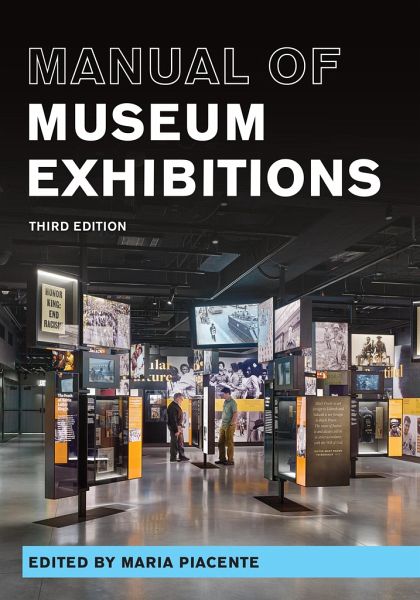
All museum activities converge in the very public forum of the exhibition. Whether large or small, exhibitions are responsible for driving museum attendance and revenue as well as showcasing new research and engaging audiences in new ideas. As museums move from a transmission to a visitor-centered model, exhibitions are more experience driven, participatory, and interactive, built around multiple perspectives and powerful storytelling. The exhibition development process is more complex than ever as audiences demand more dynamic, diverse and inclusive experiences. Museum leaders, interpretive…mehr
All museum activities converge in the very public forum of the exhibition. Whether large or small, exhibitions are responsible for driving museum attendance and revenue as well as showcasing new research and engaging audiences in new ideas. As museums move from a transmission to a visitor-centered model, exhibitions are more experience driven, participatory, and interactive, built around multiple perspectives and powerful storytelling. The exhibition development process is more complex than ever as audiences demand more dynamic, diverse and inclusive experiences. Museum leaders, interpretive planners, designers, and curators are rising to the challenges in innovative ways. This manual details the exhibition process in a straightforward way that can be easily adapted by institutions of any size. It explores the exhibition planning and development process in a wealth of detail, providing the technical and practical methodologies museum professionals need today. This 3rd edition includes many new features and expanded chapters on evaluation, virtual exhibitions multimedia, travelling exhibition, curiosity and motivation, DEAI (diversity, equity, accessibility and inclusion), while retaining the essential content related to interpretive planning, roles and responsibility, and content development. New and exciting case studies, exhibition examples, and more than 200 color photos and figures illustrate every step of the process. No museum or museum professional can be without this critical guide to an essential function.
Maria Piacente has spent more than 25 years in the global cultural sector, specializing in interpretive planning, exhibition development, and project management for cultural projects of all sizes, ranging in scope from art to science to history. Formerly the Vice President of Exhibitions and Events with Lord Cultural Resources, Maria is currently the Senior Vice President for Exhibitions and Galleries at the Royal Ontario Museum.
Inhaltsangabe
Preface Acknowledgements 1.Introduction: The Exhibition Planning Process by Maria Piacente Part I: Why? 2. Museums and their Exhibitions by Brad King 2.1. The Trust Factor 2.2. Exhibitions as Communication Platforms 2.3. Museums as Activist Institutions 2.4. The Way Forward 3. Where Do Exhibition Ideas Come From? by Barry Lord and Maria Piacente 3.1. Research-Based and Market-Driven Exhibitions 3.2. Planning for Exhibition Research Part II: Where? 4. Exhibition Facilities by Sean Stanwick and Heather Maximea 4.1. A World of Exhibition Spaces 4.2. Design Criteria for Exhibition Spaces 4.3. Exhibition Space Characteristics 4.4. Exhibition Gallery Security 4.5. Accessibility, Adjacency and Flow Part III: What? 5. Permanent Collection Displays by Katherine Molineux 5.1. Planning for Permanent Collection Exhibitions 5.2. Changing Permanent Collection Displays 5.3. Interpreting Collections 5.4. Modes of Display 6. It's Not Always About Collections by Katherine Molineux 6.1. Idea Exhibitions 6.2. Children's Exhibitions 6.3. Living History Exhibitions 6.4. Science Exhibitions 6.5. Digital Immersive Exhibitions Case Study: Weston Innovation Learning Centre, Terms of Engagement at the Ontario Science Centre, by Lesley Lewis and Kevin von Apen 7.Virtual Exhibitions by Sarah Hill 7.1. What is a Virtual Exhibition? 7.2. Why Develop a Virtual Exhibition? 7.3. Thinking About Digital Audiences 7.4. Virtual Exhibition Considerations 7.5. Virtual Exhibition Development Process 7.6. Tips for Smaller Museums that Want to go Digital Case Study: Extending the Life of a Travelling Exhibition, Museum of International Folk Art, Santa Fe, United States 8. Temporary Exhibitions by Maria Piacente and Katherine Molineux 8.1. Types of Exhibitions in a Temporary Exhibition Program 8.2. Managing a Temporary Exhibition Program 8.3. Making Space for Temporary Exhibitions 8.4. Public and Educational Programming 8.5. Marketing and Public Relations 8.6. Funding and Resourcing a Temporary Exhibition Program 8.7. Generating Revenue 9. Travelling Exhibitions by Maria Piacente 9.1. Why Create a Travelling Exhibition Program? 9.2. Strategize for Success 9.3. Staff and Professional Resources 9.4. Loan Agreements 9.5. Designing and Preparing an Exhibition for Travel 9.6. Managing the Tour 9.7. Borrowers and Organizers Case Study: Natural History Museum London's Touring Exhibition Program, An Interview with Jan English, Head of Touring Exhibitions Interview: Travelling Exhibitions in a Changing World, with Antonio Rodriguez, Chairman of the Board, International Committee for Exhibition Exchange (ICEE) Part IV: Who? 10. Exhibitions and DEAI by Maria Piacente and Karen Carter 10.1. Implications for Exhibitions 10.2. Reflections: Fulfillment of Our Promise Case Study: Activating Change: DEAI, Community and Evaluation, An Interview with Cheryl Blackman, Director of Museums and Heritage Services for the City of Toronto, Canada 11. Curiosity and Motivation by Shiralee Hudson Hill and Barbara Soren 11.1. Cultivating Curiosity and Activating Change 11.2. Learning and Exhibitions 11.3. Understanding Audience Experiences, Motivations, and Preferences in Exhibitions 12. Evaluation 12.1. Measuring Success by Gail Lord 12.2. Before, During, and After: Front-End, Formative, Remedial and Summative 12.3. Evaluation by Duncan Grewcock 12.4. Qualitative and Quantitative Audience by Barbara Soren and Jackie Armstrong Case Study: University of Michigan Museum of Natural History by Barbara Soren Part V: How? 13. Who is involved in the Exhibition Process? by Maria Piacente 13.1. Roles and Responsibilities 13.2. Teams and Committees 13.3. Contracting Expertise 13.4. Making Decisions Case Study: Oakland Museum of California Exhibition Process with Valerie Huaco Case Study: Roles and Responsibilities in a Small Museum: The Central Bank Museum of Trinidad and Tobago 14. Preparing the Exhibition Brief by Maria Piacente 14.1. Formulating the Exhibition Concept 14.2. Exhibition Brief Case Study: Canada Day 1 Travelling Exhibition 15. Interpretive Planning by Maria Piacente 15.1. Pre-Planning, Research and Visioning 15.2. Interpretive Strategy 15.3. Organizational and Thematic Frameworks 15.4. Organizational and Thematic Frameworks from around the World 15.5. Communication Objectives 15.6. Interpretive Plan Case Study: University of Michigan Museum of Natural History, Exploring Michigan Case Study: Interpretive Planning for the Capitol Visitor Center, Exhibition Hall 16. Content Development by Lisa Wright 16.1. Research Planning 16.2. Collections Research and Selection 16.3. Exhibition Text by Patchen Barss 16.4. Image Research and Procurement 16.5. Hands-On Exhibits, Models, and Dioramas 16.6. Multimedia Exhibits 16.7. Subject Matter Experts Case Study: Working with Subject Matter Experts: Canadian Museum of Immigration at Pier 21 Case Study: Creating with Community: Bunjilaka Aboriginal Culture Center Case Study: Indigenous-Led Design and Content Development: Canada's Diversity Gardens 17. Design by Yvonne Tang and James Bruer 17.1. Exhibition Design 17.2. Exhibition Display Cases by Mike Chaplin 17.3. Lighting Design by Kevin Shaw 17.4. Green Design Case Study: Exhibitions and Museums
Preface Acknowledgements 1.Introduction: The Exhibition Planning Process by Maria Piacente Part I: Why? 2. Museums and their Exhibitions by Brad King 2.1. The Trust Factor 2.2. Exhibitions as Communication Platforms 2.3. Museums as Activist Institutions 2.4. The Way Forward 3. Where Do Exhibition Ideas Come From? by Barry Lord and Maria Piacente 3.1. Research-Based and Market-Driven Exhibitions 3.2. Planning for Exhibition Research Part II: Where? 4. Exhibition Facilities by Sean Stanwick and Heather Maximea 4.1. A World of Exhibition Spaces 4.2. Design Criteria for Exhibition Spaces 4.3. Exhibition Space Characteristics 4.4. Exhibition Gallery Security 4.5. Accessibility, Adjacency and Flow Part III: What? 5. Permanent Collection Displays by Katherine Molineux 5.1. Planning for Permanent Collection Exhibitions 5.2. Changing Permanent Collection Displays 5.3. Interpreting Collections 5.4. Modes of Display 6. It's Not Always About Collections by Katherine Molineux 6.1. Idea Exhibitions 6.2. Children's Exhibitions 6.3. Living History Exhibitions 6.4. Science Exhibitions 6.5. Digital Immersive Exhibitions Case Study: Weston Innovation Learning Centre, Terms of Engagement at the Ontario Science Centre, by Lesley Lewis and Kevin von Apen 7.Virtual Exhibitions by Sarah Hill 7.1. What is a Virtual Exhibition? 7.2. Why Develop a Virtual Exhibition? 7.3. Thinking About Digital Audiences 7.4. Virtual Exhibition Considerations 7.5. Virtual Exhibition Development Process 7.6. Tips for Smaller Museums that Want to go Digital Case Study: Extending the Life of a Travelling Exhibition, Museum of International Folk Art, Santa Fe, United States 8. Temporary Exhibitions by Maria Piacente and Katherine Molineux 8.1. Types of Exhibitions in a Temporary Exhibition Program 8.2. Managing a Temporary Exhibition Program 8.3. Making Space for Temporary Exhibitions 8.4. Public and Educational Programming 8.5. Marketing and Public Relations 8.6. Funding and Resourcing a Temporary Exhibition Program 8.7. Generating Revenue 9. Travelling Exhibitions by Maria Piacente 9.1. Why Create a Travelling Exhibition Program? 9.2. Strategize for Success 9.3. Staff and Professional Resources 9.4. Loan Agreements 9.5. Designing and Preparing an Exhibition for Travel 9.6. Managing the Tour 9.7. Borrowers and Organizers Case Study: Natural History Museum London's Touring Exhibition Program, An Interview with Jan English, Head of Touring Exhibitions Interview: Travelling Exhibitions in a Changing World, with Antonio Rodriguez, Chairman of the Board, International Committee for Exhibition Exchange (ICEE) Part IV: Who? 10. Exhibitions and DEAI by Maria Piacente and Karen Carter 10.1. Implications for Exhibitions 10.2. Reflections: Fulfillment of Our Promise Case Study: Activating Change: DEAI, Community and Evaluation, An Interview with Cheryl Blackman, Director of Museums and Heritage Services for the City of Toronto, Canada 11. Curiosity and Motivation by Shiralee Hudson Hill and Barbara Soren 11.1. Cultivating Curiosity and Activating Change 11.2. Learning and Exhibitions 11.3. Understanding Audience Experiences, Motivations, and Preferences in Exhibitions 12. Evaluation 12.1. Measuring Success by Gail Lord 12.2. Before, During, and After: Front-End, Formative, Remedial and Summative 12.3. Evaluation by Duncan Grewcock 12.4. Qualitative and Quantitative Audience by Barbara Soren and Jackie Armstrong Case Study: University of Michigan Museum of Natural History by Barbara Soren Part V: How? 13. Who is involved in the Exhibition Process? by Maria Piacente 13.1. Roles and Responsibilities 13.2. Teams and Committees 13.3. Contracting Expertise 13.4. Making Decisions Case Study: Oakland Museum of California Exhibition Process with Valerie Huaco Case Study: Roles and Responsibilities in a Small Museum: The Central Bank Museum of Trinidad and Tobago 14. Preparing the Exhibition Brief by Maria Piacente 14.1. Formulating the Exhibition Concept 14.2. Exhibition Brief Case Study: Canada Day 1 Travelling Exhibition 15. Interpretive Planning by Maria Piacente 15.1. Pre-Planning, Research and Visioning 15.2. Interpretive Strategy 15.3. Organizational and Thematic Frameworks 15.4. Organizational and Thematic Frameworks from around the World 15.5. Communication Objectives 15.6. Interpretive Plan Case Study: University of Michigan Museum of Natural History, Exploring Michigan Case Study: Interpretive Planning for the Capitol Visitor Center, Exhibition Hall 16. Content Development by Lisa Wright 16.1. Research Planning 16.2. Collections Research and Selection 16.3. Exhibition Text by Patchen Barss 16.4. Image Research and Procurement 16.5. Hands-On Exhibits, Models, and Dioramas 16.6. Multimedia Exhibits 16.7. Subject Matter Experts Case Study: Working with Subject Matter Experts: Canadian Museum of Immigration at Pier 21 Case Study: Creating with Community: Bunjilaka Aboriginal Culture Center Case Study: Indigenous-Led Design and Content Development: Canada's Diversity Gardens 17. Design by Yvonne Tang and James Bruer 17.1. Exhibition Design 17.2. Exhibition Display Cases by Mike Chaplin 17.3. Lighting Design by Kevin Shaw 17.4. Green Design Case Study: Exhibitions and Museums
Es gelten unsere Allgemeinen Geschäftsbedingungen: www.buecher.de/agb
Impressum
www.buecher.de ist ein Internetauftritt der buecher.de internetstores GmbH
Geschäftsführung: Monica Sawhney | Roland Kölbl | Günter Hilger
Sitz der Gesellschaft: Batheyer Straße 115 - 117, 58099 Hagen
Postanschrift: Bürgermeister-Wegele-Str. 12, 86167 Augsburg
Amtsgericht Hagen HRB 13257
Steuernummer: 321/5800/1497
USt-IdNr: DE450055826