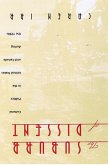
Manufacturing Dissent reveals how the early twentieth century's 'lost generation' of writers, artists, and intellectuals combatted disinformation and 'fake news.' Cultural historians, literary scholars, and those interested in the power of literature to encourage critical thought and promote democracy will find this book of particular value. The book is interdisciplinary, focusing on the rich literary and artistic period of American modernism as a new site for examining the psychology of public opinion and the role of cognition in the formation of beliefs. The emerging twentieth-century…mehr
Manufacturing Dissent reveals how the early twentieth century's 'lost generation' of writers, artists, and intellectuals combatted disinformation and 'fake news.' Cultural historians, literary scholars, and those interested in the power of literature to encourage critical thought and promote democracy will find this book of particular value. The book is interdisciplinary, focusing on the rich literary and artistic period of American modernism as a new site for examining the psychology of public opinion and the role of cognition in the formation of beliefs. The emerging twentieth-century neuroscience of 'plasticity,' habit, and attention that Harvard psychologist William James helped pioneer becomes fertile ground for an experimental variety of literature that Stephanie L. Hawkins argues is 'mind science' in its own right. Writers as diverse as F. Scott Fitzgerald, Zora Neale Hurston, Ernest Hemingway, and Gertrude Stein sought a public-spirited critique of propaganda and disinformation that expresses their civic engagement in promoting democratic dissent.
Stephanie L. Hawkins is an associate professor of late nineteenth- and early twentieth-century American literature and culture at the University of North Texas and former editor-in-chief of Studies in the Novel. The author of American Iconographic: National Geographic, Global Culture, and the Visual Imagination (University of Virginia Press, 2010), her scholarly work focuses on the interface between public attitudes, literary and visual representation, and institutional rhetorics. Her essays on American modernism have appeared in Modern Fiction Studies, Modernism/Modernity, The Henry James Review, Arizona Quarterly, and Texas Studies in Literature and Language. She has published scientific essays on William James and the history of neuroscience in Frontiers in Physiology and in an essay collection on the history of neuroscience published by Springer.
Inhaltsangabe
Introduction: manufacturing dissent: The 'Pound Case'; 1. Staging consent: reform modernism in Henry James and Harold Frederic; 2. In the trenches of public opinion: conversion technique and aesthetics of exposure in Ernest Hemingway and John Dos Passos; 3. World war gothic: modernism's sick souls and techniques of dissociation in F. Scott Fitzgerald and Katherine Anne Porter; 4. Disgust and mental detection: converting conspi/racist thought in William Faulkner and Jean Toomer; 5. Hoodoo conversions: humor and psychological protest in Zora Neale Hurston and Gertrude Stein; Conclusion: phantom publics.
Introduction: manufacturing dissent: The 'Pound Case'; 1. Staging consent: reform modernism in Henry James and Harold Frederic; 2. In the trenches of public opinion: conversion technique and aesthetics of exposure in Ernest Hemingway and John Dos Passos; 3. World war gothic: modernism's sick souls and techniques of dissociation in F. Scott Fitzgerald and Katherine Anne Porter; 4. Disgust and mental detection: converting conspi/racist thought in William Faulkner and Jean Toomer; 5. Hoodoo conversions: humor and psychological protest in Zora Neale Hurston and Gertrude Stein; Conclusion: phantom publics.
Es gelten unsere Allgemeinen Geschäftsbedingungen: www.buecher.de/agb
Impressum
www.buecher.de ist ein Internetauftritt der buecher.de internetstores GmbH
Geschäftsführung: Monica Sawhney | Roland Kölbl | Günter Hilger
Sitz der Gesellschaft: Batheyer Straße 115 - 117, 58099 Hagen
Postanschrift: Bürgermeister-Wegele-Str. 12, 86167 Augsburg
Amtsgericht Hagen HRB 13257
Steuernummer: 321/5800/1497
USt-IdNr: DE450055826