
Manufacturing in the Digital Age
Herausgeber: Pradhan, Mohan Kumar; Shanmugam, Ragavanantham; Gaikwad, Mahendra U.
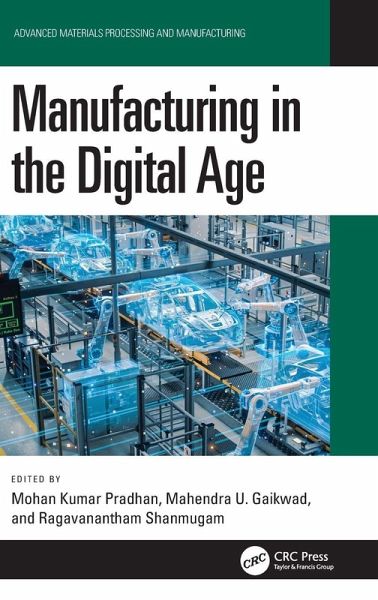
Manufacturing in the Digital Age
Herausgeber: Pradhan, Mohan Kumar; Shanmugam, Ragavanantham; Gaikwad, Mahendra U.
- Gebundenes Buch
- Merkliste
- Auf die Merkliste
- Bewerten Bewerten
- Teilen
- Produkt teilen
- Produkterinnerung
- Produkterinnerung
This book covers manufacturing in the current context of Industry 4.0 and the impending era of Industry 5.0 exploring the path established by the manufacturing sector including developments, constraints, difficulties, and solutions, underlining the importance of sustainability.
Andere Kunden interessierten sich auch für
 Namrata GangilComposite Fabrication on Age-Hardened Alloy using Friction Stir Processing130,99 €
 Engineering Assets and Public Infrastructures in the Age of Digitalization137,99 €
 AnonymousThe Cement Age40,99 €
 Jayshree PandyaThe Global Age113,99 €
 Digital Twinning for Discrete Manufacturing151,99 €
 Chandan Deep SinghManufacturing Competency and Strategic Success in the Automobile Industry63,99 €
 AVENUE21. Planning and Policy Considerations for an Age of Automated Mobility38,99 €
-
-
-


This book covers manufacturing in the current context of Industry 4.0 and the impending era of Industry 5.0 exploring the path established by the manufacturing sector including developments, constraints, difficulties, and solutions, underlining the importance of sustainability.
Produktdetails
- Produktdetails
- Verlag: CRC Press
- Seitenzahl: 258
- Erscheinungstermin: 27. November 2025
- Englisch
- Abmessung: 240mm x 161mm x 19mm
- Gewicht: 555g
- ISBN-13: 9781032703879
- ISBN-10: 1032703873
- Artikelnr.: 74776427
- Herstellerkennzeichnung
- Libri GmbH
- Europaallee 1
- 36244 Bad Hersfeld
- gpsr@libri.de
- Verlag: CRC Press
- Seitenzahl: 258
- Erscheinungstermin: 27. November 2025
- Englisch
- Abmessung: 240mm x 161mm x 19mm
- Gewicht: 555g
- ISBN-13: 9781032703879
- ISBN-10: 1032703873
- Artikelnr.: 74776427
- Herstellerkennzeichnung
- Libri GmbH
- Europaallee 1
- 36244 Bad Hersfeld
- gpsr@libri.de
Mohan Kumar Pradhan, M.Tech (Mechanical Engineering, REC (now NIT), Rourkela), and Ph.D. (Engineering, NIT Rourkela), is currently working as an Associate Professor in the Department of Mechanical Engineering, National Institute of Technology (NIT), Raipur - an Institute of National Importance. He previously served as an Assistant Professor in the Department of Mechanical Engineering, Maulana Azad National Institute of Technology (MANIT), Bhopal, - also an Institute of National Importance. Pradhan has over 26 years of teaching and research experience in the field of manufacturing. His areas of teaching and research include Manufacturing Technologies, Additive Manufacturing, Quality Assurance, Metrology, Tool Engineering, Metal Forming, Theory of Plasticity, Design and Manufacturing, Non-Traditional Machining, Micro-Machining, MEMS, Hybrid Machining, Composites, and Process Modelling and Optimization. Pradhan has made significant contributions to his field with over 85 international journal publications and over 80 technical papers published in conference proceedings. He has authored one book, edited two books, and edited over five conference proceedings. Additionally, he has served as a guest editor for more than five journals and contributed over 30 book chapters. He is a member of the editorial board and review panel for more than five renowned international journals. His research achievements have earned him numerous awards and honours. He has been recognised in the Web of Science Core Collection with 200 publications, an h-index of 16+, a SCOPUS h-index of 18+, and a Google Scholar h-index of 25+. Pradhan is a Chartered Engineer, a Life Fellow of the Indian Institution of Production Engineers (IIPE), a Life Member of ISTE, IACSIT, IAENG, and a Fellow (F.I.E.). Pradhan has been featured in the top 2% of world scientists list for 2021, 2022, 2023, and 2024, as prepared by a team of scientists at Stanford University in the United States. Mahendra U. Gaikwad is currently working as an Assistant Professor in the Department of Mechanical Engineering, Veermata Jijabai Technological Institute (VJTI), Mumbai, (An Autonomous Institute of the Government of Maharashtra), India. He has more than 11 years of teaching experience at UG & PG level. He obtained his B.E. in Mechanical Engineering and M.E. in Mechanical Design Engineering from the Walchand Institute of Technology, Solapur, Maharashtra, India, and Ph.D. in Mechanical Engineering from the Sathyabama Institute of Science and Technology, Chennai, Tamil Nadu, India. His current research interests include advanced manufacturing process, material characterization, surface integrity, machining of smart material alloys and optimization. He has published more than 25 articles, 3 book chapters, and edited 2 books with renowned publishers. He acted as a reviewer in more than three international journals & four international conferences. Being concerned with manufacturing research background he has undertaken industry based research projects for UG & PG students, till date he has guided more than 25 UG project groups and more than 8 PG students in his teaching career. He has received the Best Performer in Education (Teaching & Research Excellence) Award in 2022 year by Savitribai Phule Excellence Award, Pune, Maharashtra, India. He is a member of International Association of Engineers (IAENG) and lifetime member of the Quality Circle Forum of India. Ragavanantham Shanmugam, Department Chair of Engineering Technology at Fairmont State University, West Virginia, United States, is recognized for his exceptional contributions to engineering education for the underserved communities through innovative teaching, curriculum development, and student mentorship. With over 25 years of global academic experience, Shanmugam has advanced interdisciplinary learning, fostered industry partnerships, and championed diversity, equity, and inclusion in STEM. His scholarly impact includes over 575+ citations, 5 book Chapters in advanced manufacturing and pioneering research in advanced manufacturing and sustainable engineering. Awarded multiple Best Teacher honors, his leadership has inspired countless students and colleagues, embodying the values of excellence and innovation in engineering education.
Preface, Acknowledgment, Editor's Bibliography, List of Contributors,
Foreword, Chapter 1 Introduction to Manufacturing in the Digital Age 1.1
The Order from First Production to the Industrial Revolution 1.1.1
Definition and History of Manufacturing 1.1.2 Traditional Manufacturing
Processes 1.1.3 Challenges and Limitations of Traditional Manufacturing 1.2
Revolutionizing Manufacturing with Digital Transformation 1.2.1 Definition
of Digital Manufacturing 1.2.2 Key Factors of Digital Transformation in
Manufacturing 1.2.3 The Role of Industry 4.0 1.3 Key Technologies in
Digital Manufacturing 1.3.1 IoT 1.3.2 Big Data and Analytics 1.3.3 AI and
ML 1.3.4 Robotics and Automation 1.3.5 Additive Manufacturing (3D Printing)
1.3.6 Digital Twins 1.3.7 Cloud Computing 1.3.8 Cybersecurity 1.4 Impact of
Digital Manufacturing 1.4.1 On Product Development 1.4.2 On Supply Chain
Management 1.4.3 On Workforce 1.5 Case Studies and Real-World Examples
1.5.1 Success Stories from Leading Manufacturers 1.5.2 Challenges Faced and
Overcome 1.5.3 Lessons Drawn and Leading Practices 1.6 Benefits of Digital
Manufacturing 1.6.1 Increased Efficiency and Productivity 1.6.2 Cost
Reduction 1.6.3 Improved Quality and Consistency 1.6.4 Enhanced Flexibility
and Agility 1.7 Challenges and Barriers to Adoption 1.7.1 Technical
Challenges 1.7.2 Cost and Investment Considerations 1.7.3 Workforce
Resistance and Cultural Change 1.7.4 Data Privacy and Security Concerns 1.8
Future Trends in Digital Manufacturing 1.8.1 Emerging Technologies 1.8.2
Predictions for the Next Decade 1.8.3 The Role of Sustainability and Green
Manufacturing 1.9 Conclusion Chapter 2 Advancements in Industry 4.0 and
Introduction to Industry 5.0 2.1 Introduction 2.1.1 Overview of the
Industrial Revolutions 2.1.2 Introduction to I4o and I5o 2.1.3 Chapter
Objectives 2.2 Core Technologies of I4o 2.2.1 IoT 2.2.2 AI and ML 2.2.3 CPS
2.2.4 Big Data Analytics 2.2.5 Robotics and Automation 2.3 Applications and
Implications of I4o 2.3.1 Smart Factories 2.3.2 SCM 2.3.3 Predictive
Maintenance and AI in Manufacturing 2.3.4 Digital Twins 2.4 I5o: A
Human-Centric Approach 2.4.1 From Automation to Augmentation 2.4.2 Ethical
and Value-Oriented Technology in I5o 2.4.3 Resilience and Sustainability
2.4.4 Customization and Personalization 2.5 Key Technologies Enabling I5o
2.5.1 Advanced AI and Robotics 2.5.2 CPS in I5o 2.5.3 Metaverse and Virtual
Collaboration Tools 2.6 Transitioning from I4o to I5o 2.6.1 Evolutionary
Path 2.6.2 Overcoming Challenges in the Transition 2.6.3 Collaborative
Ecosystem 2.7 Case Studies and Practical Insights 2.7.1 Smart Factories in
Action 2.7.2 Personalized Manufacturing 2.8 Conclusion 2.8.1 Summary of Key
Innovations Driving I4o and I5o 2.8.2 Outlook on Future Developments in I5o
Chapter 3 Product Design and Development in the Digital Era 3.1
Introduction 3.2 Digital Design and Prototyping 3.2.1 Computer-Aided Design
(CAD) 3.2.2 Virtual Reality (VR) and Augmented Reality (AR) 3.3
Collaborative Design and Development 3.3.1 Cloud-Based Collaboration 3.3.2
Integrated Design and Development Tools 3.3.3 Communication and Messaging
Platforms 3.3.4 Project Management and Collaboration Tools 3.3.5 User
Testing and Feedback 3.3.6 Security and Access Controls 3.4 Data-Driven
Decision-Making 3.4.1 User Behavior Analysis 3.4.2 Performance Analytics
3.4.3 Iterative Design and Development 3.4.4 Predictive Analytics 3.4.5
Cost-Benefit Analysis 3.4.6 Security Analytics 3.5 Sustainability and
Efficiency 3.5.1 Green Software Engineering 3.5.2 Renewable Energy in Data
Centers 3.5.3 Life Cycle Assessment (LCA) for Digital Products 3.5.4 Agile
and DevOps for Efficiency 3.5.5 Automation and Efficiency 3.5.6 User
Experience (UX) and Performance Optimization 3.5.7 Remote Collaboration and
Sustainable Work Practices 3.5.8 Resource Efficiency in Cloud Computing 3.6
Challenges 3.6.1 Data Privacy and Security 3.6.2 Rapid Technological
Changes 3.6.3 User Experience (UX) Design Challenges 3.6.4 Artificial
Intelligence (AI) Integration Challenges 3.6.5 Positive and Negative Social
Effects 3.6.6 Skill Gaps 3.6.7 Reluctance to Change 3.7 Case Studies 3.7.1
Digital Transformation at Siemens 3.7.2 Nike's Digital Innovation 3.7.3
Ford's Electrification Strategy 3.7.4 Adobe's Creative Cloud 3.7.5
Samsung's Product Innovation 3.7.6 Nike+ 3.7.7 Starbucks' Mobile App 3.7.8
Peloton Interactive Fitness 3.7.9 HelloFresh Meal Kits 3.7.10 Netflix 3.8
Future Trends 3.8.1 Human-Centered and Inclusive Design 3.8.2 Customization
and Personalization 3.8.3 Digital Twins 3.8.4 IoT Integration 3.8.5 AR and
VR in Product Prototyping 3.8.6 Robotics and Automation 3.8.7 Biometric
Integration 3.8.8 Edge Computing in Product Functionality 3.8.9 Voice User
Interfaces (VUI) 3.8.10 Blockchain for Supply Chain Transparency 3.8.11
Emphasis on Emotional Design 3.9 Conclusions Chapter 4 Internet of Things
(IoT) in Smart Manufacturing 4.1 Introduction 4.1.1 Manufacturing 4.1.2 IoT
4.2 Application of IOT 4.2.1 Enhanced Operational Efficiency 4.2.2
Predictive Maintenance 4.2.3 Quality Improvement 4.2.4 Supply Chain
Optimization 4.2.5 Energy Efficiency 4.2.6 Customization and Flexibility
4.2.7 Innovation and Competitive Advantage 4.2.8 Data Integration and
Analytics 4.3 Digitalization of Manufacturing Processes Relies Heavily on
Internet of Things (IoT) 4.4 To Enable Real-Time Data Collection 4.5
Predictive Maintenance 4.6 Improved Supply Chain Management 4.7 Industry
4.0 and Industry 5.0 are Integrating IoT 4.8 Sensor 4.9 Devices 4.10
Networks 4.11 Conclusion Chapter 5 Sustainable Manufacturing Practices in
the Digital Age 5.1 Introduction 5.1.1 Sustainable Manufacturing in a
Digital Context 5.2 Function of Additive Manufacturing in the Digital Era
of Sustainable Manufacturing 5.3 Challenges to Implementing Sustainable
Manufacturing Practices in the Digital Age 5.4 Innovation and Technology
for Sustainability 5.5 New Developments in Digital Sustainability Trends
5.5.1 Green AI. 5.5.2 Bio-Manufacturing 5.5.3 Edge Computing 5.5.4
Decentralized Energy Grids 5.6 The Digital Transformation of Sustainability
5.6.1 Smart Factories: A Step Toward Zero Waste 5.7 The Benefits of
Sustainable Manufacturing Practices in Digital Ages 5.8 Smart
Manufacturing: The Path to Sustainability 5.9 The Future of Sustainable
Manufacturing in the Digital Age 5.10 Conclusion Chapter 6 Challenges and
Solutions of Industry 4.0 to Industry 5.0 6.1 Introduction to Industry 4.0
6.2 Challenges and Solutions in Adopting Industry 4.0 6.3 Datasets 6.4
Challenges and Solutions in Adopting Industry 5.0 6.5 Conclusions Chapter 7
Sustainable Industrial Transformation: Exploring Industry 4.0 and 5.0 7.1
Introduction 7.2 Evolution of Industrial Revolutions 7.3 Challenges of
Industry 4.0 7.4 A Strategic Method to Meet the Obstacles 7.5 Industry 5.0:
A Strategic Solution 7.6 Technological Advancements in Industry 4.0 and 5.0
7.7 Future Research Directions 7.8 Conclusion Chapter 8 Artificial Neural
Networks with Training Algorithms for Prediction of Surface Roughness in
Electrical Discharge Machining 8.1 Introduction 8.1.1 Research Novelty 8.2
Experiments and Methods 8.2.1 Experimental Set Up 8.2.2 Design of
Experiment 8.2.3 Surface Roughness 8.2.4 Artificial Neural Networks 8.2.5
ANN Training Algorithms 8.2.6 Levenberg-Marquardt Algorithm 8.2.7 Conjugate
Gradient Algorithm 8.2.8 Resilient-Backpropagation Algorithm 8.2.9
Evaluation Criteria 8.3 Results and Discussion 8.4 Conclusions Chapter 9
Effect of Performance Measures on Lean Manufacturing System Considering
Industry 4.0 9.1 Introduction 9.2 Lean Manufacturing System: An Overview
9.2.1 Machine-Level Configurations 9.2.2 System Base Configurations 9.3
Process 9.4 Changeover Time 9.5 Conclusion and Future Scope Chapter 10
Human-Machine Harmony in the Production Sector: How Automation is
Transforming Manufacturing 10.1 Introduction 10.2 Fixed Automation 10.2.1
Definition and Characteristics of Fixed Automation 10.2.2 Examples of Fixed
Automation 10.2.3 Advantages of Fixed Automation 10.2.4 Limitations of
Fixed Automation 10.3 Fluid Automation 10.3.1 Concept and Definition 10.3.2
Key Components of Fluid Automation 10.3.3 Applications of Fluid Automation
10.3.4 Advantages and Challenges of Fluid Automation 10.4 Human-Machine
Collaboration 10.4.1 Role of Automation in Repetitive and Advanced Tasks
10.4.2 Workforce Skill Requirements 10.4.3 Designing Workplaces for Safety
and Collaboration 10.5 Industry 4.0 Integration 10.5.1 Industry 4.0 Vision
and Goals 10.5.2 Importance of Interoperability 10.5.3 Real-Time
Information Sharing and Adaptability 10.6 Conclusion 10.6.1 Synergy between
Humans and Machines 10.6.2 Fluid Automation as a Path to Flexibility 10.6.3
Future Manufacturing Outlook Chapter 11 Efficient Automation Solution for
Invoice Data Extraction and Compilation: A Streamlined Approach for
Enhanced Productivity 11.1 Introduction 11.2 Introduction to Robotic
Process Automation (RPA) and its Advantages 11.3 Purpose and Significance
of the Study 11.4 Methodology 11.4.1 Overview of Selected RPA Tools (e.g.,
UiPath, Automation Anywhere) 11.4.2 Step-By-Step Explanation of the
Automation Process 11.4.3 Handling Failed Extractions 11.5 Implementation
Steps 11.6 Results and Discussion 11.6.1 Performance Metrics (Accuracy,
Time Savings) 11.6.2 Sample Outputs (e.g., Processed Invoices, Excel Data)
11.6.3 Comparative Analysis with Manual Processing Methods 11.7 Benefits of
Automation 11.8 Challenges and Limitations of Automation Systems 11.9
Challenges in Manufacturing Environments 11.10 Solutions Tailored to
Manufacturing 11.11 Conclusion Chapter 12 Modernizing and Streamlining
Vendor Records Using Robotics Process Automation for Uplifting Business
12.1 Introduction 12.1.1 Basics of Robotics Process Automation (RPA) 12.1.2
How it Works 12.1.3 Importance of RPA 12.2 Literature Review 12.2.1
Presence of RPA 12.2.2 History 12.2.3 Features and Main Characteristics
12.2.4 Types of RPA 12.2.5 Artificial Intelligence and RPA 12.3 Use Case
Example 12.3.1 Current Process Followed in the Chudekar Agro Pvt. Ltd.
Company 12.3.2 Future Changes Can be Done Using RPA 12.4 Advantages of RPA
12.5 Disadvantages Rather Challenges of RPA 12.6 Current RPA Providers 12.7
The RPA Market's Future is Fueled by Hyper Automation 12.8 Conclusion
References. Index.
Foreword, Chapter 1 Introduction to Manufacturing in the Digital Age 1.1
The Order from First Production to the Industrial Revolution 1.1.1
Definition and History of Manufacturing 1.1.2 Traditional Manufacturing
Processes 1.1.3 Challenges and Limitations of Traditional Manufacturing 1.2
Revolutionizing Manufacturing with Digital Transformation 1.2.1 Definition
of Digital Manufacturing 1.2.2 Key Factors of Digital Transformation in
Manufacturing 1.2.3 The Role of Industry 4.0 1.3 Key Technologies in
Digital Manufacturing 1.3.1 IoT 1.3.2 Big Data and Analytics 1.3.3 AI and
ML 1.3.4 Robotics and Automation 1.3.5 Additive Manufacturing (3D Printing)
1.3.6 Digital Twins 1.3.7 Cloud Computing 1.3.8 Cybersecurity 1.4 Impact of
Digital Manufacturing 1.4.1 On Product Development 1.4.2 On Supply Chain
Management 1.4.3 On Workforce 1.5 Case Studies and Real-World Examples
1.5.1 Success Stories from Leading Manufacturers 1.5.2 Challenges Faced and
Overcome 1.5.3 Lessons Drawn and Leading Practices 1.6 Benefits of Digital
Manufacturing 1.6.1 Increased Efficiency and Productivity 1.6.2 Cost
Reduction 1.6.3 Improved Quality and Consistency 1.6.4 Enhanced Flexibility
and Agility 1.7 Challenges and Barriers to Adoption 1.7.1 Technical
Challenges 1.7.2 Cost and Investment Considerations 1.7.3 Workforce
Resistance and Cultural Change 1.7.4 Data Privacy and Security Concerns 1.8
Future Trends in Digital Manufacturing 1.8.1 Emerging Technologies 1.8.2
Predictions for the Next Decade 1.8.3 The Role of Sustainability and Green
Manufacturing 1.9 Conclusion Chapter 2 Advancements in Industry 4.0 and
Introduction to Industry 5.0 2.1 Introduction 2.1.1 Overview of the
Industrial Revolutions 2.1.2 Introduction to I4o and I5o 2.1.3 Chapter
Objectives 2.2 Core Technologies of I4o 2.2.1 IoT 2.2.2 AI and ML 2.2.3 CPS
2.2.4 Big Data Analytics 2.2.5 Robotics and Automation 2.3 Applications and
Implications of I4o 2.3.1 Smart Factories 2.3.2 SCM 2.3.3 Predictive
Maintenance and AI in Manufacturing 2.3.4 Digital Twins 2.4 I5o: A
Human-Centric Approach 2.4.1 From Automation to Augmentation 2.4.2 Ethical
and Value-Oriented Technology in I5o 2.4.3 Resilience and Sustainability
2.4.4 Customization and Personalization 2.5 Key Technologies Enabling I5o
2.5.1 Advanced AI and Robotics 2.5.2 CPS in I5o 2.5.3 Metaverse and Virtual
Collaboration Tools 2.6 Transitioning from I4o to I5o 2.6.1 Evolutionary
Path 2.6.2 Overcoming Challenges in the Transition 2.6.3 Collaborative
Ecosystem 2.7 Case Studies and Practical Insights 2.7.1 Smart Factories in
Action 2.7.2 Personalized Manufacturing 2.8 Conclusion 2.8.1 Summary of Key
Innovations Driving I4o and I5o 2.8.2 Outlook on Future Developments in I5o
Chapter 3 Product Design and Development in the Digital Era 3.1
Introduction 3.2 Digital Design and Prototyping 3.2.1 Computer-Aided Design
(CAD) 3.2.2 Virtual Reality (VR) and Augmented Reality (AR) 3.3
Collaborative Design and Development 3.3.1 Cloud-Based Collaboration 3.3.2
Integrated Design and Development Tools 3.3.3 Communication and Messaging
Platforms 3.3.4 Project Management and Collaboration Tools 3.3.5 User
Testing and Feedback 3.3.6 Security and Access Controls 3.4 Data-Driven
Decision-Making 3.4.1 User Behavior Analysis 3.4.2 Performance Analytics
3.4.3 Iterative Design and Development 3.4.4 Predictive Analytics 3.4.5
Cost-Benefit Analysis 3.4.6 Security Analytics 3.5 Sustainability and
Efficiency 3.5.1 Green Software Engineering 3.5.2 Renewable Energy in Data
Centers 3.5.3 Life Cycle Assessment (LCA) for Digital Products 3.5.4 Agile
and DevOps for Efficiency 3.5.5 Automation and Efficiency 3.5.6 User
Experience (UX) and Performance Optimization 3.5.7 Remote Collaboration and
Sustainable Work Practices 3.5.8 Resource Efficiency in Cloud Computing 3.6
Challenges 3.6.1 Data Privacy and Security 3.6.2 Rapid Technological
Changes 3.6.3 User Experience (UX) Design Challenges 3.6.4 Artificial
Intelligence (AI) Integration Challenges 3.6.5 Positive and Negative Social
Effects 3.6.6 Skill Gaps 3.6.7 Reluctance to Change 3.7 Case Studies 3.7.1
Digital Transformation at Siemens 3.7.2 Nike's Digital Innovation 3.7.3
Ford's Electrification Strategy 3.7.4 Adobe's Creative Cloud 3.7.5
Samsung's Product Innovation 3.7.6 Nike+ 3.7.7 Starbucks' Mobile App 3.7.8
Peloton Interactive Fitness 3.7.9 HelloFresh Meal Kits 3.7.10 Netflix 3.8
Future Trends 3.8.1 Human-Centered and Inclusive Design 3.8.2 Customization
and Personalization 3.8.3 Digital Twins 3.8.4 IoT Integration 3.8.5 AR and
VR in Product Prototyping 3.8.6 Robotics and Automation 3.8.7 Biometric
Integration 3.8.8 Edge Computing in Product Functionality 3.8.9 Voice User
Interfaces (VUI) 3.8.10 Blockchain for Supply Chain Transparency 3.8.11
Emphasis on Emotional Design 3.9 Conclusions Chapter 4 Internet of Things
(IoT) in Smart Manufacturing 4.1 Introduction 4.1.1 Manufacturing 4.1.2 IoT
4.2 Application of IOT 4.2.1 Enhanced Operational Efficiency 4.2.2
Predictive Maintenance 4.2.3 Quality Improvement 4.2.4 Supply Chain
Optimization 4.2.5 Energy Efficiency 4.2.6 Customization and Flexibility
4.2.7 Innovation and Competitive Advantage 4.2.8 Data Integration and
Analytics 4.3 Digitalization of Manufacturing Processes Relies Heavily on
Internet of Things (IoT) 4.4 To Enable Real-Time Data Collection 4.5
Predictive Maintenance 4.6 Improved Supply Chain Management 4.7 Industry
4.0 and Industry 5.0 are Integrating IoT 4.8 Sensor 4.9 Devices 4.10
Networks 4.11 Conclusion Chapter 5 Sustainable Manufacturing Practices in
the Digital Age 5.1 Introduction 5.1.1 Sustainable Manufacturing in a
Digital Context 5.2 Function of Additive Manufacturing in the Digital Era
of Sustainable Manufacturing 5.3 Challenges to Implementing Sustainable
Manufacturing Practices in the Digital Age 5.4 Innovation and Technology
for Sustainability 5.5 New Developments in Digital Sustainability Trends
5.5.1 Green AI. 5.5.2 Bio-Manufacturing 5.5.3 Edge Computing 5.5.4
Decentralized Energy Grids 5.6 The Digital Transformation of Sustainability
5.6.1 Smart Factories: A Step Toward Zero Waste 5.7 The Benefits of
Sustainable Manufacturing Practices in Digital Ages 5.8 Smart
Manufacturing: The Path to Sustainability 5.9 The Future of Sustainable
Manufacturing in the Digital Age 5.10 Conclusion Chapter 6 Challenges and
Solutions of Industry 4.0 to Industry 5.0 6.1 Introduction to Industry 4.0
6.2 Challenges and Solutions in Adopting Industry 4.0 6.3 Datasets 6.4
Challenges and Solutions in Adopting Industry 5.0 6.5 Conclusions Chapter 7
Sustainable Industrial Transformation: Exploring Industry 4.0 and 5.0 7.1
Introduction 7.2 Evolution of Industrial Revolutions 7.3 Challenges of
Industry 4.0 7.4 A Strategic Method to Meet the Obstacles 7.5 Industry 5.0:
A Strategic Solution 7.6 Technological Advancements in Industry 4.0 and 5.0
7.7 Future Research Directions 7.8 Conclusion Chapter 8 Artificial Neural
Networks with Training Algorithms for Prediction of Surface Roughness in
Electrical Discharge Machining 8.1 Introduction 8.1.1 Research Novelty 8.2
Experiments and Methods 8.2.1 Experimental Set Up 8.2.2 Design of
Experiment 8.2.3 Surface Roughness 8.2.4 Artificial Neural Networks 8.2.5
ANN Training Algorithms 8.2.6 Levenberg-Marquardt Algorithm 8.2.7 Conjugate
Gradient Algorithm 8.2.8 Resilient-Backpropagation Algorithm 8.2.9
Evaluation Criteria 8.3 Results and Discussion 8.4 Conclusions Chapter 9
Effect of Performance Measures on Lean Manufacturing System Considering
Industry 4.0 9.1 Introduction 9.2 Lean Manufacturing System: An Overview
9.2.1 Machine-Level Configurations 9.2.2 System Base Configurations 9.3
Process 9.4 Changeover Time 9.5 Conclusion and Future Scope Chapter 10
Human-Machine Harmony in the Production Sector: How Automation is
Transforming Manufacturing 10.1 Introduction 10.2 Fixed Automation 10.2.1
Definition and Characteristics of Fixed Automation 10.2.2 Examples of Fixed
Automation 10.2.3 Advantages of Fixed Automation 10.2.4 Limitations of
Fixed Automation 10.3 Fluid Automation 10.3.1 Concept and Definition 10.3.2
Key Components of Fluid Automation 10.3.3 Applications of Fluid Automation
10.3.4 Advantages and Challenges of Fluid Automation 10.4 Human-Machine
Collaboration 10.4.1 Role of Automation in Repetitive and Advanced Tasks
10.4.2 Workforce Skill Requirements 10.4.3 Designing Workplaces for Safety
and Collaboration 10.5 Industry 4.0 Integration 10.5.1 Industry 4.0 Vision
and Goals 10.5.2 Importance of Interoperability 10.5.3 Real-Time
Information Sharing and Adaptability 10.6 Conclusion 10.6.1 Synergy between
Humans and Machines 10.6.2 Fluid Automation as a Path to Flexibility 10.6.3
Future Manufacturing Outlook Chapter 11 Efficient Automation Solution for
Invoice Data Extraction and Compilation: A Streamlined Approach for
Enhanced Productivity 11.1 Introduction 11.2 Introduction to Robotic
Process Automation (RPA) and its Advantages 11.3 Purpose and Significance
of the Study 11.4 Methodology 11.4.1 Overview of Selected RPA Tools (e.g.,
UiPath, Automation Anywhere) 11.4.2 Step-By-Step Explanation of the
Automation Process 11.4.3 Handling Failed Extractions 11.5 Implementation
Steps 11.6 Results and Discussion 11.6.1 Performance Metrics (Accuracy,
Time Savings) 11.6.2 Sample Outputs (e.g., Processed Invoices, Excel Data)
11.6.3 Comparative Analysis with Manual Processing Methods 11.7 Benefits of
Automation 11.8 Challenges and Limitations of Automation Systems 11.9
Challenges in Manufacturing Environments 11.10 Solutions Tailored to
Manufacturing 11.11 Conclusion Chapter 12 Modernizing and Streamlining
Vendor Records Using Robotics Process Automation for Uplifting Business
12.1 Introduction 12.1.1 Basics of Robotics Process Automation (RPA) 12.1.2
How it Works 12.1.3 Importance of RPA 12.2 Literature Review 12.2.1
Presence of RPA 12.2.2 History 12.2.3 Features and Main Characteristics
12.2.4 Types of RPA 12.2.5 Artificial Intelligence and RPA 12.3 Use Case
Example 12.3.1 Current Process Followed in the Chudekar Agro Pvt. Ltd.
Company 12.3.2 Future Changes Can be Done Using RPA 12.4 Advantages of RPA
12.5 Disadvantages Rather Challenges of RPA 12.6 Current RPA Providers 12.7
The RPA Market's Future is Fueled by Hyper Automation 12.8 Conclusion
References. Index.
Preface, Acknowledgment, Editor's Bibliography, List of Contributors,
Foreword, Chapter 1 Introduction to Manufacturing in the Digital Age 1.1
The Order from First Production to the Industrial Revolution 1.1.1
Definition and History of Manufacturing 1.1.2 Traditional Manufacturing
Processes 1.1.3 Challenges and Limitations of Traditional Manufacturing 1.2
Revolutionizing Manufacturing with Digital Transformation 1.2.1 Definition
of Digital Manufacturing 1.2.2 Key Factors of Digital Transformation in
Manufacturing 1.2.3 The Role of Industry 4.0 1.3 Key Technologies in
Digital Manufacturing 1.3.1 IoT 1.3.2 Big Data and Analytics 1.3.3 AI and
ML 1.3.4 Robotics and Automation 1.3.5 Additive Manufacturing (3D Printing)
1.3.6 Digital Twins 1.3.7 Cloud Computing 1.3.8 Cybersecurity 1.4 Impact of
Digital Manufacturing 1.4.1 On Product Development 1.4.2 On Supply Chain
Management 1.4.3 On Workforce 1.5 Case Studies and Real-World Examples
1.5.1 Success Stories from Leading Manufacturers 1.5.2 Challenges Faced and
Overcome 1.5.3 Lessons Drawn and Leading Practices 1.6 Benefits of Digital
Manufacturing 1.6.1 Increased Efficiency and Productivity 1.6.2 Cost
Reduction 1.6.3 Improved Quality and Consistency 1.6.4 Enhanced Flexibility
and Agility 1.7 Challenges and Barriers to Adoption 1.7.1 Technical
Challenges 1.7.2 Cost and Investment Considerations 1.7.3 Workforce
Resistance and Cultural Change 1.7.4 Data Privacy and Security Concerns 1.8
Future Trends in Digital Manufacturing 1.8.1 Emerging Technologies 1.8.2
Predictions for the Next Decade 1.8.3 The Role of Sustainability and Green
Manufacturing 1.9 Conclusion Chapter 2 Advancements in Industry 4.0 and
Introduction to Industry 5.0 2.1 Introduction 2.1.1 Overview of the
Industrial Revolutions 2.1.2 Introduction to I4o and I5o 2.1.3 Chapter
Objectives 2.2 Core Technologies of I4o 2.2.1 IoT 2.2.2 AI and ML 2.2.3 CPS
2.2.4 Big Data Analytics 2.2.5 Robotics and Automation 2.3 Applications and
Implications of I4o 2.3.1 Smart Factories 2.3.2 SCM 2.3.3 Predictive
Maintenance and AI in Manufacturing 2.3.4 Digital Twins 2.4 I5o: A
Human-Centric Approach 2.4.1 From Automation to Augmentation 2.4.2 Ethical
and Value-Oriented Technology in I5o 2.4.3 Resilience and Sustainability
2.4.4 Customization and Personalization 2.5 Key Technologies Enabling I5o
2.5.1 Advanced AI and Robotics 2.5.2 CPS in I5o 2.5.3 Metaverse and Virtual
Collaboration Tools 2.6 Transitioning from I4o to I5o 2.6.1 Evolutionary
Path 2.6.2 Overcoming Challenges in the Transition 2.6.3 Collaborative
Ecosystem 2.7 Case Studies and Practical Insights 2.7.1 Smart Factories in
Action 2.7.2 Personalized Manufacturing 2.8 Conclusion 2.8.1 Summary of Key
Innovations Driving I4o and I5o 2.8.2 Outlook on Future Developments in I5o
Chapter 3 Product Design and Development in the Digital Era 3.1
Introduction 3.2 Digital Design and Prototyping 3.2.1 Computer-Aided Design
(CAD) 3.2.2 Virtual Reality (VR) and Augmented Reality (AR) 3.3
Collaborative Design and Development 3.3.1 Cloud-Based Collaboration 3.3.2
Integrated Design and Development Tools 3.3.3 Communication and Messaging
Platforms 3.3.4 Project Management and Collaboration Tools 3.3.5 User
Testing and Feedback 3.3.6 Security and Access Controls 3.4 Data-Driven
Decision-Making 3.4.1 User Behavior Analysis 3.4.2 Performance Analytics
3.4.3 Iterative Design and Development 3.4.4 Predictive Analytics 3.4.5
Cost-Benefit Analysis 3.4.6 Security Analytics 3.5 Sustainability and
Efficiency 3.5.1 Green Software Engineering 3.5.2 Renewable Energy in Data
Centers 3.5.3 Life Cycle Assessment (LCA) for Digital Products 3.5.4 Agile
and DevOps for Efficiency 3.5.5 Automation and Efficiency 3.5.6 User
Experience (UX) and Performance Optimization 3.5.7 Remote Collaboration and
Sustainable Work Practices 3.5.8 Resource Efficiency in Cloud Computing 3.6
Challenges 3.6.1 Data Privacy and Security 3.6.2 Rapid Technological
Changes 3.6.3 User Experience (UX) Design Challenges 3.6.4 Artificial
Intelligence (AI) Integration Challenges 3.6.5 Positive and Negative Social
Effects 3.6.6 Skill Gaps 3.6.7 Reluctance to Change 3.7 Case Studies 3.7.1
Digital Transformation at Siemens 3.7.2 Nike's Digital Innovation 3.7.3
Ford's Electrification Strategy 3.7.4 Adobe's Creative Cloud 3.7.5
Samsung's Product Innovation 3.7.6 Nike+ 3.7.7 Starbucks' Mobile App 3.7.8
Peloton Interactive Fitness 3.7.9 HelloFresh Meal Kits 3.7.10 Netflix 3.8
Future Trends 3.8.1 Human-Centered and Inclusive Design 3.8.2 Customization
and Personalization 3.8.3 Digital Twins 3.8.4 IoT Integration 3.8.5 AR and
VR in Product Prototyping 3.8.6 Robotics and Automation 3.8.7 Biometric
Integration 3.8.8 Edge Computing in Product Functionality 3.8.9 Voice User
Interfaces (VUI) 3.8.10 Blockchain for Supply Chain Transparency 3.8.11
Emphasis on Emotional Design 3.9 Conclusions Chapter 4 Internet of Things
(IoT) in Smart Manufacturing 4.1 Introduction 4.1.1 Manufacturing 4.1.2 IoT
4.2 Application of IOT 4.2.1 Enhanced Operational Efficiency 4.2.2
Predictive Maintenance 4.2.3 Quality Improvement 4.2.4 Supply Chain
Optimization 4.2.5 Energy Efficiency 4.2.6 Customization and Flexibility
4.2.7 Innovation and Competitive Advantage 4.2.8 Data Integration and
Analytics 4.3 Digitalization of Manufacturing Processes Relies Heavily on
Internet of Things (IoT) 4.4 To Enable Real-Time Data Collection 4.5
Predictive Maintenance 4.6 Improved Supply Chain Management 4.7 Industry
4.0 and Industry 5.0 are Integrating IoT 4.8 Sensor 4.9 Devices 4.10
Networks 4.11 Conclusion Chapter 5 Sustainable Manufacturing Practices in
the Digital Age 5.1 Introduction 5.1.1 Sustainable Manufacturing in a
Digital Context 5.2 Function of Additive Manufacturing in the Digital Era
of Sustainable Manufacturing 5.3 Challenges to Implementing Sustainable
Manufacturing Practices in the Digital Age 5.4 Innovation and Technology
for Sustainability 5.5 New Developments in Digital Sustainability Trends
5.5.1 Green AI. 5.5.2 Bio-Manufacturing 5.5.3 Edge Computing 5.5.4
Decentralized Energy Grids 5.6 The Digital Transformation of Sustainability
5.6.1 Smart Factories: A Step Toward Zero Waste 5.7 The Benefits of
Sustainable Manufacturing Practices in Digital Ages 5.8 Smart
Manufacturing: The Path to Sustainability 5.9 The Future of Sustainable
Manufacturing in the Digital Age 5.10 Conclusion Chapter 6 Challenges and
Solutions of Industry 4.0 to Industry 5.0 6.1 Introduction to Industry 4.0
6.2 Challenges and Solutions in Adopting Industry 4.0 6.3 Datasets 6.4
Challenges and Solutions in Adopting Industry 5.0 6.5 Conclusions Chapter 7
Sustainable Industrial Transformation: Exploring Industry 4.0 and 5.0 7.1
Introduction 7.2 Evolution of Industrial Revolutions 7.3 Challenges of
Industry 4.0 7.4 A Strategic Method to Meet the Obstacles 7.5 Industry 5.0:
A Strategic Solution 7.6 Technological Advancements in Industry 4.0 and 5.0
7.7 Future Research Directions 7.8 Conclusion Chapter 8 Artificial Neural
Networks with Training Algorithms for Prediction of Surface Roughness in
Electrical Discharge Machining 8.1 Introduction 8.1.1 Research Novelty 8.2
Experiments and Methods 8.2.1 Experimental Set Up 8.2.2 Design of
Experiment 8.2.3 Surface Roughness 8.2.4 Artificial Neural Networks 8.2.5
ANN Training Algorithms 8.2.6 Levenberg-Marquardt Algorithm 8.2.7 Conjugate
Gradient Algorithm 8.2.8 Resilient-Backpropagation Algorithm 8.2.9
Evaluation Criteria 8.3 Results and Discussion 8.4 Conclusions Chapter 9
Effect of Performance Measures on Lean Manufacturing System Considering
Industry 4.0 9.1 Introduction 9.2 Lean Manufacturing System: An Overview
9.2.1 Machine-Level Configurations 9.2.2 System Base Configurations 9.3
Process 9.4 Changeover Time 9.5 Conclusion and Future Scope Chapter 10
Human-Machine Harmony in the Production Sector: How Automation is
Transforming Manufacturing 10.1 Introduction 10.2 Fixed Automation 10.2.1
Definition and Characteristics of Fixed Automation 10.2.2 Examples of Fixed
Automation 10.2.3 Advantages of Fixed Automation 10.2.4 Limitations of
Fixed Automation 10.3 Fluid Automation 10.3.1 Concept and Definition 10.3.2
Key Components of Fluid Automation 10.3.3 Applications of Fluid Automation
10.3.4 Advantages and Challenges of Fluid Automation 10.4 Human-Machine
Collaboration 10.4.1 Role of Automation in Repetitive and Advanced Tasks
10.4.2 Workforce Skill Requirements 10.4.3 Designing Workplaces for Safety
and Collaboration 10.5 Industry 4.0 Integration 10.5.1 Industry 4.0 Vision
and Goals 10.5.2 Importance of Interoperability 10.5.3 Real-Time
Information Sharing and Adaptability 10.6 Conclusion 10.6.1 Synergy between
Humans and Machines 10.6.2 Fluid Automation as a Path to Flexibility 10.6.3
Future Manufacturing Outlook Chapter 11 Efficient Automation Solution for
Invoice Data Extraction and Compilation: A Streamlined Approach for
Enhanced Productivity 11.1 Introduction 11.2 Introduction to Robotic
Process Automation (RPA) and its Advantages 11.3 Purpose and Significance
of the Study 11.4 Methodology 11.4.1 Overview of Selected RPA Tools (e.g.,
UiPath, Automation Anywhere) 11.4.2 Step-By-Step Explanation of the
Automation Process 11.4.3 Handling Failed Extractions 11.5 Implementation
Steps 11.6 Results and Discussion 11.6.1 Performance Metrics (Accuracy,
Time Savings) 11.6.2 Sample Outputs (e.g., Processed Invoices, Excel Data)
11.6.3 Comparative Analysis with Manual Processing Methods 11.7 Benefits of
Automation 11.8 Challenges and Limitations of Automation Systems 11.9
Challenges in Manufacturing Environments 11.10 Solutions Tailored to
Manufacturing 11.11 Conclusion Chapter 12 Modernizing and Streamlining
Vendor Records Using Robotics Process Automation for Uplifting Business
12.1 Introduction 12.1.1 Basics of Robotics Process Automation (RPA) 12.1.2
How it Works 12.1.3 Importance of RPA 12.2 Literature Review 12.2.1
Presence of RPA 12.2.2 History 12.2.3 Features and Main Characteristics
12.2.4 Types of RPA 12.2.5 Artificial Intelligence and RPA 12.3 Use Case
Example 12.3.1 Current Process Followed in the Chudekar Agro Pvt. Ltd.
Company 12.3.2 Future Changes Can be Done Using RPA 12.4 Advantages of RPA
12.5 Disadvantages Rather Challenges of RPA 12.6 Current RPA Providers 12.7
The RPA Market's Future is Fueled by Hyper Automation 12.8 Conclusion
References. Index.
Foreword, Chapter 1 Introduction to Manufacturing in the Digital Age 1.1
The Order from First Production to the Industrial Revolution 1.1.1
Definition and History of Manufacturing 1.1.2 Traditional Manufacturing
Processes 1.1.3 Challenges and Limitations of Traditional Manufacturing 1.2
Revolutionizing Manufacturing with Digital Transformation 1.2.1 Definition
of Digital Manufacturing 1.2.2 Key Factors of Digital Transformation in
Manufacturing 1.2.3 The Role of Industry 4.0 1.3 Key Technologies in
Digital Manufacturing 1.3.1 IoT 1.3.2 Big Data and Analytics 1.3.3 AI and
ML 1.3.4 Robotics and Automation 1.3.5 Additive Manufacturing (3D Printing)
1.3.6 Digital Twins 1.3.7 Cloud Computing 1.3.8 Cybersecurity 1.4 Impact of
Digital Manufacturing 1.4.1 On Product Development 1.4.2 On Supply Chain
Management 1.4.3 On Workforce 1.5 Case Studies and Real-World Examples
1.5.1 Success Stories from Leading Manufacturers 1.5.2 Challenges Faced and
Overcome 1.5.3 Lessons Drawn and Leading Practices 1.6 Benefits of Digital
Manufacturing 1.6.1 Increased Efficiency and Productivity 1.6.2 Cost
Reduction 1.6.3 Improved Quality and Consistency 1.6.4 Enhanced Flexibility
and Agility 1.7 Challenges and Barriers to Adoption 1.7.1 Technical
Challenges 1.7.2 Cost and Investment Considerations 1.7.3 Workforce
Resistance and Cultural Change 1.7.4 Data Privacy and Security Concerns 1.8
Future Trends in Digital Manufacturing 1.8.1 Emerging Technologies 1.8.2
Predictions for the Next Decade 1.8.3 The Role of Sustainability and Green
Manufacturing 1.9 Conclusion Chapter 2 Advancements in Industry 4.0 and
Introduction to Industry 5.0 2.1 Introduction 2.1.1 Overview of the
Industrial Revolutions 2.1.2 Introduction to I4o and I5o 2.1.3 Chapter
Objectives 2.2 Core Technologies of I4o 2.2.1 IoT 2.2.2 AI and ML 2.2.3 CPS
2.2.4 Big Data Analytics 2.2.5 Robotics and Automation 2.3 Applications and
Implications of I4o 2.3.1 Smart Factories 2.3.2 SCM 2.3.3 Predictive
Maintenance and AI in Manufacturing 2.3.4 Digital Twins 2.4 I5o: A
Human-Centric Approach 2.4.1 From Automation to Augmentation 2.4.2 Ethical
and Value-Oriented Technology in I5o 2.4.3 Resilience and Sustainability
2.4.4 Customization and Personalization 2.5 Key Technologies Enabling I5o
2.5.1 Advanced AI and Robotics 2.5.2 CPS in I5o 2.5.3 Metaverse and Virtual
Collaboration Tools 2.6 Transitioning from I4o to I5o 2.6.1 Evolutionary
Path 2.6.2 Overcoming Challenges in the Transition 2.6.3 Collaborative
Ecosystem 2.7 Case Studies and Practical Insights 2.7.1 Smart Factories in
Action 2.7.2 Personalized Manufacturing 2.8 Conclusion 2.8.1 Summary of Key
Innovations Driving I4o and I5o 2.8.2 Outlook on Future Developments in I5o
Chapter 3 Product Design and Development in the Digital Era 3.1
Introduction 3.2 Digital Design and Prototyping 3.2.1 Computer-Aided Design
(CAD) 3.2.2 Virtual Reality (VR) and Augmented Reality (AR) 3.3
Collaborative Design and Development 3.3.1 Cloud-Based Collaboration 3.3.2
Integrated Design and Development Tools 3.3.3 Communication and Messaging
Platforms 3.3.4 Project Management and Collaboration Tools 3.3.5 User
Testing and Feedback 3.3.6 Security and Access Controls 3.4 Data-Driven
Decision-Making 3.4.1 User Behavior Analysis 3.4.2 Performance Analytics
3.4.3 Iterative Design and Development 3.4.4 Predictive Analytics 3.4.5
Cost-Benefit Analysis 3.4.6 Security Analytics 3.5 Sustainability and
Efficiency 3.5.1 Green Software Engineering 3.5.2 Renewable Energy in Data
Centers 3.5.3 Life Cycle Assessment (LCA) for Digital Products 3.5.4 Agile
and DevOps for Efficiency 3.5.5 Automation and Efficiency 3.5.6 User
Experience (UX) and Performance Optimization 3.5.7 Remote Collaboration and
Sustainable Work Practices 3.5.8 Resource Efficiency in Cloud Computing 3.6
Challenges 3.6.1 Data Privacy and Security 3.6.2 Rapid Technological
Changes 3.6.3 User Experience (UX) Design Challenges 3.6.4 Artificial
Intelligence (AI) Integration Challenges 3.6.5 Positive and Negative Social
Effects 3.6.6 Skill Gaps 3.6.7 Reluctance to Change 3.7 Case Studies 3.7.1
Digital Transformation at Siemens 3.7.2 Nike's Digital Innovation 3.7.3
Ford's Electrification Strategy 3.7.4 Adobe's Creative Cloud 3.7.5
Samsung's Product Innovation 3.7.6 Nike+ 3.7.7 Starbucks' Mobile App 3.7.8
Peloton Interactive Fitness 3.7.9 HelloFresh Meal Kits 3.7.10 Netflix 3.8
Future Trends 3.8.1 Human-Centered and Inclusive Design 3.8.2 Customization
and Personalization 3.8.3 Digital Twins 3.8.4 IoT Integration 3.8.5 AR and
VR in Product Prototyping 3.8.6 Robotics and Automation 3.8.7 Biometric
Integration 3.8.8 Edge Computing in Product Functionality 3.8.9 Voice User
Interfaces (VUI) 3.8.10 Blockchain for Supply Chain Transparency 3.8.11
Emphasis on Emotional Design 3.9 Conclusions Chapter 4 Internet of Things
(IoT) in Smart Manufacturing 4.1 Introduction 4.1.1 Manufacturing 4.1.2 IoT
4.2 Application of IOT 4.2.1 Enhanced Operational Efficiency 4.2.2
Predictive Maintenance 4.2.3 Quality Improvement 4.2.4 Supply Chain
Optimization 4.2.5 Energy Efficiency 4.2.6 Customization and Flexibility
4.2.7 Innovation and Competitive Advantage 4.2.8 Data Integration and
Analytics 4.3 Digitalization of Manufacturing Processes Relies Heavily on
Internet of Things (IoT) 4.4 To Enable Real-Time Data Collection 4.5
Predictive Maintenance 4.6 Improved Supply Chain Management 4.7 Industry
4.0 and Industry 5.0 are Integrating IoT 4.8 Sensor 4.9 Devices 4.10
Networks 4.11 Conclusion Chapter 5 Sustainable Manufacturing Practices in
the Digital Age 5.1 Introduction 5.1.1 Sustainable Manufacturing in a
Digital Context 5.2 Function of Additive Manufacturing in the Digital Era
of Sustainable Manufacturing 5.3 Challenges to Implementing Sustainable
Manufacturing Practices in the Digital Age 5.4 Innovation and Technology
for Sustainability 5.5 New Developments in Digital Sustainability Trends
5.5.1 Green AI. 5.5.2 Bio-Manufacturing 5.5.3 Edge Computing 5.5.4
Decentralized Energy Grids 5.6 The Digital Transformation of Sustainability
5.6.1 Smart Factories: A Step Toward Zero Waste 5.7 The Benefits of
Sustainable Manufacturing Practices in Digital Ages 5.8 Smart
Manufacturing: The Path to Sustainability 5.9 The Future of Sustainable
Manufacturing in the Digital Age 5.10 Conclusion Chapter 6 Challenges and
Solutions of Industry 4.0 to Industry 5.0 6.1 Introduction to Industry 4.0
6.2 Challenges and Solutions in Adopting Industry 4.0 6.3 Datasets 6.4
Challenges and Solutions in Adopting Industry 5.0 6.5 Conclusions Chapter 7
Sustainable Industrial Transformation: Exploring Industry 4.0 and 5.0 7.1
Introduction 7.2 Evolution of Industrial Revolutions 7.3 Challenges of
Industry 4.0 7.4 A Strategic Method to Meet the Obstacles 7.5 Industry 5.0:
A Strategic Solution 7.6 Technological Advancements in Industry 4.0 and 5.0
7.7 Future Research Directions 7.8 Conclusion Chapter 8 Artificial Neural
Networks with Training Algorithms for Prediction of Surface Roughness in
Electrical Discharge Machining 8.1 Introduction 8.1.1 Research Novelty 8.2
Experiments and Methods 8.2.1 Experimental Set Up 8.2.2 Design of
Experiment 8.2.3 Surface Roughness 8.2.4 Artificial Neural Networks 8.2.5
ANN Training Algorithms 8.2.6 Levenberg-Marquardt Algorithm 8.2.7 Conjugate
Gradient Algorithm 8.2.8 Resilient-Backpropagation Algorithm 8.2.9
Evaluation Criteria 8.3 Results and Discussion 8.4 Conclusions Chapter 9
Effect of Performance Measures on Lean Manufacturing System Considering
Industry 4.0 9.1 Introduction 9.2 Lean Manufacturing System: An Overview
9.2.1 Machine-Level Configurations 9.2.2 System Base Configurations 9.3
Process 9.4 Changeover Time 9.5 Conclusion and Future Scope Chapter 10
Human-Machine Harmony in the Production Sector: How Automation is
Transforming Manufacturing 10.1 Introduction 10.2 Fixed Automation 10.2.1
Definition and Characteristics of Fixed Automation 10.2.2 Examples of Fixed
Automation 10.2.3 Advantages of Fixed Automation 10.2.4 Limitations of
Fixed Automation 10.3 Fluid Automation 10.3.1 Concept and Definition 10.3.2
Key Components of Fluid Automation 10.3.3 Applications of Fluid Automation
10.3.4 Advantages and Challenges of Fluid Automation 10.4 Human-Machine
Collaboration 10.4.1 Role of Automation in Repetitive and Advanced Tasks
10.4.2 Workforce Skill Requirements 10.4.3 Designing Workplaces for Safety
and Collaboration 10.5 Industry 4.0 Integration 10.5.1 Industry 4.0 Vision
and Goals 10.5.2 Importance of Interoperability 10.5.3 Real-Time
Information Sharing and Adaptability 10.6 Conclusion 10.6.1 Synergy between
Humans and Machines 10.6.2 Fluid Automation as a Path to Flexibility 10.6.3
Future Manufacturing Outlook Chapter 11 Efficient Automation Solution for
Invoice Data Extraction and Compilation: A Streamlined Approach for
Enhanced Productivity 11.1 Introduction 11.2 Introduction to Robotic
Process Automation (RPA) and its Advantages 11.3 Purpose and Significance
of the Study 11.4 Methodology 11.4.1 Overview of Selected RPA Tools (e.g.,
UiPath, Automation Anywhere) 11.4.2 Step-By-Step Explanation of the
Automation Process 11.4.3 Handling Failed Extractions 11.5 Implementation
Steps 11.6 Results and Discussion 11.6.1 Performance Metrics (Accuracy,
Time Savings) 11.6.2 Sample Outputs (e.g., Processed Invoices, Excel Data)
11.6.3 Comparative Analysis with Manual Processing Methods 11.7 Benefits of
Automation 11.8 Challenges and Limitations of Automation Systems 11.9
Challenges in Manufacturing Environments 11.10 Solutions Tailored to
Manufacturing 11.11 Conclusion Chapter 12 Modernizing and Streamlining
Vendor Records Using Robotics Process Automation for Uplifting Business
12.1 Introduction 12.1.1 Basics of Robotics Process Automation (RPA) 12.1.2
How it Works 12.1.3 Importance of RPA 12.2 Literature Review 12.2.1
Presence of RPA 12.2.2 History 12.2.3 Features and Main Characteristics
12.2.4 Types of RPA 12.2.5 Artificial Intelligence and RPA 12.3 Use Case
Example 12.3.1 Current Process Followed in the Chudekar Agro Pvt. Ltd.
Company 12.3.2 Future Changes Can be Done Using RPA 12.4 Advantages of RPA
12.5 Disadvantages Rather Challenges of RPA 12.6 Current RPA Providers 12.7
The RPA Market's Future is Fueled by Hyper Automation 12.8 Conclusion
References. Index.