- Gebundenes Buch
- Merkliste
- Auf die Merkliste
- Bewerten Bewerten
- Teilen
- Produkt teilen
- Produkterinnerung
- Produkterinnerung
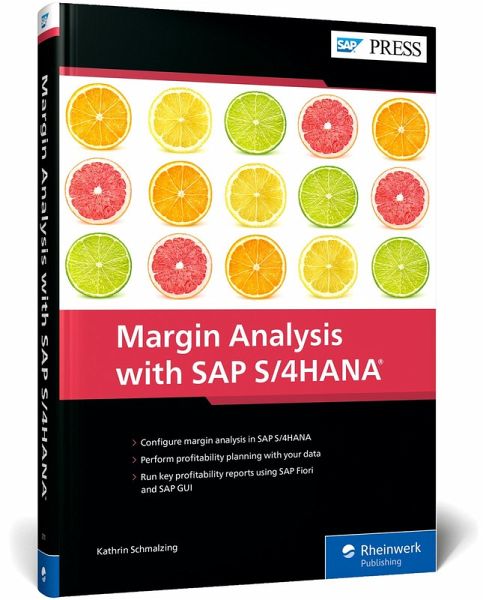
Margin analysis is now the standard for CO-PA in SAP S/4HANA-master it with this all-in-one resource! Get click-by-click instructions for configuring your master data, establishing operating concerns and value flows, and more to set up margin analysis in SAP S/4HANA. Walk through planning your COGS, sales, and overhead costs. See what's changed for margin analysis, including new reporting options with SAP Business Technology Platform and SAP Datasphere. This book provides all the guidance you need for each step of your costing-based profitability operations!
Highlights include: 1) Basic…mehr
Andere Kunden interessierten sich auch für
Kathrin SchmalzingProfitability Analysis with SAP S/4HANA68,99 €
Eric RyanGroup Reporting with SAP S/4HANA75,99 €
John JordanProduct Cost Controlling with SAP S/4HANA75,99 €
Luke CarlsonTreasury and Risk Management with SAP S/4HANA91,99 €
Anand SeetharajuImplementing Central Finance with SAP S/4HANA75,99 €
Stoil JotevConfiguring SAP S/4HANA Finance68,99 €
Isabella LöwControlling in SAP S/4HANA79,90 €-
-
-
Margin analysis is now the standard for CO-PA in SAP S/4HANA-master it with this all-in-one resource! Get click-by-click instructions for configuring your master data, establishing operating concerns and value flows, and more to set up margin analysis in SAP S/4HANA. Walk through planning your COGS, sales, and overhead costs. See what's changed for margin analysis, including new reporting options with SAP Business Technology Platform and SAP Datasphere. This book provides all the guidance you need for each step of your costing-based profitability operations!
Highlights include:
1) Basic settings
2) Master data
3) Organizational data
4) Characteristics
5) Value flows
6) Operating concerns
7) Cost center assessment
8) Costing-based profitability analysis
9) Planning
10) Reporting
Highlights include:
1) Basic settings
2) Master data
3) Organizational data
4) Characteristics
5) Value flows
6) Operating concerns
7) Cost center assessment
8) Costing-based profitability analysis
9) Planning
10) Reporting
Produktdetails
- Produktdetails
- SAP PRESS Englisch
- Verlag: Rheinwerk Verlag / SAP PRESS
- Artikelnr. des Verlages: 459/22711
- 3. Aufl.
- Seitenzahl: 341
- Erscheinungstermin: 7. Februar 2026
- Englisch
- Abmessung: 261mm x 182mm x 23mm
- Gewicht: 772g
- ISBN-13: 9781493227112
- ISBN-10: 1493227114
- Artikelnr.: 74522618
- Herstellerkennzeichnung
- Rheinwerk Verlag GmbH
- Rheinwerkallee 4
- 53227 Bonn
- Info@rheinwerk-verlag.de
- SAP PRESS Englisch
- Verlag: Rheinwerk Verlag / SAP PRESS
- Artikelnr. des Verlages: 459/22711
- 3. Aufl.
- Seitenzahl: 341
- Erscheinungstermin: 7. Februar 2026
- Englisch
- Abmessung: 261mm x 182mm x 23mm
- Gewicht: 772g
- ISBN-13: 9781493227112
- ISBN-10: 1493227114
- Artikelnr.: 74522618
- Herstellerkennzeichnung
- Rheinwerk Verlag GmbH
- Rheinwerkallee 4
- 53227 Bonn
- Info@rheinwerk-verlag.de
Kathrin Schmalzing is a manager at EY, where she specializes in FI and CO implementations, business process analysis and transformation, and value flow analysis. Kathrin has been working in CO for 15 years.
... Introduction ... 13
... Target Group ... 13
... Objective and Content ... 14
... Universal Parallel Accounting and the Future of Margin Analysis ... 15
... Acknowledgments ... 18
1 ... Introduction to Profitability Analysis ... 19
1.1 ... Purpose of Profitability Analysis ... 19
1.2 ... Profitability Concepts ... 21
1.3 ... Types of Profitability Analysis ... 27
1.4 ... Technical Setup ... 36
1.5 ... Summary ... 38
2 ... Configuring the Operating Concern and Basic Settings for
Profitability Analysis ... 41
2.1 ... Creating the Operating Concern ... 41
2.2 ... Activating Profitability Analysis ... 52
2.3 ... Currencies in the Operating Concern ... 54
2.4 ... Creating an Extension Ledger for Profitability Analysis ... 56
2.5 ... Creating Number Ranges for Profitability Analysis ... 59
2.6 ... Assigning Versions to the Operating Concern ... 62
2.7 ... Setting the Operating Concern ... 65
2.8 ... Transporting the Operating Concern ... 66
2.9 ... Summary ... 69
3 ... Configuring Characteristics ... 71
3.1 ... Characteristics ... 73
3.2 ... Characteristics Derivations ... 92
3.3 ... Summary ... 126
4 ... Value Flows of Margin Analysis ... 127
4.1 ... Predictive Accounting ... 128
4.2 ... Billing Data Transfer ... 141
4.3 ... Costs of Goods Manufactured in Margin Analysis ... 150
4.4 ... Splitting the Cost of Goods Sold ... 151
4.5 ... Variance Calculation ... 159
4.6 ... Order Settlement ... 178
4.7 ... Overhead Allocation ... 187
4.8 ... Direct Account Assignment ... 198
4.9 ... Top-Down Distribution ... 202
4.10 ... Summary ... 208
5 ... Costing-Based Profitability Analysis ... 209
5.1 ... Value Fields ... 212
5.2 ... Quantity Fields ... 216
5.3 ... Assigning Value Fields and Quantity Fields to the Operating Concern
... 218
5.4 ... Transferring Incoming Sales Orders ... 218
5.5 ... Transferring Quantity Fields ... 223
5.6 ... Billing Data Transfer ... 230
5.7 ... Costs of Goods Manufactured ... 246
5.8 ... Cost of Goods Sold Transfer and Split ... 249
5.9 ... Variance Calculation ... 269
5.10 ... Cost Center Assessment ... 276
5.11 ... Direct Account Assignment ... 277
5.12 ... Summary ... 283
6 ... Planning ... 285
6.1 ... Planning in Margin Analysis ... 286
6.2 ... Sales Planning ... 289
6.3 ... Cost of Goods Sold Planning ... 293
6.4 ... Overhead Cost Planning ... 294
6.5 ... Summary ... 294
7 ... Reporting ... 295
7.1 ... Profitability Analysis Reporting Basics ... 295
7.2 ... Predictive Accounting ... 298
7.3 ... Showing Line Items for Margin Analysis ... 312
7.4 ... Profitability Analysis Reporting ... 317
7.5 ... Other Reporting Possibilities with Development ... 324
7.6 ... Summary ... 328
A ... Changes to the Data Model ... 331
B ... Additional Sources of Information ... 333
C ... The Author ... 335
... Index ... 337

... Target Group ... 13
... Objective and Content ... 14
... Universal Parallel Accounting and the Future of Margin Analysis ... 15
... Acknowledgments ... 18
1 ... Introduction to Profitability Analysis ... 19
1.1 ... Purpose of Profitability Analysis ... 19
1.2 ... Profitability Concepts ... 21
1.3 ... Types of Profitability Analysis ... 27
1.4 ... Technical Setup ... 36
1.5 ... Summary ... 38
2 ... Configuring the Operating Concern and Basic Settings for
Profitability Analysis ... 41
2.1 ... Creating the Operating Concern ... 41
2.2 ... Activating Profitability Analysis ... 52
2.3 ... Currencies in the Operating Concern ... 54
2.4 ... Creating an Extension Ledger for Profitability Analysis ... 56
2.5 ... Creating Number Ranges for Profitability Analysis ... 59
2.6 ... Assigning Versions to the Operating Concern ... 62
2.7 ... Setting the Operating Concern ... 65
2.8 ... Transporting the Operating Concern ... 66
2.9 ... Summary ... 69
3 ... Configuring Characteristics ... 71
3.1 ... Characteristics ... 73
3.2 ... Characteristics Derivations ... 92
3.3 ... Summary ... 126
4 ... Value Flows of Margin Analysis ... 127
4.1 ... Predictive Accounting ... 128
4.2 ... Billing Data Transfer ... 141
4.3 ... Costs of Goods Manufactured in Margin Analysis ... 150
4.4 ... Splitting the Cost of Goods Sold ... 151
4.5 ... Variance Calculation ... 159
4.6 ... Order Settlement ... 178
4.7 ... Overhead Allocation ... 187
4.8 ... Direct Account Assignment ... 198
4.9 ... Top-Down Distribution ... 202
4.10 ... Summary ... 208
5 ... Costing-Based Profitability Analysis ... 209
5.1 ... Value Fields ... 212
5.2 ... Quantity Fields ... 216
5.3 ... Assigning Value Fields and Quantity Fields to the Operating Concern
... 218
5.4 ... Transferring Incoming Sales Orders ... 218
5.5 ... Transferring Quantity Fields ... 223
5.6 ... Billing Data Transfer ... 230
5.7 ... Costs of Goods Manufactured ... 246
5.8 ... Cost of Goods Sold Transfer and Split ... 249
5.9 ... Variance Calculation ... 269
5.10 ... Cost Center Assessment ... 276
5.11 ... Direct Account Assignment ... 277
5.12 ... Summary ... 283
6 ... Planning ... 285
6.1 ... Planning in Margin Analysis ... 286
6.2 ... Sales Planning ... 289
6.3 ... Cost of Goods Sold Planning ... 293
6.4 ... Overhead Cost Planning ... 294
6.5 ... Summary ... 294
7 ... Reporting ... 295
7.1 ... Profitability Analysis Reporting Basics ... 295
7.2 ... Predictive Accounting ... 298
7.3 ... Showing Line Items for Margin Analysis ... 312
7.4 ... Profitability Analysis Reporting ... 317
7.5 ... Other Reporting Possibilities with Development ... 324
7.6 ... Summary ... 328
A ... Changes to the Data Model ... 331
B ... Additional Sources of Information ... 333
C ... The Author ... 335
... Index ... 337
... Introduction ... 13
... Target Group ... 13
... Objective and Content ... 14
... Universal Parallel Accounting and the Future of Margin Analysis ... 15
... Acknowledgments ... 18
1 ... Introduction to Profitability Analysis ... 19
1.1 ... Purpose of Profitability Analysis ... 19
1.2 ... Profitability Concepts ... 21
1.3 ... Types of Profitability Analysis ... 27
1.4 ... Technical Setup ... 36
1.5 ... Summary ... 38
2 ... Configuring the Operating Concern and Basic Settings for
Profitability Analysis ... 41
2.1 ... Creating the Operating Concern ... 41
2.2 ... Activating Profitability Analysis ... 52
2.3 ... Currencies in the Operating Concern ... 54
2.4 ... Creating an Extension Ledger for Profitability Analysis ... 56
2.5 ... Creating Number Ranges for Profitability Analysis ... 59
2.6 ... Assigning Versions to the Operating Concern ... 62
2.7 ... Setting the Operating Concern ... 65
2.8 ... Transporting the Operating Concern ... 66
2.9 ... Summary ... 69
3 ... Configuring Characteristics ... 71
3.1 ... Characteristics ... 73
3.2 ... Characteristics Derivations ... 92
3.3 ... Summary ... 126
4 ... Value Flows of Margin Analysis ... 127
4.1 ... Predictive Accounting ... 128
4.2 ... Billing Data Transfer ... 141
4.3 ... Costs of Goods Manufactured in Margin Analysis ... 150
4.4 ... Splitting the Cost of Goods Sold ... 151
4.5 ... Variance Calculation ... 159
4.6 ... Order Settlement ... 178
4.7 ... Overhead Allocation ... 187
4.8 ... Direct Account Assignment ... 198
4.9 ... Top-Down Distribution ... 202
4.10 ... Summary ... 208
5 ... Costing-Based Profitability Analysis ... 209
5.1 ... Value Fields ... 212
5.2 ... Quantity Fields ... 216
5.3 ... Assigning Value Fields and Quantity Fields to the Operating Concern
... 218
5.4 ... Transferring Incoming Sales Orders ... 218
5.5 ... Transferring Quantity Fields ... 223
5.6 ... Billing Data Transfer ... 230
5.7 ... Costs of Goods Manufactured ... 246
5.8 ... Cost of Goods Sold Transfer and Split ... 249
5.9 ... Variance Calculation ... 269
5.10 ... Cost Center Assessment ... 276
5.11 ... Direct Account Assignment ... 277
5.12 ... Summary ... 283
6 ... Planning ... 285
6.1 ... Planning in Margin Analysis ... 286
6.2 ... Sales Planning ... 289
6.3 ... Cost of Goods Sold Planning ... 293
6.4 ... Overhead Cost Planning ... 294
6.5 ... Summary ... 294
7 ... Reporting ... 295
7.1 ... Profitability Analysis Reporting Basics ... 295
7.2 ... Predictive Accounting ... 298
7.3 ... Showing Line Items for Margin Analysis ... 312
7.4 ... Profitability Analysis Reporting ... 317
7.5 ... Other Reporting Possibilities with Development ... 324
7.6 ... Summary ... 328
A ... Changes to the Data Model ... 331
B ... Additional Sources of Information ... 333
C ... The Author ... 335
... Index ... 337
... Target Group ... 13
... Objective and Content ... 14
... Universal Parallel Accounting and the Future of Margin Analysis ... 15
... Acknowledgments ... 18
1 ... Introduction to Profitability Analysis ... 19
1.1 ... Purpose of Profitability Analysis ... 19
1.2 ... Profitability Concepts ... 21
1.3 ... Types of Profitability Analysis ... 27
1.4 ... Technical Setup ... 36
1.5 ... Summary ... 38
2 ... Configuring the Operating Concern and Basic Settings for
Profitability Analysis ... 41
2.1 ... Creating the Operating Concern ... 41
2.2 ... Activating Profitability Analysis ... 52
2.3 ... Currencies in the Operating Concern ... 54
2.4 ... Creating an Extension Ledger for Profitability Analysis ... 56
2.5 ... Creating Number Ranges for Profitability Analysis ... 59
2.6 ... Assigning Versions to the Operating Concern ... 62
2.7 ... Setting the Operating Concern ... 65
2.8 ... Transporting the Operating Concern ... 66
2.9 ... Summary ... 69
3 ... Configuring Characteristics ... 71
3.1 ... Characteristics ... 73
3.2 ... Characteristics Derivations ... 92
3.3 ... Summary ... 126
4 ... Value Flows of Margin Analysis ... 127
4.1 ... Predictive Accounting ... 128
4.2 ... Billing Data Transfer ... 141
4.3 ... Costs of Goods Manufactured in Margin Analysis ... 150
4.4 ... Splitting the Cost of Goods Sold ... 151
4.5 ... Variance Calculation ... 159
4.6 ... Order Settlement ... 178
4.7 ... Overhead Allocation ... 187
4.8 ... Direct Account Assignment ... 198
4.9 ... Top-Down Distribution ... 202
4.10 ... Summary ... 208
5 ... Costing-Based Profitability Analysis ... 209
5.1 ... Value Fields ... 212
5.2 ... Quantity Fields ... 216
5.3 ... Assigning Value Fields and Quantity Fields to the Operating Concern
... 218
5.4 ... Transferring Incoming Sales Orders ... 218
5.5 ... Transferring Quantity Fields ... 223
5.6 ... Billing Data Transfer ... 230
5.7 ... Costs of Goods Manufactured ... 246
5.8 ... Cost of Goods Sold Transfer and Split ... 249
5.9 ... Variance Calculation ... 269
5.10 ... Cost Center Assessment ... 276
5.11 ... Direct Account Assignment ... 277
5.12 ... Summary ... 283
6 ... Planning ... 285
6.1 ... Planning in Margin Analysis ... 286
6.2 ... Sales Planning ... 289
6.3 ... Cost of Goods Sold Planning ... 293
6.4 ... Overhead Cost Planning ... 294
6.5 ... Summary ... 294
7 ... Reporting ... 295
7.1 ... Profitability Analysis Reporting Basics ... 295
7.2 ... Predictive Accounting ... 298
7.3 ... Showing Line Items for Margin Analysis ... 312
7.4 ... Profitability Analysis Reporting ... 317
7.5 ... Other Reporting Possibilities with Development ... 324
7.6 ... Summary ... 328
A ... Changes to the Data Model ... 331
B ... Additional Sources of Information ... 333
C ... The Author ... 335
... Index ... 337