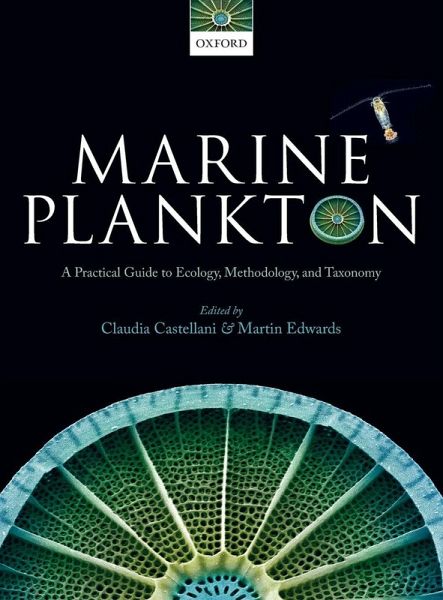
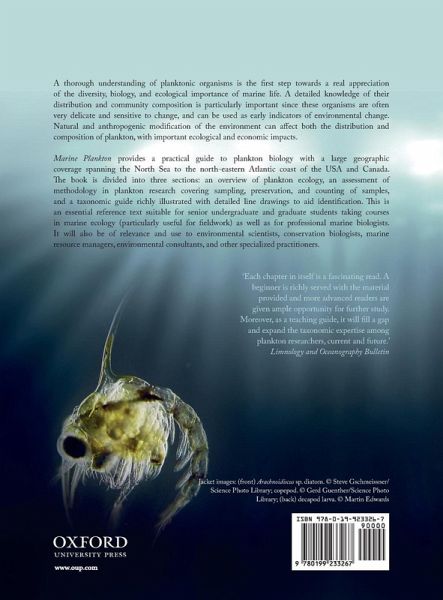
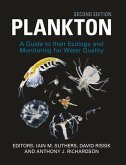
This is a practical guide to the taxonomy and identification of planktonic organisms, which also provides a general introduction to plankton biology and incorporates the latest techniques in plankton ecology.
This is a practical guide to the taxonomy and identification of planktonic organisms, which also provides a general introduction to plankton biology and incorporates the latest techniques in plankton ecology.
Claudia Castellani is a marine biologist at the Sir Alister Hardy Foundation for Ocean Science (SAHFOS) where she teaches and conducts research on plankton ecology, physiology, and taxonomy. Her research focuses on the biological mechanisms determining the spatial and temporal changes in marine zooplankton species abundance and productivity through the combined study of their morphology, eco-physiology and genetic. Claudia is also a member of the ICES Working Group of Zooplankton Ecology (WGZE) and the co-editor of the ICES plankton taxonomy leaflets. In her spare time Claudia enjoys playing recreational and competitive tennis. Martin Edwards is a marine macroecologist whose primary research interests are on environmental change impacts on marine ecosystems ranging from marine biodiversity, biogeographical and phenological changes to whole ecosystem regime shifts. He is currently Chief Scientist at the Sir Alister Hardy Foundation for Ocean Science (SAHFOS) and Professor of Ocean Ecology at Plymouth University.
Inhaltsangabe
* General Introduction * Section I - Ecology * 1: N. P. Holliday and S. Henson: The marine environment * 2: G. Beaugrand: Plankton biodiversity and biogeography * 3: J. A. Raven: Phytoplankton productivity * 4: A. G. Hirst: Zooplankton productivity * 5: C. Robinson: Phytoplankton biogeochemical cycles * 6: D. K. Steinberg: Zooplankton biogeochemical cycles * 7: M. Edwards: Plankton and global change * 8: K. Brander: Plankton and Fisheries * Section II - Methodology * 9: A. C. Kraberg, K. Metfies, and R. Stern: Sampling, preservation, and counting of samples i) Phytoplankton * 10: P. H. Wiebe, M. C. Benfield, and A. Bucklin: Sampling, preservation, and counting of samples ii) Zooplankton * Section III - Taxonomy * Part 1 - Phytoplankton * Introduction: Taxonomy of planktonic microbial eukaryotes * Phytoplankton: Diatoms * Phytoplankton: Dinoflagellates * Phytoplankton: Flagellates * Part 2 - Zooplankton * Protozooplankton: Ciliates * Protozooplankton: Radiolaria and Achantharia * Protozooplankton: Foraminifera * Cnidaria: Schyphozoa and non-colonial Hydrozoa * Cnidaria: colonial Hydrozoa (Siphonophorae) * Ctenophora * Crustacea: Introduction * Crustacea: Copepoda * Crustacea: Branchiopoda * Crustacea: Cirripedia and Facetotecta * Crustacea: Ostracoda * Crustacea: Decapoda * Crustacea: Stomatopoda * Crustacea: Lophogastrida and Mysida * Crustacea: Amphipoda * Crustacea: Euphausiacea * Anellida: holoplanktonic Polychaeta * Mollusca: holoplanktonic molluscs * Chaetognatha * Echinodermata * Bryozoa * Brachiopoda * Phoronida * Rotifera * Chordata: Thaliacea * Chordata: Appendicularia * Chordata: Fish eggs and larvae
* General Introduction * Section I - Ecology * 1: N. P. Holliday and S. Henson: The marine environment * 2: G. Beaugrand: Plankton biodiversity and biogeography * 3: J. A. Raven: Phytoplankton productivity * 4: A. G. Hirst: Zooplankton productivity * 5: C. Robinson: Phytoplankton biogeochemical cycles * 6: D. K. Steinberg: Zooplankton biogeochemical cycles * 7: M. Edwards: Plankton and global change * 8: K. Brander: Plankton and Fisheries * Section II - Methodology * 9: A. C. Kraberg, K. Metfies, and R. Stern: Sampling, preservation, and counting of samples i) Phytoplankton * 10: P. H. Wiebe, M. C. Benfield, and A. Bucklin: Sampling, preservation, and counting of samples ii) Zooplankton * Section III - Taxonomy * Part 1 - Phytoplankton * Introduction: Taxonomy of planktonic microbial eukaryotes * Phytoplankton: Diatoms * Phytoplankton: Dinoflagellates * Phytoplankton: Flagellates * Part 2 - Zooplankton * Protozooplankton: Ciliates * Protozooplankton: Radiolaria and Achantharia * Protozooplankton: Foraminifera * Cnidaria: Schyphozoa and non-colonial Hydrozoa * Cnidaria: colonial Hydrozoa (Siphonophorae) * Ctenophora * Crustacea: Introduction * Crustacea: Copepoda * Crustacea: Branchiopoda * Crustacea: Cirripedia and Facetotecta * Crustacea: Ostracoda * Crustacea: Decapoda * Crustacea: Stomatopoda * Crustacea: Lophogastrida and Mysida * Crustacea: Amphipoda * Crustacea: Euphausiacea * Anellida: holoplanktonic Polychaeta * Mollusca: holoplanktonic molluscs * Chaetognatha * Echinodermata * Bryozoa * Brachiopoda * Phoronida * Rotifera * Chordata: Thaliacea * Chordata: Appendicularia * Chordata: Fish eggs and larvae
Es gelten unsere Allgemeinen Geschäftsbedingungen: www.buecher.de/agb
Impressum
www.buecher.de ist ein Internetauftritt der buecher.de internetstores GmbH
Geschäftsführung: Monica Sawhney | Roland Kölbl | Günter Hilger
Sitz der Gesellschaft: Batheyer Straße 115 - 117, 58099 Hagen
Postanschrift: Bürgermeister-Wegele-Str. 12, 86167 Augsburg
Amtsgericht Hagen HRB 13257
Steuernummer: 321/5800/1497
USt-IdNr: DE450055826