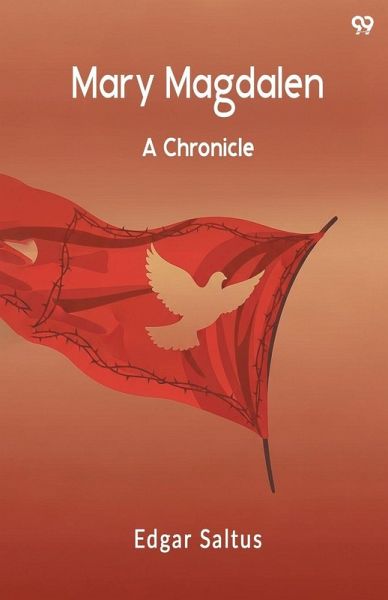
Mary Magdalen: A chronicle begins amid the noise and spectacle of a chariot race, immersing the reader in a richly detailed world of power, ambition, and tension. The ruler at the center of this opulence watches the races with a mixture of distraction and discomfort, sensing that his authority, though outwardly secure, is under quiet threat. While the pageantry continues around him, his mind drifts to the growing influence of a wandering preacher whose words of renewal and an impending kingdom unsettle the established order. Against this backdrop, a woman moves subtly into focus observed…mehr
Mary Magdalen: A chronicle begins amid the noise and spectacle of a chariot race, immersing the reader in a richly detailed world of power, ambition, and tension. The ruler at the center of this opulence watches the races with a mixture of distraction and discomfort, sensing that his authority, though outwardly secure, is under quiet threat. While the pageantry continues around him, his mind drifts to the growing influence of a wandering preacher whose words of renewal and an impending kingdom unsettle the established order. Against this backdrop, a woman moves subtly into focus observed briefly but with an intensity that foreshadows her central role in the unfolding spiritual drama. Her presence, while not yet dominant, carries the weight of change, representing a collision of the sacred and the worldly. The opening contrasts external grandeur with internal unease, setting the stage for a story that will navigate belief, transformation, and the human cost of transcendence. This juxtaposition of spectacle and silence marks the beginning of a deeper reckoning within individuals and the society they inhabit.
Edgar Evertson Saltus was born on October 8, 1855, in New York City to parents Francis Henry Saltus and Julia Ida Evertson Saltus. Known for his elaborate and elegant prose, he became a distinctive voice in American literature during the late 19th and early 20th centuries. His writing style was often compared to that of European decadent authors such as Joris-Karl Huysmans, Gabriele D'Annunzio, and Oscar Wilde, with whom he shared a fascination for aestheticism, moral ambiguity, and philosophical pessimism. Saltus began his career in law but turned to literature, where his refined diction and interest in metaphysical questions garnered both attention and controversy. His work spanned fiction, essays, and philosophical treatises, often exploring the limits of morality, beauty, and human desire. Among his notable writings are The Philosophy of Disenchantment and The Anatomy of Negation, which reflect his engagement with skepticism and nihilism. He lived much of his life in New York, where he was a known figure in intellectual and literary circles. He married Marie Saltus in 1911 and remained with her until his death on July 31, 1921, in Manhattan, at the age of 65.
Es gelten unsere Allgemeinen Geschäftsbedingungen: www.buecher.de/agb
Impressum
www.buecher.de ist ein Internetauftritt der buecher.de internetstores GmbH
Geschäftsführung: Monica Sawhney | Roland Kölbl | Günter Hilger
Sitz der Gesellschaft: Batheyer Straße 115 - 117, 58099 Hagen
Postanschrift: Bürgermeister-Wegele-Str. 12, 86167 Augsburg
Amtsgericht Hagen HRB 13257
Steuernummer: 321/5800/1497
USt-IdNr: DE450055826