
Andere Kunden interessierten sich auch für
 Mary Magdalene30,99 €
 The True Essence of Mary Magdalene18,99 €
 New Gospel of Mary Magdalene8,49 €
 The Acts of Saint Mary Magdalene Considered, in a Series of Discourses25,99 €
 Acts of Saint Mary Magdalene Considered25,99 €
 Mary Magdalene24,99 €
 Bible Understood39,99 €

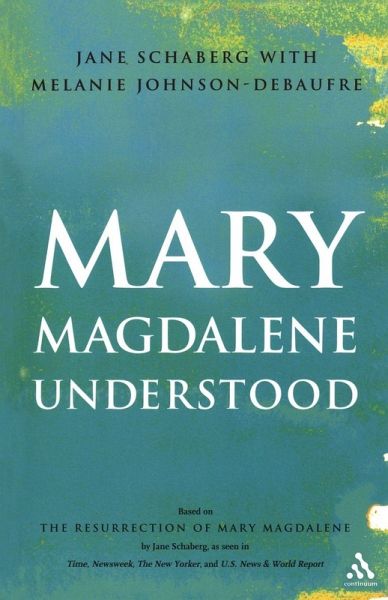
This book is based on The Resurrection of Mary Magdalene by Jane Schaberg (2002, 2004). It explores the silence, conflation, and distortion that characterizes Mary's afterlife in text and image. There is Mary the Whore, the Demon-Possessed Madwoman, and the Penitent. All give glimpses into the significant social anxiety generated by women's sexuality, intelligence, and spirituality.
- An accessible version of the work of a highly respected scholar
The book begins with a visit to the long-neglected site of ancient Magdala on the western shore of the Sea of Galilee. Unexcavated and slipping into the sea, Migdal stands as a reminder of the lost history of Mary Magdalene, and of ancient women. From Migdal, the reader moves back in history, looking through Mary's legends to her fame and notoriety. Mary's medieval and modern legends are contrasted sharply with her depiction in the Gnostic and apocryphal materials of Tomas and Philip. The scrolls of Nag Hammadi are discussed, and Mary's role as visionary and leader are looked at--all giving a portrait of Mary's prominence in the early centuries of Christianity. Mary's story is part of an overall egalitarian and mystical movement that interpreted the absence of Jesus' body as a powerful and prophetic sign of God's vindication of the world's suffering. The conclusion takes us back to the contemporary world. A reconstruction of Mary Magdalene and a Magdalene Christianity might be a source for social transformation. An epilogue, completely new to this book, looks at the phenomenon of The Da Vinci Code.
Review:
"Schaberg combines biblical scholarship, imagination, and feminist advocacy into a major work of methodological originality that reveals persuasive themes. Schaberg's book breaks new ground and is recommended for all libraries; required for seminary and feminist collections."
Carolyn M. Croft, Library Journal, June 15, 2002
“Among the plethora of recent books on Mary, Schaberg's stands out for its careful research, its literary artistry and its reflections on the meaning of it all...She is undaunted by the paucity of solid historical information, turning over every pebble of evidence about Mary Magdalene and examining it meticulously under her critical lenses. Schaberg is also a poet, which is evident in every lovely turn of phrase and precise expression”
Karen L. King, The Women's Review of Books, March 2003
“Schaberg combines biblical scholarship, imagination, and feminist advocacy into a major work of methodological originality that reveals persuasive themes. Schaberg’s book breaks new ground and is recommended for all libraries; required for seminary and feminist collections.”
Library Journal
“Readers interested in a book bursting with information about Mary Magdalene will find Jane Schaberg’s book a must-read. This powerfully packed volume offers a feast for those interested in a wide range of subjects on this significant early Christian figure. I find what she has offered us to be an enriching and satisfying banquet from which readers will not go away hungry.”
Journal of the American Academy of Religion, Fall 2005
Table of contents:
Introduction - A Feminist Reconstruction of the Historical Mary Magdalene
1. A Dig of One's Own
2. Thinking Back through the Magdalene
3. The Woman Who Understood (Too) Completely
4. The Women Did Not Flee
5. Mary Magdalene as Successor to Jesus
Conclusion: The Implications for Contemporary Women
Epilogue: New Reflections on The Da Vinci Code
- An accessible version of the work of a highly respected scholar
The book begins with a visit to the long-neglected site of ancient Magdala on the western shore of the Sea of Galilee. Unexcavated and slipping into the sea, Migdal stands as a reminder of the lost history of Mary Magdalene, and of ancient women. From Migdal, the reader moves back in history, looking through Mary's legends to her fame and notoriety. Mary's medieval and modern legends are contrasted sharply with her depiction in the Gnostic and apocryphal materials of Tomas and Philip. The scrolls of Nag Hammadi are discussed, and Mary's role as visionary and leader are looked at--all giving a portrait of Mary's prominence in the early centuries of Christianity. Mary's story is part of an overall egalitarian and mystical movement that interpreted the absence of Jesus' body as a powerful and prophetic sign of God's vindication of the world's suffering. The conclusion takes us back to the contemporary world. A reconstruction of Mary Magdalene and a Magdalene Christianity might be a source for social transformation. An epilogue, completely new to this book, looks at the phenomenon of The Da Vinci Code.
Review:
"Schaberg combines biblical scholarship, imagination, and feminist advocacy into a major work of methodological originality that reveals persuasive themes. Schaberg's book breaks new ground and is recommended for all libraries; required for seminary and feminist collections."
Carolyn M. Croft, Library Journal, June 15, 2002
“Among the plethora of recent books on Mary, Schaberg's stands out for its careful research, its literary artistry and its reflections on the meaning of it all...She is undaunted by the paucity of solid historical information, turning over every pebble of evidence about Mary Magdalene and examining it meticulously under her critical lenses. Schaberg is also a poet, which is evident in every lovely turn of phrase and precise expression”
Karen L. King, The Women's Review of Books, March 2003
“Schaberg combines biblical scholarship, imagination, and feminist advocacy into a major work of methodological originality that reveals persuasive themes. Schaberg’s book breaks new ground and is recommended for all libraries; required for seminary and feminist collections.”
Library Journal
“Readers interested in a book bursting with information about Mary Magdalene will find Jane Schaberg’s book a must-read. This powerfully packed volume offers a feast for those interested in a wide range of subjects on this significant early Christian figure. I find what she has offered us to be an enriching and satisfying banquet from which readers will not go away hungry.”
Journal of the American Academy of Religion, Fall 2005
Table of contents:
Introduction - A Feminist Reconstruction of the Historical Mary Magdalene
1. A Dig of One's Own
2. Thinking Back through the Magdalene
3. The Woman Who Understood (Too) Completely
4. The Women Did Not Flee
5. Mary Magdalene as Successor to Jesus
Conclusion: The Implications for Contemporary Women
Epilogue: New Reflections on The Da Vinci Code