
Andere Kunden interessierten sich auch für
 Fractals, Googols, and Other Mathematical Tales10,99 €
: Problems and Solutions") Mathematical Olympiad in China (2009-2010): Problems and Solutions27,99 €
Mathematical Olympiad in China (2009-2010): Problems and Solutions27,99 € What Is a Number?34,99 €
 Routes of Learning40,99 €
 Numbers that Dazzled the World18,99 €
 A History Of Mathematical Notations Vol I25,99 €
 Mathematical Scandals9,99 €




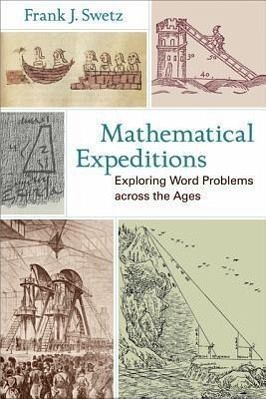
A little bucket, one-third full, is 8 inches deep, and its upper and lower diameters are 7 inches and 6 inches, respectively. How large is the frog which, jumping into the bucket, causes the water to rise 3 inches? Word problems not unlike this example are a staple on math tests and of abiding interest to students, teachers, and professional mathematicians alike. Frank Swetz, a highly regarded mathematics educator, gathers hundreds of these problems in this fun and fascinating introduction to mathematics from around the world. Mathematical Expeditions is a collection of over 500 culturally and historically diverse mathematical problems carefully chosen to enrich mathematics teaching from middle school through the college level. What better way to teach students the multicultural aspects of math than by assigning them problems first composed on clay tablets by Babylonian scribes, included in the Rhind papyrus, or Vedic problems scratched on tree bark? From Egypt to Greece to China to India, Swetz's problems--both practical and abstract--span centuries and cultures. Swetz has organized the problems by culture and historical period, showing, through the various constructs and contexts of the problems, the history and development of mathematics throughout the world. Along the way, he tells us what various cultures knew about math and how they came to learn it, providing instructors with a wonderful way to incorporate multicultural mathematics into the middle school, high school, and college classroom.