
Andere Kunden interessierten sich auch für
 Ancient Maya Cities of the Eastern Lowlands74,99 €
 Maya Salt Works88,99 €
 Maya Kingship84,99 €
 Water, Cacao, and the Early Maya of Chocolá115,99 €
 Ancient Maya Pottery74,99 €
 The Ch'orti' Maya Area65,99 €
 Heterarchy, Political Economy, and the Ancient Maya56,99 €




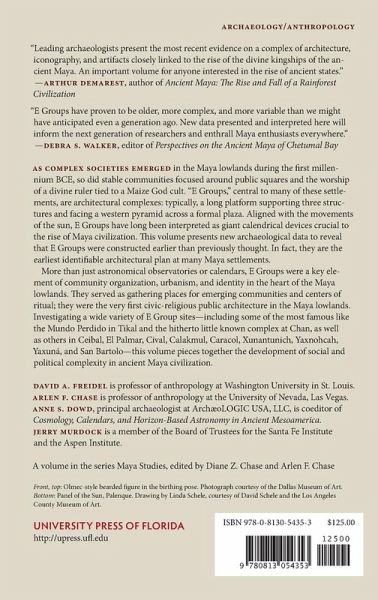
In ancient Maya cities, “E Groups” are sets of buildings aligned with the movements of the sun. This volume presents new archaeological data to reveal that E Groups were constructed earlier than previously thought—in fact, they are the earliest identifiable architectural plan at many Maya settlements. More than just astronomical observatories or calendars, E Groups were gathering places for emerging communities and centers of ritual: the very first civic-religious public architecture in the Maya lowlands. Investigating a wide variety of E Group sites in different contexts, this volume pieces together the development of social and political complexity in the ancient Maya civilization. A volume in the series Maya Studies, edited by Diane Z. Chase and Arlen F. Chase.