Growing consumer interest in organic and herbal-based products has led to great demand in the botanicals industry in the past few years. However, the growing number of products utilizing medicinal and aromatic plants (MAPs) has threatened an estimated 9,000 medicinal plant species worldwide, making it critical to reevaluate their research and development, production, and utilization. Continuing advances in Omics methodologies and instrumentation are essential to understanding how plants cope with the dynamic nature of their growing environment, how yields and characteristics can be improved,…mehr
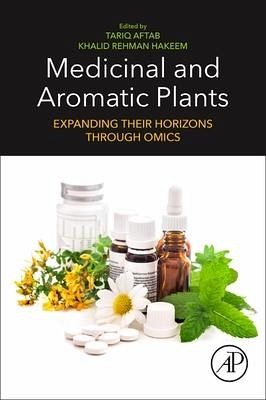
Growing consumer interest in organic and herbal-based products has led to great demand in the botanicals industry in the past few years. However, the growing number of products utilizing medicinal and aromatic plants (MAPs) has threatened an estimated 9,000 medicinal plant species worldwide, making it critical to reevaluate their research and development, production, and utilization. Continuing advances in Omics methodologies and instrumentation are essential to understanding how plants cope with the dynamic nature of their growing environment, how yields and characteristics can be improved, and how to most effectively direct conservation efforts.
With a focus on metabolomics, genomics, proteomics, transcriptomics, and more, Medicinal and Aromatic Plants: Expanding Their Horizons through Omics illustrates the genetic mechanisms of MAPs, providing a better understanding of MAPs conservation and methods to improve characteristics for medical applications. With an introduction on the role of MAPs in human health, subsequent chapters discuss using proteomics to increase MAP yields and plant quality, genome editing, and CRISPR/Cas9. A valuable resource for farmers, scientists, chemists, biochemists, pharmacists, and students interested in medicinal and aromatic plants and plant biology, Medicinal and Aromatic Plants: Expanding Their Horizons through Omics ensures readers have the background knowledge to put the necessary methodologies into practice themselves.
Tariq Aftab received his PhD from the Department of Botany at Aligarh Muslim University, India, where he is currently a Senior Assistant Professor. He is the recipient of a prestigious Leibniz DAAD fellowship from Germany, a Raman Fellowship from the Government of India, and Young Scientist Awards from both the State Government of Uttar Pradesh and the Government of India. He has also served as a Visiting Scientist at IPK Gatersleben, Germany, and in the Department of Plant Biology at Michigan State University, United States. Dr. Aftab has edited numerous books for major international publishers, including Elsevier, Springer Nature, and CRC Press. He has co-authored several book chapters and published extensively in peer-reviewed, international journals. His research interests include physiological, proteomic, and molecular studies on medicinal and crop plants.
Inhaltsangabe
1. Review of the active principles of medicinal and aromatic plants and their disease fighting properties
2. Unraveling the mode of action of medicinal plants in delaying age related diseases using model organisms
3. Metabolomics and fluxomics studies in the medicinal plant Catharanthus roseus
4. Multivariate analysis of herbal drugs with diverse pharmacological activities: Metabolomics study
5. Metabolomics: A recent advanced omics technology in herbal medicine research
6. Genome Editing: Applications for Medicinal and Aromatic Plants
7. Cytogenetic and Bioactive Attributes of Crocus sativus (Saffron); a Tool to Unfold its Medicinal Mystery
8. Metabolic engineering for the production of plant therapeutic compounds
9. CRISPR/Cas9 mediated genome editing in medicinal and aromatic plants: Developments and applications
10. Proteomics research in aromatic plants and its contribution to the nutraceuticals and pharmaceutical outcomes
11. Fluxes of nutrients in mycorrhiza: What has fluxomics taught us in the plant-fungus interaction?
12. Metabolomics of Medicinal and Aromatic Plants: Goldmines of Secondary metabolites for Herbal Medicine Research
13. Exploration of biotechnological studies in low calorie sweetener Stevia rebaudiana: present and future prospects