Norma K Dunlap (USA Middle Tennessee State University), Donna M Huryn (University of Pennsylvania and University of Pittsbu
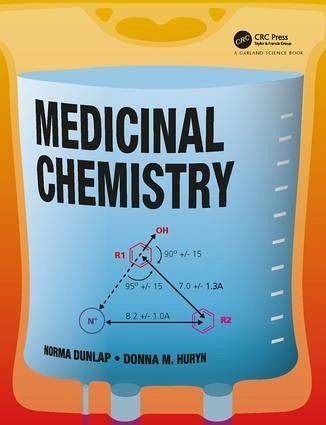
Medicinal Chemistry
Norma K Dunlap (USA Middle Tennessee State University), Donna M Huryn (University of Pennsylvania and University of Pittsbu
Medicinal Chemistry
- Broschiertes Buch
- Merkliste
- Auf die Merkliste
- Bewerten Bewerten
- Teilen
- Produkt teilen
- Produkterinnerung
- Produkterinnerung
Medicinal Chemistry teaches the essential concepts of medicinal chemistry from the perspective of practicing.
Andere Kunden interessierten sich auch für
In Silico Drug Discovery and Design98,99 €
Raymond CooperNatural Products Chemistry126,99 €
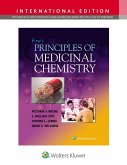
Beck, Kimberly, PhDFoye's Principles of Medicinal Chemistry73,99 €
Roche, Victoria, PhD F., PhDFoye's Principles of Medicinal Chemistry71,99 €
Advanced AI Techniques and Applications in Bioinformatics51,99 €
Multi-Dimensional Liquid Chromatography269,99 €
Christopher LongThe Molecularisation of Security45,99 €-
-
-
Medicinal Chemistry teaches the essential concepts of medicinal chemistry from the perspective of practicing.
Produktdetails
- Produktdetails
- Verlag: Taylor & Francis Inc
- Seitenzahl: 508
- Erscheinungstermin: 17. April 2018
- Englisch
- Abmessung: 213mm x 275mm x 30mm
- Gewicht: 1162g
- ISBN-13: 9780815345565
- ISBN-10: 0815345569
- Artikelnr.: 52962101
- Herstellerkennzeichnung
- Libri GmbH
- Europaallee 1
- 36244 Bad Hersfeld
- gpsr@libri.de
- Verlag: Taylor & Francis Inc
- Seitenzahl: 508
- Erscheinungstermin: 17. April 2018
- Englisch
- Abmessung: 213mm x 275mm x 30mm
- Gewicht: 1162g
- ISBN-13: 9780815345565
- ISBN-10: 0815345569
- Artikelnr.: 52962101
- Herstellerkennzeichnung
- Libri GmbH
- Europaallee 1
- 36244 Bad Hersfeld
- gpsr@libri.de
Norma Dunlap is Professor of Chemistry at Middle Tennessee State University, where she specializes in synthetic organic chemistry and medicinal chemistry. Her research interests include the design and synthesis of bioactive compounds, as well as isolation, identification, and synthesis of bioactive natural products. She holds a PhD in Organic Chemistry from the University of Wyoming and was an NIH Postdoctoral Fellow at the University of Pennsylvania. Prior to an academic career, she was a Senior Research Scientist in drug discovery at Hoffmann-LaRoche.Donna M. Huryn is Research Professor in the Department of Pharmaceutical Sciences at the University of Pittsburgh and Adjunct Professor of Chemistry at the University of Pennsylvania and. Her research focuses on identi_cation, characterization, and optimization of small molecule probes and drugs to treat cancer, neurodegeneration and infectious diseases. She holds a PhD from the University of Pennsylvania and started her career as a medicinal chemist in the pharmaceutical industry. She is the Principal Investigator of the University of Pittsburgh Chemical Diversity Center and is a Fellow of the American Chemical Society.
PART I: DRUG DISCOVERY AND DEVELOPMENT
Chapter 1: Historical Perspective and Overview of Drug Discovery
Chapter 2: Drug Discovery: Hit and Lead Identification
Chapter 3: Lead Optimization: Drug-Target Interactions and the
Pharmacophore
Chapter 4: Lead Optimization: Properties Optimized and Medicinal Chemistry
Strategies
Chapter 5: The Process of Developing a Drug from an Optimized Lead
PART II: CLASSES OF DRUG TARGETS
Chapter 6: Receptors, Ion Channels, and Transporters as Drug Targets
Chapter 7: Enzymes as Drug Targets
Chapter 8: Protein-Protein and Lipid Structure Interactions as Drug Targets
Chapter 9: DNA and RNA as Drug Targets
PART III: SELECTED THERAPEUTIC AREAS
Chapter 10: Anti-Cancer Drugs
Chapter 11: Antiviral and Antifungal Agents
Chapter 12: Antibacterial and Antiparasitic Drugs
Chapter 13: Drugs Acting on the Central Nervous System

Chapter 1: Historical Perspective and Overview of Drug Discovery
Chapter 2: Drug Discovery: Hit and Lead Identification
Chapter 3: Lead Optimization: Drug-Target Interactions and the
Pharmacophore
Chapter 4: Lead Optimization: Properties Optimized and Medicinal Chemistry
Strategies
Chapter 5: The Process of Developing a Drug from an Optimized Lead
PART II: CLASSES OF DRUG TARGETS
Chapter 6: Receptors, Ion Channels, and Transporters as Drug Targets
Chapter 7: Enzymes as Drug Targets
Chapter 8: Protein-Protein and Lipid Structure Interactions as Drug Targets
Chapter 9: DNA and RNA as Drug Targets
PART III: SELECTED THERAPEUTIC AREAS
Chapter 10: Anti-Cancer Drugs
Chapter 11: Antiviral and Antifungal Agents
Chapter 12: Antibacterial and Antiparasitic Drugs
Chapter 13: Drugs Acting on the Central Nervous System
PART I: DRUG DISCOVERY AND DEVELOPMENT
Chapter 1: Historical Perspective and Overview of Drug Discovery
Chapter 2: Drug Discovery: Hit and Lead Identification
Chapter 3: Lead Optimization: Drug-Target Interactions and the
Pharmacophore
Chapter 4: Lead Optimization: Properties Optimized and Medicinal Chemistry
Strategies
Chapter 5: The Process of Developing a Drug from an Optimized Lead
PART II: CLASSES OF DRUG TARGETS
Chapter 6: Receptors, Ion Channels, and Transporters as Drug Targets
Chapter 7: Enzymes as Drug Targets
Chapter 8: Protein-Protein and Lipid Structure Interactions as Drug Targets
Chapter 9: DNA and RNA as Drug Targets
PART III: SELECTED THERAPEUTIC AREAS
Chapter 10: Anti-Cancer Drugs
Chapter 11: Antiviral and Antifungal Agents
Chapter 12: Antibacterial and Antiparasitic Drugs
Chapter 13: Drugs Acting on the Central Nervous System
Chapter 1: Historical Perspective and Overview of Drug Discovery
Chapter 2: Drug Discovery: Hit and Lead Identification
Chapter 3: Lead Optimization: Drug-Target Interactions and the
Pharmacophore
Chapter 4: Lead Optimization: Properties Optimized and Medicinal Chemistry
Strategies
Chapter 5: The Process of Developing a Drug from an Optimized Lead
PART II: CLASSES OF DRUG TARGETS
Chapter 6: Receptors, Ion Channels, and Transporters as Drug Targets
Chapter 7: Enzymes as Drug Targets
Chapter 8: Protein-Protein and Lipid Structure Interactions as Drug Targets
Chapter 9: DNA and RNA as Drug Targets
PART III: SELECTED THERAPEUTIC AREAS
Chapter 10: Anti-Cancer Drugs
Chapter 11: Antiviral and Antifungal Agents
Chapter 12: Antibacterial and Antiparasitic Drugs
Chapter 13: Drugs Acting on the Central Nervous System