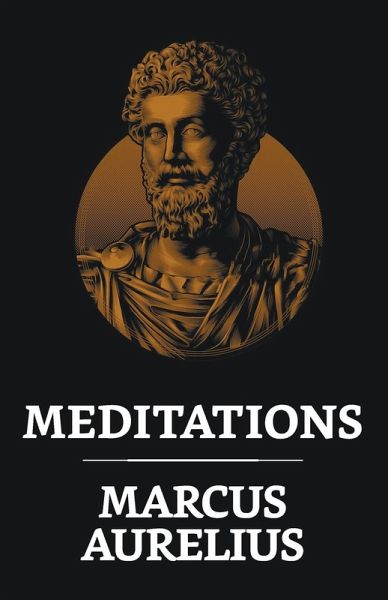
Marcus Aurelius's Meditations serves as both a compact treatise on living a happier, more virtuous life and an excellent introduction to Stoic philosophy. Marcus Aurelius (121-180 C.E.) The philosophy of the Roman Emperor Marcus Aurelius can be found in a collection of personal writings known as the Meditations. These reflect the influence of Stoicism and, in particular, the philosophy of Epictetus, the Stoic. It's one of the best books I have ever read. Meditations might make a point in say book 1 or 2 and then follow up on it in book 6 or whatever. Overall don't worry about how fast you read…mehr
Marcus Aurelius's Meditations serves as both a compact treatise on living a happier, more virtuous life and an excellent introduction to Stoic philosophy. Marcus Aurelius (121-180 C.E.) The philosophy of the Roman Emperor Marcus Aurelius can be found in a collection of personal writings known as the Meditations. These reflect the influence of Stoicism and, in particular, the philosophy of Epictetus, the Stoic. It's one of the best books I have ever read. Meditations might make a point in say book 1 or 2 and then follow up on it in book 6 or whatever. Overall don't worry about how fast you read it and yes it is tough to read I have times where I can read a chapter a day but may not read again for a week or so.
Marcus Aurelius, born in 121 AD in Rome, ascended to power as Roman Emperor in 161 AD. Known as one of the ""Five Good Emperors,"" he ruled during a time of significant military conflict, including wars against the Parthians and Germanic tribes. Aurelius is best remembered for his Stoic philosophy, captured in his personal writings, Meditations, where he reflected on leadership, virtue, and the nature of the universe.Despite facing plagues, military challenges, and personal losses, Marcus Aurelius maintained a reputation as a philosopher-emperor. His reign marked the end of the Pax Romana, an era of relative peace in the Roman Empire. His philosophical reflections continue to influence modern thought on ethics, leadership, and personal resilience.Marcus Aurelius's legacy endures through his writings and the monumental tributes to his military achievements, such as the Column of Marcus Aurelius in Rome. He was succeeded by his son, Commodus, whose reign was markedly different from his father's. Meditations remains a timeless work, offering insights into Stoicism and the human condition.
Es gelten unsere Allgemeinen Geschäftsbedingungen: www.buecher.de/agb
Impressum
www.buecher.de ist ein Internetauftritt der buecher.de internetstores GmbH
Geschäftsführung: Monica Sawhney | Roland Kölbl | Günter Hilger
Sitz der Gesellschaft: Batheyer Straße 115 - 117, 58099 Hagen
Postanschrift: Bürgermeister-Wegele-Str. 12, 86167 Augsburg
Amtsgericht Hagen HRB 13257
Steuernummer: 321/5800/1497
USt-IdNr: DE450055826