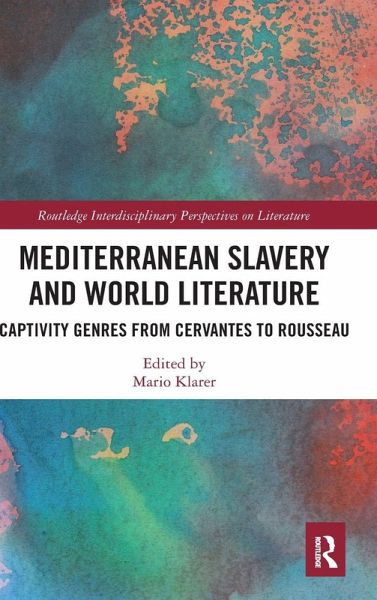
Mediterranean Slavery and World Literature, is a collection of selected essays which brings to light the literary transformations of the captivity experience in major early modern texts of world literature and popular media, including works by Cervantes, de Vega, Defoe, Rousseau, Mozart, and Droste.Where most studies of slavery, until now, have been limited to historial and autobiographical accounts, this mongraph look speicifically at the treatment of literary texts that touch upon on the subject, and does so from a multicutlural perspective.
Mediterranean Slavery and World Literature, is a collection of selected essays which brings to light the literary transformations of the captivity experience in major early modern texts of world literature and popular media, including works by Cervantes, de Vega, Defoe, Rousseau, Mozart, and Droste.Where most studies of slavery, until now, have been limited to historial and autobiographical accounts, this mongraph look speicifically at the treatment of literary texts that touch upon on the subject, and does so from a multicutlural perspective.
Mario Klarer is Professor of American Studies at the University of Innsbruck.
Inhaltsangabe
Introduction Mario Klarer Part 1 Accounts and Authenticities Before Barbary Captivity Narratives: Slavery, Ransom, and the Economy of Christian Virtue in The Good Gerhard (c. 1220) by Rudolf of Ems Mario Klarer Toward a New Literary History of Captivity: Adventure and Generic Hybridity in the Late Sixteenth Century Marcus Hartner Swedish Barbary Captivity Tales: From Letters to Literature (1650-1770) Joachim Östlund Part 2 Genesis and Genres Cervantes' Algerian Swan Song: The Birth of Los Baños de Argel and Its Positive Portrayal of Jews Michael Ross Gordon Female Captivity in Penelope Aubin's The Noble Slaves (1722) and Elizabeth Marsh's The Female Captive (1769) Stefanie Fricke A Dystopia as Utopia: The Algerian City of Oran and Annette von Droste-Hülshoff's The Jew's Beech Magnus Ressel Part 3 Transformations and Translations The Free Slave: Morality, Neostoicism, and Publishing Strategy in Emanuel d'Aranda's Algiers and it's Slavery (1640-82) Lisa F. Kattenberg The Robinsonade as a Literary Avatar of Early Nineteenth-Century Barbary Captivity Narration Robert Spindler Part 4 Media and Markets Mozart, Islam, and the Hangman of Salzburg Kurt Palm Images from the Dey's Court: The Artist as Slave in Algiers Ernstpeter Ruhe Jonathan Cowdery's American Captives in Tripoli (1806): Experience of the Frigate Philadelphia Officers (1803-05) Lotfi Ben Rejeb Part 5 Captives and Concepts Of Cross and Crescent: Analogies of Violence and the Topos of "Barbary Captivity" in Samuel Sewall's The Selling of Joseph (1700), with a Postscript on Benjamin Franklin Carsten Junker Defoe, Slavery, and Barbary G. A. Starr Émile in Chains: A New Perspective on Rousseau, Slavery, and Hegel's Phenomenology Jeremy D. Popkin
Introduction Mario Klarer Part 1 Accounts and Authenticities Before Barbary Captivity Narratives: Slavery, Ransom, and the Economy of Christian Virtue in The Good Gerhard (c. 1220) by Rudolf of Ems Mario Klarer Toward a New Literary History of Captivity: Adventure and Generic Hybridity in the Late Sixteenth Century Marcus Hartner Swedish Barbary Captivity Tales: From Letters to Literature (1650-1770) Joachim Östlund Part 2 Genesis and Genres Cervantes' Algerian Swan Song: The Birth of Los Baños de Argel and Its Positive Portrayal of Jews Michael Ross Gordon Female Captivity in Penelope Aubin's The Noble Slaves (1722) and Elizabeth Marsh's The Female Captive (1769) Stefanie Fricke A Dystopia as Utopia: The Algerian City of Oran and Annette von Droste-Hülshoff's The Jew's Beech Magnus Ressel Part 3 Transformations and Translations The Free Slave: Morality, Neostoicism, and Publishing Strategy in Emanuel d'Aranda's Algiers and it's Slavery (1640-82) Lisa F. Kattenberg The Robinsonade as a Literary Avatar of Early Nineteenth-Century Barbary Captivity Narration Robert Spindler Part 4 Media and Markets Mozart, Islam, and the Hangman of Salzburg Kurt Palm Images from the Dey's Court: The Artist as Slave in Algiers Ernstpeter Ruhe Jonathan Cowdery's American Captives in Tripoli (1806): Experience of the Frigate Philadelphia Officers (1803-05) Lotfi Ben Rejeb Part 5 Captives and Concepts Of Cross and Crescent: Analogies of Violence and the Topos of "Barbary Captivity" in Samuel Sewall's The Selling of Joseph (1700), with a Postscript on Benjamin Franklin Carsten Junker Defoe, Slavery, and Barbary G. A. Starr Émile in Chains: A New Perspective on Rousseau, Slavery, and Hegel's Phenomenology Jeremy D. Popkin
Es gelten unsere Allgemeinen Geschäftsbedingungen: www.buecher.de/agb
Impressum
www.buecher.de ist ein Internetauftritt der buecher.de internetstores GmbH
Geschäftsführung: Monica Sawhney | Roland Kölbl | Günter Hilger
Sitz der Gesellschaft: Batheyer Straße 115 - 117, 58099 Hagen
Postanschrift: Bürgermeister-Wegele-Str. 12, 86167 Augsburg
Amtsgericht Hagen HRB 13257
Steuernummer: 321/5800/1497
USt-IdNr: DE450055826