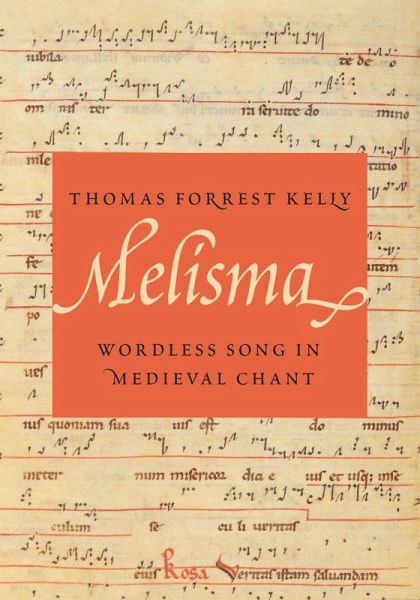
This is the first book about melismas, or long melodies sung to a single vowel. Using the evidence of medieval creative minds, Thomas Forrest Kelly uncovers the melisma as a phenomenon, how it works, how melismas appear when they are written in chant, and how they function as part of a text and as part of a song.
This is the first book about melismas, or long melodies sung to a single vowel. Using the evidence of medieval creative minds, Thomas Forrest Kelly uncovers the melisma as a phenomenon, how it works, how melismas appear when they are written in chant, and how they function as part of a text and as part of a song.
Thomas Forrest Kelly is Morton B. Knafel Professor of Music, Emeritus at Harvard University, where he taught until his retirement; he previously taught at Oberlin College, the Five Colleges, and Wellesley College. His published work includes several volumes for general audiences and more specialized studies on aspects of medieval music. He was the founding director of the Castle Hill Festival and served as President of Early Music America, for whose magazine he has written a quarterly column for twenty years. He holds an honorary doctorate from the University of North Carolina and is a Fellow of the American Academy in Rome, the American Academy of Arts and Sciences, and the Medieval Academy of America. He is also a Chevalier of the Ordre des Arts et Lettres of the French Republic, and an honorary citizen of the city of Benevento.
Inhaltsangabe
Preface Abbreviations Chapter 1. Songs without words Jubilare sine verbis How do you sing a melisma? Stylistic considerations How do you write a melisma? The shape and effect of melismas Musical nature of melismas Chapter 2. Some historical considerations The earliest notations of melismas Medieval words for melismas Medieval descriptions of melismas and their usage Chapter 3. Melismas within chants of the mass Tracts Graduals Alleluia Offertories and their verses Benedictiones Ite missa est, Benedicamus domino Appendix A. Opening Melismas in Offertories Chapter 4. Melismas, mostly added, and mostly In the Divine Office Caudae for antiphons Melismas for responsories Borrowed melismas Composed melismas Modal melismas Melismas in antiphons Later medieval adjustments to melismas Appendix B: Added responsory-melismas borrowed from offertories Chapter 5. Melismas added to chants in the Mass Introits Sequentiae Appendix C: Melismas in Aquitanian graduals and tropers Chapter 6. Melismas in the Ordinary of the Mass Kyrieleison Gloria in excelsis Sanctus: Osanna melismas Chapter 7. Melismas with words: prosula Introduction Genres Offertory Alleluia Fabrice mundi (neuma triplex) Ordinary of the mass Style and Performance Chapter 8. Melismas with words: prosa Text and music Specific melodiae and prosas Sequence, prosula, and notation Chapter 9. Conclusions, Details, Examples Music and language Detailed examinations of melismas and their subdivisions Conclusions Bibliography Credits and Permissions Index of manuscripts Index of chant incipits General index
Preface Abbreviations Chapter 1. Songs without words Jubilare sine verbis How do you sing a melisma? Stylistic considerations How do you write a melisma? The shape and effect of melismas Musical nature of melismas Chapter 2. Some historical considerations The earliest notations of melismas Medieval words for melismas Medieval descriptions of melismas and their usage Chapter 3. Melismas within chants of the mass Tracts Graduals Alleluia Offertories and their verses Benedictiones Ite missa est, Benedicamus domino Appendix A. Opening Melismas in Offertories Chapter 4. Melismas, mostly added, and mostly In the Divine Office Caudae for antiphons Melismas for responsories Borrowed melismas Composed melismas Modal melismas Melismas in antiphons Later medieval adjustments to melismas Appendix B: Added responsory-melismas borrowed from offertories Chapter 5. Melismas added to chants in the Mass Introits Sequentiae Appendix C: Melismas in Aquitanian graduals and tropers Chapter 6. Melismas in the Ordinary of the Mass Kyrieleison Gloria in excelsis Sanctus: Osanna melismas Chapter 7. Melismas with words: prosula Introduction Genres Offertory Alleluia Fabrice mundi (neuma triplex) Ordinary of the mass Style and Performance Chapter 8. Melismas with words: prosa Text and music Specific melodiae and prosas Sequence, prosula, and notation Chapter 9. Conclusions, Details, Examples Music and language Detailed examinations of melismas and their subdivisions Conclusions Bibliography Credits and Permissions Index of manuscripts Index of chant incipits General index
Es gelten unsere Allgemeinen Geschäftsbedingungen: www.buecher.de/agb
Impressum
www.buecher.de ist ein Internetauftritt der buecher.de internetstores GmbH
Geschäftsführung: Monica Sawhney | Roland Kölbl | Günter Hilger
Sitz der Gesellschaft: Batheyer Straße 115 - 117, 58099 Hagen
Postanschrift: Bürgermeister-Wegele-Str. 12, 86167 Augsburg
Amtsgericht Hagen HRB 13257
Steuernummer: 321/5800/1497
USt-IdNr: DE450055826