
Andere Kunden interessierten sich auch für
") Blood and Fire: The Duke of Windsor and the Strange Murder of Sir Harry Oakes. (H/C)37,99 €
Blood and Fire: The Duke of Windsor and the Strange Murder of Sir Harry Oakes. (H/C)37,99 € When Men Kill83,99 €
 Blood Secrets29,99 €
 Blood in the Water21,99 €
 Blood & Justice on the Sunset Strip - The Life, Loves & Lies of Hollywood Criminal Defense Attorney Peter Knecht26,99 €
 Blood & Justice on the Sunset Strip - The Life, Loves & Lies of Hollywood Criminal Defense Attorney Peter Knecht34,99 €
 Bad Blood26,99 €







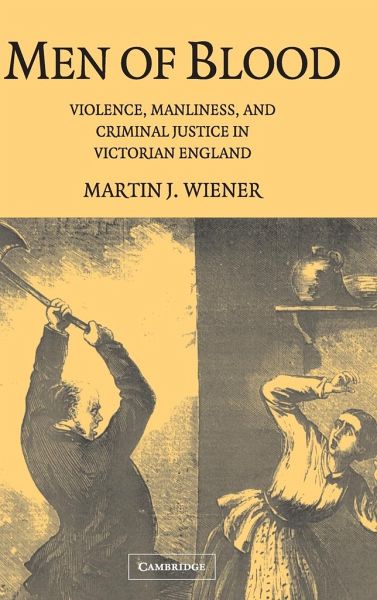
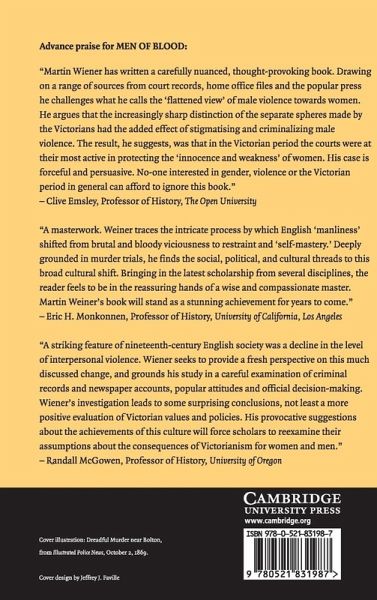
An examination of the treatment of serious violence by men against women in nineteenth-century England. During Victoria's reign the criminal law came to punish such violence more systematically and heavily, while propagating a new, more pacific ideal of manliness. Yet this apparently progressive legal development called forth strong resistance, not only from violent men themselves but, from others who drew upon discourses of democracy, humanitarianism and patriarchy to establish sympathy with 'men of blood'. In exploring this development and the contest it generated, Professor Wiener analyzes the cultural logic underlying shifting practices in nineteenth-century courts and Whitehall, and locates competing cultural discourses in the everyday life of criminal justice. The tensions and dilemmas this book highlights are more than simply 'Victorian' ones; to an important degree they remain with us. Consequently this work speaks not only to historians and to students of gender but also to criminologists and legal theorists.