
Andere Kunden interessierten sich auch für
 Mauenheim und Bargen66,99 €
 Ruhr Museum. Katalog der etruskischen und italischen Antiken49,00 €
 Die Wikinger16,99 €
 Mythen und Sagen im alten Rom9,95 €
 Die Kelten in Burgund25,99 €
 Die Etrusker10,00 €
 Etruskische Todesdämonen49,00 €






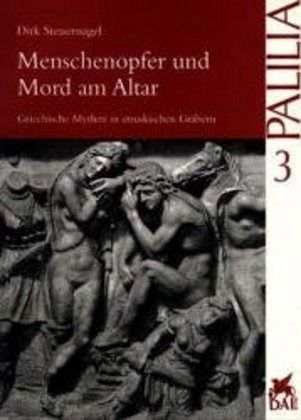
Numerous Etruscan monuments of the 4th to the 1st century BC contain depictions of human sacrifices and of various acts of violance committed in sacred places. There is a broad range of themes, taken mostly from Greek mythology. This volume looks at the interests that the Etruscan aristocracy pursued via the depiction of Greek myths.
Hinweis: Dieser Artikel kann nur an eine deutsche Lieferadresse ausgeliefert werden.
Hinweis: Dieser Artikel kann nur an eine deutsche Lieferadresse ausgeliefert werden.
"The Etruskian embodiments of the Greek myths in alto-relievo and statues make possible to reconstruct their lost elements unattested in the available corpus of the Greek mythology. Especially, the reflections of the Greek concepts on the Next
World in the Etruskian iconography are of a great importance.
The book includes the catalogue of photographs (305) with a fuil bibliography. lt is published in a high typographical form and is nicely designed..
The publication will be useful for the ethnographers, art critics, historians of religion and culture in general."
By Georgi Boganov
In: Book Review, S. 26
World in the Etruskian iconography are of a great importance.
The book includes the catalogue of photographs (305) with a fuil bibliography. lt is published in a high typographical form and is nicely designed..
The publication will be useful for the ethnographers, art critics, historians of religion and culture in general."
By Georgi Boganov
In: Book Review, S. 26