
Andere Kunden interessierten sich auch für
 Política de saúde mental no município de Belo Horizonte40,99 €
 Política de salud mental en el municipio de Belo Horizonte41,99 €
 Politique de santé mentale dans la municipalité de Belo Horizonte40,99 €
 Polityka zdrowia psychicznego w gminie Belo Horizonte40,99 €
 Politik zur psychischen Gesundheit in der Gemeinde Belo Horizonte61,90 €
 Politica sanitaria mentale nel comune di Belo Horizonte40,99 €
 Care And Defense Of The Water Resources In The Municipality Of Soacha29,99 €




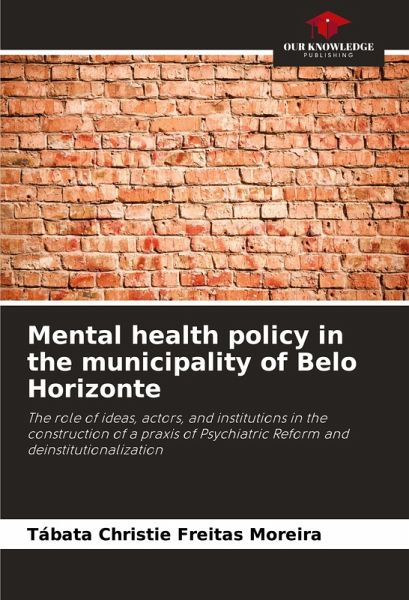
This dissertation focuses on innovations surrounding ideas about madness, the constitution of public agendas, and the translation of these agendas into institutional changes. To this end, it was necessary to privilege theoretical perspectives that elucidate the role of ideas in the formation of government agendas and to recover the trajectory traced by discourses and practices referring to the "madman"-considered mentally ill by M. Foucault and a citizen with rights by F. Basaglia. Based on the experience of the municipality of Belo Horizonte in the field of mental health, this study analyzes the municipal Mental Health policy, seeking to identify its constitution, its trajectory, its advances, and, finally, its challenges. Analytically, it seeks to elucidate how the Psychiatric Reform and its premises were incorporated into the structure and dynamics of the policy and how this reform has been implemented in the municipality, with the guideline of deinstitutionalization as its axis.