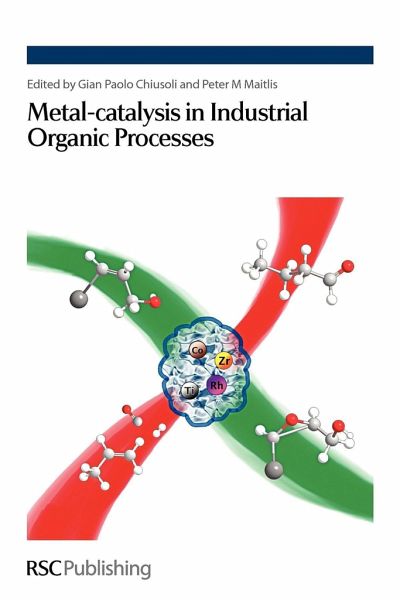
This popular book, now available as softback, considers the major areas of the field and discusses the logic of using catalysis in industrial processes. Information is provided on oxidation, hydrogenation, carbonylation, C-C bond formation, metathesis and polymerization processes as well as on the mechanisms involved. In addition two appendices offer a concise treatment of homogeneous and heterogenous catalysis. Numerous exercises referring to problems of catalytic processes, and research perspectives complete this book. This definitive reference source, written by practising experts in the…mehr
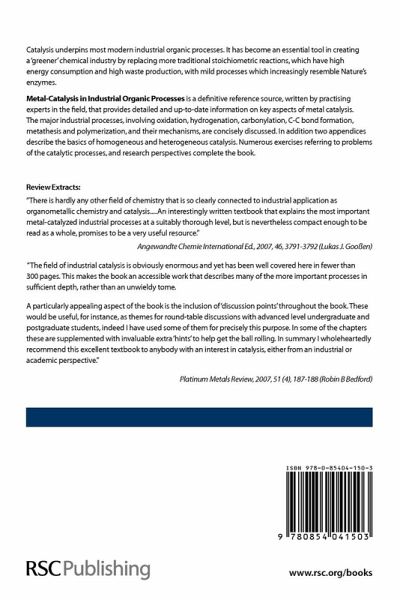
This popular book, now available as softback, considers the major areas of the field and discusses the logic of using catalysis in industrial processes. Information is provided on oxidation, hydrogenation, carbonylation, C-C bond formation, metathesis and polymerization processes as well as on the mechanisms involved. In addition two appendices offer a concise treatment of homogeneous and heterogenous catalysis. Numerous exercises referring to problems of catalytic processes, and research perspectives complete this book. This definitive reference source, written by practising experts in the field, provides detailed and up-to-date information on key aspects of metal catalysis.
Preface Glossary Chapter 1: Introduction - Catalysis in the Chemical Industry Sunley 1.1: Catalysis in the Chemical Industry 1.2: Selection of a Chemical Process: What Does the Catalyst Do? 1.3: Developing Metal-Catalysis - the Role of Fundamental Understanding References Chapter 2: Formation of C-O Bonds by Oxidation 2.1: Review - The Basic Chemistry of Oxygen 2.2: Cyclohexane Oxidation to Cyclohexanol and Cyclohexanone and to Adipic Acid: on the Way to Nylon-6,6 2.3: p-Xylene Oxidation to Terephthalic Acid. Polyethylene Terephthalate: on the Way to Fibres for Shirts 2.4: Ethylene Oxide by Ag-catalyzed Oxidation of Ethylene: for Antifreeze and Detergents 2.5: Propylene Oxide: to Biocompatible Propylene Glycol 2.6: Hydrogen Peroxide Route to Propylene Oxide 2.7: Asymmetric Epoxidation, Dihydroxylation and Sulfide Oxidation: New Routes to Chiral Agrochemicals and Pharmaceuticals 2.8: Acrolein and Acrylic Acid from Propylene: for Super-Absorbent Polymers, Paints, and Fibres 2.9: Methacrolein and Methacrylic Acid from Isobutene 2.10: Ammoxidation Reactions. Propylene to Acrylonitrile: for Engineering Plastics, Polymers 2.11: Maleic Anhydride and Phthalic Anhydride: for THF, Spandex, Swim-suits and Ladies' Tights 2.12: Silicalite Process to e-Caprolactam 2.13: Oxidation of Phenol to Catechol and Hydroquinone 2.14: Benzene Oxidation to Phenol: Making Phenolic Resins for Building 2.15: Oxidation Processes in which the Metal Directly Functionalizes the Olefinic Substrate 2.16: Enzymatic and Microbiological Oxidations. Microbial Hydroxylation of Progesterone Annex 1: Alkane Feedstocks. Alternative Routes to Acetic Acid and Acrylonitrile Annex 2: Adsorption Effects on the Catalytic Performances of TS-1. Zeolites as Solid Solvents References Chapter 3: Hydrogenation Reactions 3.1: Introduction and Basic Chemistry: Activation of Hydrogen and Transfer to Substrate Isomerization Reactions 3.2: Hydrotreating in Petroleum Chemistry 3.3: Mono-unsaturated Fatty Esters by Partial Hydrogenation of Natural Oils 3.4: Hydrogenation of Adiponitrile to Hexamethylenediamine 3.5: Making L-DOPA by Enantioselective Hydrogenation of Acetamidoarylacrylic Acids 3.6: Enantioselective Hydrogenation of N-Arylimines in the Synthesis of the Chiral Herbicide, (S )-Metolachlor 3.7: Isomerization Reactions: Diethylgeranylamine and Diethylnerylamine for the Production of (_)-Menthol 3.8: Enantioselective Hydrogen Transfer 3.9: Ethylbenzene Dehydrogenation to Styrene Discussion Points References Chapter 4: Syntheses Based on Carbon Monoxide 4.1: Introduction 4.2: Carbonylation Reactions of Alcohols and Esters 4.3: Hydroxy/Alkoxy-Carbonylation of Alkenes and Dienes 4.4: Polyketones 4.5: Oxidative Carbonylation of Methanol to Dimethyl Carbonate and Dimethyl Oxalate 4.6: Hydroformylation of Olefins 4.7: CO Hydrogenation Annex 1: Concerning the Mechanism of the Fischer-Tropsch Reaction Annex 2: Some Hints for Discussion Points References Chapter 5: Carbon-Carbon Bond Formation 5.1: Introduction 5.2: Alkylation and Related Reactions 5.3: Carbon-Carbon Bond Formation through Activation of Aryl- or Vinyl-Halide bonds: Fine Chemicals 5.4: Chemistry of Allyl Compounds. Butadiene as Substrate 5.5: Oligomerization of Olefins 5.6: Carbene Chemistry and Asymmetric Synthesis: Chrysanthemic Esters Annex 1: Devising New Synthetic Pathways Annex 2: Hints to Improve or to Develop Alternative Processes for the Synthesis of Aromatics Catalyzed by Transition Metals Annex 3: Perspectives in C-C Bond Forming Organic Syntheses References Chapter 6: Metathesis of Olefins 6.1: Introduction - History and Basic Chemistry of Metathesis 6.2: The Carbene-Metallacyclobutane Mechanism of Metathesis 6.3: Industrial Applications of Metathesis 6.4: Homogeneous Ruthenium Alkylidene Complexes 6.5: Speciality Polymers 6.6: Fine Chemicals and Pharmaceuticals 6.7: Recent Progress 6.8: Future Outlook References Chapter 7: Polymerization Reactions 7.1: An Introductory Overview 7.2: Industrial Aspects of Polyolefin Production 7.3: Solid-State Polymerization Catalysts 7.4: Soluble Olefin Polymerization Catalysts 7.5: Supported Metallocene Catalysts 7.6: Copolymerization of Linear and Cyclic Olefins 7.7: Copolymerisation of Olefins with Polar Monomers and with CO Annex 1: Polymer Stereochemistry Studied by 13C NMR Spectroscopy Annex 2: Stereospecific Polymerization of Conjugated Diolefins: Butadiene and Isoprene Annex 3: Some Hints to Help Start the Discussions Acknowledgements References Appendix 1: Basic Organometallic Chemistry Related to Catalytic Cycles References Appendix 2: Some Basic Aspects of Surface Science Related to Heterogeneously Catalyzed Reactions References Subject Index
Preface Glossary Chapter 1: Introduction - Catalysis in the Chemical Industry Sunley 1.1: Catalysis in the Chemical Industry 1.2: Selection of a Chemical Process: What Does the Catalyst Do? 1.3: Developing Metal-Catalysis - the Role of Fundamental Understanding References Chapter 2: Formation of C-O Bonds by Oxidation 2.1: Review - The Basic Chemistry of Oxygen 2.2: Cyclohexane Oxidation to Cyclohexanol and Cyclohexanone and to Adipic Acid: on the Way to Nylon-6,6 2.3: p-Xylene Oxidation to Terephthalic Acid. Polyethylene Terephthalate: on the Way to Fibres for Shirts 2.4: Ethylene Oxide by Ag-catalyzed Oxidation of Ethylene: for Antifreeze and Detergents 2.5: Propylene Oxide: to Biocompatible Propylene Glycol 2.6: Hydrogen Peroxide Route to Propylene Oxide 2.7: Asymmetric Epoxidation, Dihydroxylation and Sulfide Oxidation: New Routes to Chiral Agrochemicals and Pharmaceuticals 2.8: Acrolein and Acrylic Acid from Propylene: for Super-Absorbent Polymers, Paints, and Fibres 2.9: Methacrolein and Methacrylic Acid from Isobutene 2.10: Ammoxidation Reactions. Propylene to Acrylonitrile: for Engineering Plastics, Polymers 2.11: Maleic Anhydride and Phthalic Anhydride: for THF, Spandex, Swim-suits and Ladies' Tights 2.12: Silicalite Process to e-Caprolactam 2.13: Oxidation of Phenol to Catechol and Hydroquinone 2.14: Benzene Oxidation to Phenol: Making Phenolic Resins for Building 2.15: Oxidation Processes in which the Metal Directly Functionalizes the Olefinic Substrate 2.16: Enzymatic and Microbiological Oxidations. Microbial Hydroxylation of Progesterone Annex 1: Alkane Feedstocks. Alternative Routes to Acetic Acid and Acrylonitrile Annex 2: Adsorption Effects on the Catalytic Performances of TS-1. Zeolites as Solid Solvents References Chapter 3: Hydrogenation Reactions 3.1: Introduction and Basic Chemistry: Activation of Hydrogen and Transfer to Substrate Isomerization Reactions 3.2: Hydrotreating in Petroleum Chemistry 3.3: Mono-unsaturated Fatty Esters by Partial Hydrogenation of Natural Oils 3.4: Hydrogenation of Adiponitrile to Hexamethylenediamine 3.5: Making L-DOPA by Enantioselective Hydrogenation of Acetamidoarylacrylic Acids 3.6: Enantioselective Hydrogenation of N-Arylimines in the Synthesis of the Chiral Herbicide, (S )-Metolachlor 3.7: Isomerization Reactions: Diethylgeranylamine and Diethylnerylamine for the Production of (_)-Menthol 3.8: Enantioselective Hydrogen Transfer 3.9: Ethylbenzene Dehydrogenation to Styrene Discussion Points References Chapter 4: Syntheses Based on Carbon Monoxide 4.1: Introduction 4.2: Carbonylation Reactions of Alcohols and Esters 4.3: Hydroxy/Alkoxy-Carbonylation of Alkenes and Dienes 4.4: Polyketones 4.5: Oxidative Carbonylation of Methanol to Dimethyl Carbonate and Dimethyl Oxalate 4.6: Hydroformylation of Olefins 4.7: CO Hydrogenation Annex 1: Concerning the Mechanism of the Fischer-Tropsch Reaction Annex 2: Some Hints for Discussion Points References Chapter 5: Carbon-Carbon Bond Formation 5.1: Introduction 5.2: Alkylation and Related Reactions 5.3: Carbon-Carbon Bond Formation through Activation of Aryl- or Vinyl-Halide bonds: Fine Chemicals 5.4: Chemistry of Allyl Compounds. Butadiene as Substrate 5.5: Oligomerization of Olefins 5.6: Carbene Chemistry and Asymmetric Synthesis: Chrysanthemic Esters Annex 1: Devising New Synthetic Pathways Annex 2: Hints to Improve or to Develop Alternative Processes for the Synthesis of Aromatics Catalyzed by Transition Metals Annex 3: Perspectives in C-C Bond Forming Organic Syntheses References Chapter 6: Metathesis of Olefins 6.1: Introduction - History and Basic Chemistry of Metathesis 6.2: The Carbene-Metallacyclobutane Mechanism of Metathesis 6.3: Industrial Applications of Metathesis 6.4: Homogeneous Ruthenium Alkylidene Complexes 6.5: Speciality Polymers 6.6: Fine Chemicals and Pharmaceuticals 6.7: Recent Progress 6.8: Future Outlook References Chapter 7: Polymerization Reactions 7.1: An Introductory Overview 7.2: Industrial Aspects of Polyolefin Production 7.3: Solid-State Polymerization Catalysts 7.4: Soluble Olefin Polymerization Catalysts 7.5: Supported Metallocene Catalysts 7.6: Copolymerization of Linear and Cyclic Olefins 7.7: Copolymerisation of Olefins with Polar Monomers and with CO Annex 1: Polymer Stereochemistry Studied by 13C NMR Spectroscopy Annex 2: Stereospecific Polymerization of Conjugated Diolefins: Butadiene and Isoprene Annex 3: Some Hints to Help Start the Discussions Acknowledgements References Appendix 1: Basic Organometallic Chemistry Related to Catalytic Cycles References Appendix 2: Some Basic Aspects of Surface Science Related to Heterogeneously Catalyzed Reactions References Subject Index
Es gelten unsere Allgemeinen Geschäftsbedingungen: www.buecher.de/agb
Impressum
www.buecher.de ist ein Internetauftritt der buecher.de internetstores GmbH
Geschäftsführung: Monica Sawhney | Roland Kölbl | Günter Hilger
Sitz der Gesellschaft: Batheyer Straße 115 - 117, 58099 Hagen
Postanschrift: Bürgermeister-Wegele-Str. 12, 86167 Augsburg
Amtsgericht Hagen HRB 13257
Steuernummer: 321/5800/1497
USt-IdNr: DE450055826