
Andere Kunden interessierten sich auch für
 Middle-earth and the Return of the Common Good37,99 €
 The Wizard's Illusion24,99 €
 Illuminating Humor of the Bible39,99 €
 Illuminating Humor of the Bible26,99 €
 How Violence Works42,99 €
 Through All the Plain20,99 €
 Christianity and the Culture Machine31,99 €
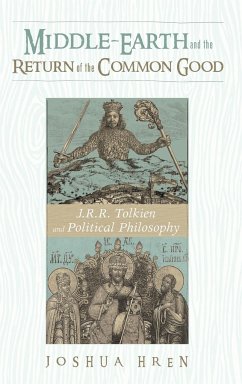
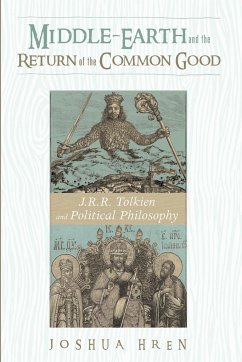
Political philosophy is nothing other than looking at things political under the aspect of eternity. This book invites us to look philosophically at political things in J.R.R. Tolkien's legendarium, demonstrating that Tolkien's potent mythology can be brought into rich, fruitful dialogue with works of political philosophy and political theology as different as Plato's Timaeus, Aquinas' De Regno, Hobbes's Leviathan, and Erik Peterson's ""Monotheism as a Political Problem."" It concludes that a political reading of Tolkien's work is most luminous when conducted by the harmonious lights of fides et ratio as found in the thought of Thomas Aquinas. A broad study of Tolkien and the political is especially pertinent in that the legendarium operates on two levels. As a popular mythology it is, in the author's own words ""a really long story that would hold the attention of readers, amuse them, delight them, and at times maybe excite them or deeply move them."" But the stories of The Silmarillion and The Lord of the Rings contain deeper teachings that can only be drawn out when read philosophically. Written from the vantage of a mind that is deeply Christian, Tolkien's stories grant us a revelatory gaze into the major political problems of modernity--from individualism to totalitarianism, sovereignty to surveillance, terror to technocracy. As an ""outsider"" in modernity, Tolkien invites us to question the modern in a manner that moves beyond reaction into a vivid and compelling vision of the common good.