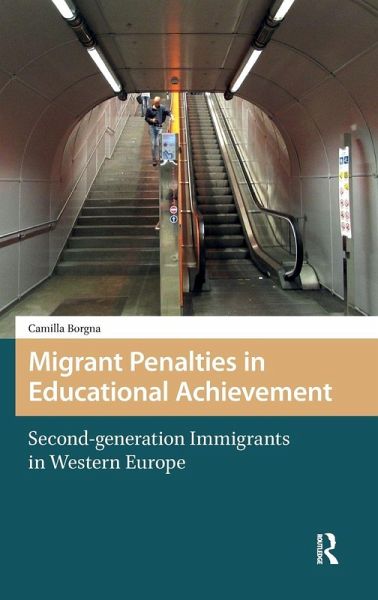
Camilla Borgna
Migrant Penalties in Educational Achievement
Second-generation Immigrants in Western Europe
Camilla Borgna
Migrant Penalties in Educational Achievement
Second-generation Immigrants in Western Europe
- Gebundenes Buch
- Merkliste
- Auf die Merkliste
- Bewerten Bewerten
- Teilen
- Produkt teilen
- Produkterinnerung
- Produkterinnerung
This volume focuses on the portant challenge of the less successful educational outcomes of second-generation migrants.
Andere Kunden interessierten sich auch für
Xiao MaSouth Korean Migrants in China123,99 €
Facilitating Educational Success For Migrant Farmworker Students in the U.S.194,99 €
Chengqi CaoEducating Migrant Children in China171,99 €
Edna ChunRethinking Diversity Frameworks in Higher Education185,99 €
Exploring the Narratives and Agency of Children with Migrant Backgrounds within Schools171,99 €
Traveller, Nomadic and Migrant Education185,99 €
Educating Greek Americans113,99 €-
-
-
This volume focuses on the portant challenge of the less successful educational outcomes of second-generation migrants.
Produktdetails
- Produktdetails
- Verlag: Routledge
- Seitenzahl: 208
- Erscheinungstermin: 4. September 2017
- Englisch
- Abmessung: 240mm x 161mm x 16mm
- Gewicht: 482g
- ISBN-13: 9789462981348
- ISBN-10: 9462981345
- Artikelnr.: 45677890
- Herstellerkennzeichnung
- Libri GmbH
- Europaallee 1
- 36244 Bad Hersfeld
- gpsr@libri.de
- Verlag: Routledge
- Seitenzahl: 208
- Erscheinungstermin: 4. September 2017
- Englisch
- Abmessung: 240mm x 161mm x 16mm
- Gewicht: 482g
- ISBN-13: 9789462981348
- ISBN-10: 9462981345
- Artikelnr.: 45677890
- Herstellerkennzeichnung
- Libri GmbH
- Europaallee 1
- 36244 Bad Hersfeld
- gpsr@libri.de
Camilla Borgna obtained a Ph.D. in Political Studies at the University of Milan in 2014 and is currently Senior Research Fellow in the unit 'Skill Formation and Labor Markets' at the WZB - Berlin Social Science Center. Her research lies at the intersection of social stratification, sociology of education, and comparative social policy. Her work appeared in the European Sociological Review, European Societies, Social Science Research, and in the Journal of European Social Policy.
3 Introduction 1.1 Children of migrants in Europe: which equal
opportunities? 1.2 The promise of diversity-oriented methods 1.3 Structure
of the book 2 Conceptual framework and case selection 2.1 Social
inequalities in education 2.2 Educational systems as opportunity structures
2.3 Defining children of immigrants 2.4 Case selection: comparing
immigration societies 2.5 Educational systems in Western Europe 3 The
educational achievement of second-generation immigrants in Western Europe
3.1 Previous studies 3.1.1 A double disadvantage 3.1.2 The role of
teachers, classrooms, and schools 3.1.3 Cross-country differences 3.2
Migrant penalties in educational achievement 3.2.1 Research questions and
hypotheses 3.2.2 Analytical strategy 3.2.3 Data, operationalization, and
models 3.2.4 Results and discussion 3.3 Compound disadvantages 3.3.1
Research questions 3.3.2 Analytical strategy 3.3.3 Operationalization:
fuzzy-set calibration 3.3.4 Results and discussion 4 The role of
educational systems for migrant learning disadvantage 4.1 Previous studies
4.1.1 Educational institutions and socio-economic disadvantage 4.1.2
Educational institutions and migrant learning disadvantage 4.1.3
Cross-country explanatory studies 4.2 Hypotheses formulation 4.2.1
Theoretically relevant dimensions of educational systems 4.2.2 Contextual
factors 4.3 Analytical strategy 4.4 Operationalization 4.4.1 Variable
construction 4.4.2 Fuzzy-set calibration 4.5 Results from a
variable-oriented approach 4.5.1 Bivariate correlations 4.5.2 Multivariate
analysis 4.5.3 Regression-tree analysis 4.6 Results from a
diversity-oriented approach 4.6.1 Assessing individual necessity and
sufficiency 4.6.2 Institutional configurations 4.6.3 fs-QCA: model
construction and robustness checks 4.6.4 Final fs-QCA results and
discussion 5 Conclusions 5.1 Key findings 5.2 Methodological contributions
5.3 Policy implications 5.4 Limitations and outlook A Appendix to chapter 3
B Appendix to chapter 4 List of tables, List of figures, References,
Endnotes
opportunities? 1.2 The promise of diversity-oriented methods 1.3 Structure
of the book 2 Conceptual framework and case selection 2.1 Social
inequalities in education 2.2 Educational systems as opportunity structures
2.3 Defining children of immigrants 2.4 Case selection: comparing
immigration societies 2.5 Educational systems in Western Europe 3 The
educational achievement of second-generation immigrants in Western Europe
3.1 Previous studies 3.1.1 A double disadvantage 3.1.2 The role of
teachers, classrooms, and schools 3.1.3 Cross-country differences 3.2
Migrant penalties in educational achievement 3.2.1 Research questions and
hypotheses 3.2.2 Analytical strategy 3.2.3 Data, operationalization, and
models 3.2.4 Results and discussion 3.3 Compound disadvantages 3.3.1
Research questions 3.3.2 Analytical strategy 3.3.3 Operationalization:
fuzzy-set calibration 3.3.4 Results and discussion 4 The role of
educational systems for migrant learning disadvantage 4.1 Previous studies
4.1.1 Educational institutions and socio-economic disadvantage 4.1.2
Educational institutions and migrant learning disadvantage 4.1.3
Cross-country explanatory studies 4.2 Hypotheses formulation 4.2.1
Theoretically relevant dimensions of educational systems 4.2.2 Contextual
factors 4.3 Analytical strategy 4.4 Operationalization 4.4.1 Variable
construction 4.4.2 Fuzzy-set calibration 4.5 Results from a
variable-oriented approach 4.5.1 Bivariate correlations 4.5.2 Multivariate
analysis 4.5.3 Regression-tree analysis 4.6 Results from a
diversity-oriented approach 4.6.1 Assessing individual necessity and
sufficiency 4.6.2 Institutional configurations 4.6.3 fs-QCA: model
construction and robustness checks 4.6.4 Final fs-QCA results and
discussion 5 Conclusions 5.1 Key findings 5.2 Methodological contributions
5.3 Policy implications 5.4 Limitations and outlook A Appendix to chapter 3
B Appendix to chapter 4 List of tables, List of figures, References,
Endnotes
3 Introduction 1.1 Children of migrants in Europe: which equal
opportunities? 1.2 The promise of diversity-oriented methods 1.3 Structure
of the book 2 Conceptual framework and case selection 2.1 Social
inequalities in education 2.2 Educational systems as opportunity structures
2.3 Defining children of immigrants 2.4 Case selection: comparing
immigration societies 2.5 Educational systems in Western Europe 3 The
educational achievement of second-generation immigrants in Western Europe
3.1 Previous studies 3.1.1 A double disadvantage 3.1.2 The role of
teachers, classrooms, and schools 3.1.3 Cross-country differences 3.2
Migrant penalties in educational achievement 3.2.1 Research questions and
hypotheses 3.2.2 Analytical strategy 3.2.3 Data, operationalization, and
models 3.2.4 Results and discussion 3.3 Compound disadvantages 3.3.1
Research questions 3.3.2 Analytical strategy 3.3.3 Operationalization:
fuzzy-set calibration 3.3.4 Results and discussion 4 The role of
educational systems for migrant learning disadvantage 4.1 Previous studies
4.1.1 Educational institutions and socio-economic disadvantage 4.1.2
Educational institutions and migrant learning disadvantage 4.1.3
Cross-country explanatory studies 4.2 Hypotheses formulation 4.2.1
Theoretically relevant dimensions of educational systems 4.2.2 Contextual
factors 4.3 Analytical strategy 4.4 Operationalization 4.4.1 Variable
construction 4.4.2 Fuzzy-set calibration 4.5 Results from a
variable-oriented approach 4.5.1 Bivariate correlations 4.5.2 Multivariate
analysis 4.5.3 Regression-tree analysis 4.6 Results from a
diversity-oriented approach 4.6.1 Assessing individual necessity and
sufficiency 4.6.2 Institutional configurations 4.6.3 fs-QCA: model
construction and robustness checks 4.6.4 Final fs-QCA results and
discussion 5 Conclusions 5.1 Key findings 5.2 Methodological contributions
5.3 Policy implications 5.4 Limitations and outlook A Appendix to chapter 3
B Appendix to chapter 4 List of tables, List of figures, References,
Endnotes
opportunities? 1.2 The promise of diversity-oriented methods 1.3 Structure
of the book 2 Conceptual framework and case selection 2.1 Social
inequalities in education 2.2 Educational systems as opportunity structures
2.3 Defining children of immigrants 2.4 Case selection: comparing
immigration societies 2.5 Educational systems in Western Europe 3 The
educational achievement of second-generation immigrants in Western Europe
3.1 Previous studies 3.1.1 A double disadvantage 3.1.2 The role of
teachers, classrooms, and schools 3.1.3 Cross-country differences 3.2
Migrant penalties in educational achievement 3.2.1 Research questions and
hypotheses 3.2.2 Analytical strategy 3.2.3 Data, operationalization, and
models 3.2.4 Results and discussion 3.3 Compound disadvantages 3.3.1
Research questions 3.3.2 Analytical strategy 3.3.3 Operationalization:
fuzzy-set calibration 3.3.4 Results and discussion 4 The role of
educational systems for migrant learning disadvantage 4.1 Previous studies
4.1.1 Educational institutions and socio-economic disadvantage 4.1.2
Educational institutions and migrant learning disadvantage 4.1.3
Cross-country explanatory studies 4.2 Hypotheses formulation 4.2.1
Theoretically relevant dimensions of educational systems 4.2.2 Contextual
factors 4.3 Analytical strategy 4.4 Operationalization 4.4.1 Variable
construction 4.4.2 Fuzzy-set calibration 4.5 Results from a
variable-oriented approach 4.5.1 Bivariate correlations 4.5.2 Multivariate
analysis 4.5.3 Regression-tree analysis 4.6 Results from a
diversity-oriented approach 4.6.1 Assessing individual necessity and
sufficiency 4.6.2 Institutional configurations 4.6.3 fs-QCA: model
construction and robustness checks 4.6.4 Final fs-QCA results and
discussion 5 Conclusions 5.1 Key findings 5.2 Methodological contributions
5.3 Policy implications 5.4 Limitations and outlook A Appendix to chapter 3
B Appendix to chapter 4 List of tables, List of figures, References,
Endnotes