
Andere Kunden interessierten sich auch für
 The Book of Humanitarian Hoaxes18,99 €
 The Political Thought of Sayyid Qutb68,99 €
 The Strange Death of Europe15,99 €
 Islamism and the Future of the Christians of the Middle East9,49 €
 The Most Bitter Foe of Nations, and the Way to Its Permanent Overthrow14,99 €
 The Symbolic Scenarios of Islamism53,99 €
 In Darkest England and the Way Out20,99 €







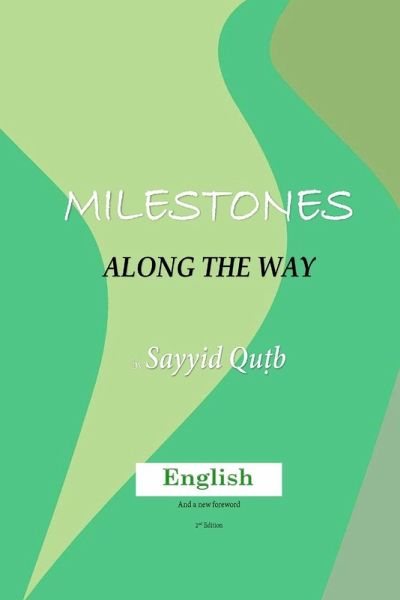
Although it is common in the publishing world for the author to produce an abstract that introduces their work, the blurb is generally written in passive voice, giving the impression that someone else, perhaps an editor or reviewer, wrote the "about" statement. Sayyid Qutb, true to his reputation, introduced his book in the first voice.I wrote Milestones Along the Way for this awaited and desired vanguard. This work consists of four chapters: The Nature of the Quranic Method, Islamic Concept and Culture, Jihad in the Cause of God, and Revival of the Muslim Community and its characteristics. These chapters are derived from the commentary I wrote, F¿ zil¿li 'l-qur'¿n, which I have changed in some places slightly to fit the topic being discussed here. I wrote the Introduction and the other chapters at various times. In writing these chapters, I provide insight into findings which were inspired by evolving reflections derived from the divine systems as expressed in the Noble Quran. In this edition, a revised English translation, a new foreword, an introduction, and an expanded index of key words and concepts. No Arabic text is included in this edition.