
Andere Kunden interessierten sich auch für
 Observations on Mineral Veins14,90 €
") Chemical Report Of The Coals, Soils, Clays, Petroleum, Mineral Waters, Etc., Of Kentucky V1, Part 3 (1888)18,99 €
Chemical Report Of The Coals, Soils, Clays, Petroleum, Mineral Waters, Etc., Of Kentucky V1, Part 3 (1888)18,99 €") American Mineral Waters; Enological Studies; Experiments On The Processing Of Persimmons To Render Them Non Astringent (1912)23,99 €
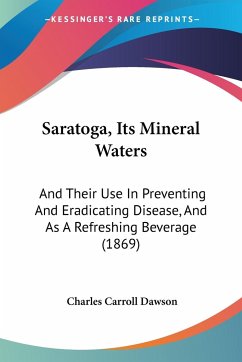
American Mineral Waters; Enological Studies; Experiments On The Processing Of Persimmons To Render Them Non Astringent (1912)23,99 € Saratoga, Its Mineral Waters12,99 €
 A Treatise On The Diseases Of Arteries And Veins32,99 €
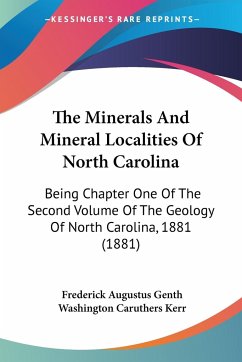
 The Minerals And Mineral Localities Of North Carolina15,99 €
") Bentrage Zu Der Mineral-Geschichte Von Bohmen (1774)21,99 €
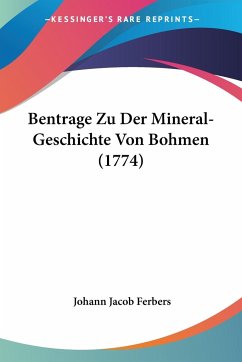
Bentrage Zu Der Mineral-Geschichte Von Bohmen (1774)21,99 €

This scarce antiquarian book is a facsimile reprint of the original. Due to its age, it may contain imperfections such as marks, notations, marginalia and flawed pages. Because we believe this work is culturally important, we have made it available as part of our commitment for protecting, preserving, and promoting the world's literature in affordable, high quality, modern editions that are true to the original work.