
Andere Kunden interessierten sich auch für
 Minimizaciq zaderzhek i uwelichenie skorosti transportnyh sredstw w VANET29,99 €
 Minimierung von Verzögerungen und Erhöhung der Fahrzeuggeschwindigkeit im VANET43,90 €
 Ridurre al minimo i ritardi e migliorare la velocità dei veicoli in VANET29,99 €
 Minimiser les retards et améliorer la vitesse des véhicules dans le réseau VANET29,99 €
 Minimizar os atrasos e aumentar a velocidade do veículo em VANET29,99 €
 Enhancement in AODV-Reactive Topology Based Routing Protocol in VANET24,99 €
 Enhancing and Combining a Recent K-means Family of Algorithms36,99 €
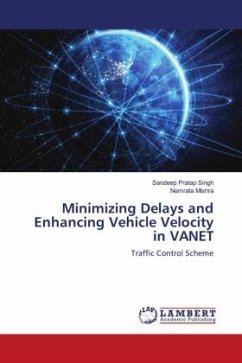
In Vehicular Ad Hoc Networks (VANETs), vehicles communicate through Vehicle-to-Vehicle (V to V) and Vehicle-to-Roadside Unit (V to RSU) channels, posing challenges for wide deployment. A key issue is designing delay minimization algorithms to handle path disruptions due to vehicle mobility. This dissertation proposes a scheme focusing on reducing delays for high-velocity vehicles, minimizing collision risks. It utilizes low-velocity vehicles to share road status and velocity information, reducing overall traffic in dynamic VANETs. The AODV routing protocol is employed for flooded request and reply, broadcasting specific packets called delay-aware information. Computer simulations using the ns-2 simulator demonstrate the scheme's effectiveness in increasing information delivery, reducing packet overhead, and improving throughput.