Brian G. Southwell, Emily A. Thorson, Laura Sheble
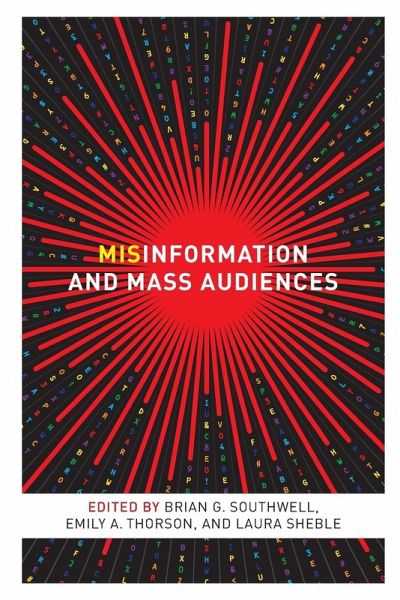
Misinformation and Mass Audiences
Herausgeber: Southwell, Brian G.
Brian G. Southwell, Emily A. Thorson, Laura Sheble
Misinformation and Mass Audiences
Herausgeber: Southwell, Brian G.
- Broschiertes Buch
- Merkliste
- Auf die Merkliste
- Bewerten Bewerten
- Teilen
- Produkt teilen
- Produkterinnerung
- Produkterinnerung
Addressing one of the most important but least-reported aspects of mass communication, this timely volume considers both the perils of misinformation and the possibilities for remedying its detrimental effects.
Andere Kunden interessierten sich auch für
Linda HutcheonA Theory of Adaptation54,99 €
Chris ComerfordCinematic Digital Television40,99 €
Summer HarlowDigital-Native News and the Remaking of Latin American Mainstream and Alternative Journalism59,99 €
Georgia-Zozeta MiliopoulouCreative Advertising Concept and Copy38,99 €
Linda HutcheonA Theory of Adaptation149,99 €
Ratan Kumar RoyTelevision in Bangladesh45,99 €
David MorleyTelevision, Audiences and Cultural Studies41,99 €-
-
-
Addressing one of the most important but least-reported aspects of mass communication, this timely volume considers both the perils of misinformation and the possibilities for remedying its detrimental effects.
Produktdetails
- Produktdetails
- Verlag: University of Texas Press
- Seitenzahl: 320
- Erscheinungstermin: 24. Januar 2018
- Englisch
- Abmessung: 229mm x 152mm x 19mm
- Gewicht: 496g
- ISBN-13: 9781477314562
- ISBN-10: 1477314563
- Artikelnr.: 48066585
- Herstellerkennzeichnung
- Libri GmbH
- Europaallee 1
- 36244 Bad Hersfeld
- gpsr@libri.de
- Verlag: University of Texas Press
- Seitenzahl: 320
- Erscheinungstermin: 24. Januar 2018
- Englisch
- Abmessung: 229mm x 152mm x 19mm
- Gewicht: 496g
- ISBN-13: 9781477314562
- ISBN-10: 1477314563
- Artikelnr.: 48066585
- Herstellerkennzeichnung
- Libri GmbH
- Europaallee 1
- 36244 Bad Hersfeld
- gpsr@libri.de
Edited by Brian G. Southwell, Emily A. Thorson, and Laura Sheble
1. Acknowledgments
2. Introduction: Misinformation among Mass Audiences as a Focus for Inquiry
(Brian G. Southwell, Emily A. Thorson, and Laura Sheble)
3. Part I. Dimensions of Audience Awareness of Misinformation
* Chapter 1. Believing Things That Are Not True: A Cognitive Science
Perspective on Misinformation (Elizabeth J. Marsh and Brenda W. Yang)
* Chapter 2. Awareness of Misinformation in Health-Related Advertising:
A Narrative Review of the Literature (Vanessa Boudewyns, Brian G.
Southwell, Kevin R. Betts, Catherine Slota Gupta, Ryan S. Paquin,
Amie C. O’Donoghue, and Natasha Vazquez)
* Chapter 3. The Importance of Measuring Knowledge in the Age of
Misinformation and Challenges in the Tobacco Domain (Joseph N.
Cappella, Yotam Ophir, and Jazmyne Sutton)
* Chapter 4. Measuring Perceptions of Shares of Groups (Douglas J.
Ahler and Gaurav Sood)
* Chapter 5. Dimensions of Visual Misinformation in the Emerging Media
Landscape (Jeff Hemsley and Jaime Snyder)
4. Part II. Theoretical Effects and Consequences of Misinformation
* Chapter 6. The Effects of False Information in News Stories (Melanie
C. Green and John K. Donahue)
* Chapter 7. Can Satire and Irony Constitute Misinformation? (Dannagal
G. Young)
* Chapter 8. Media and Political Misperceptions (Brian E. Weeks)
* Chapter 9. Misinformation and Science: Emergence, Diffusion, and
Persistence (Laura Sheble)
* Chapter 10. Doing the Wrong Things for the Right Reasons: How
Environmental Misinformation Affects Environmental Behavior
(Alexander Maki, Amanda R. Carrico, and Michael P. Vandenbergh)
5. Part III. Solutions and Remedies for Misinformation
* Chapter 11. Misinformation and Its Correction: Cognitive Mechanisms
and Recommendations for Mass Communication (Briony Swire and Ullrich
Ecker)
* Chapter 12. How to Counteract Consumer Product Misinformation (Graham
Bullock)
* Chapter 13. A History of Fact Checking in U.S. Politics and Election
Contexts (Shannon Poulsen and Dannagal G. Young)
* Chapter 14. Comparing Approaches to Journalistic Fact Checking (Emily
A. Thorson)
* Chapter 15. The Role of Middle-Level Gatekeepers in the Propagation
and Longevity of Misinformation (Jeff Hemsley)
* Chapter 16. Encouraging Information Search to Counteract
Misinformation: Providing "Balanced" Information about Vaccines
(Samantha Kaplan)
6. Conclusion: An Agenda for Misinformation Research (Emily A. Thorson, Laura
Sheble, and Brian G. Southwell)
7. Contributors
8. Index
2. Introduction: Misinformation among Mass Audiences as a Focus for Inquiry
(Brian G. Southwell, Emily A. Thorson, and Laura Sheble)
3. Part I. Dimensions of Audience Awareness of Misinformation
* Chapter 1. Believing Things That Are Not True: A Cognitive Science
Perspective on Misinformation (Elizabeth J. Marsh and Brenda W. Yang)
* Chapter 2. Awareness of Misinformation in Health-Related Advertising:
A Narrative Review of the Literature (Vanessa Boudewyns, Brian G.
Southwell, Kevin R. Betts, Catherine Slota Gupta, Ryan S. Paquin,
Amie C. O’Donoghue, and Natasha Vazquez)
* Chapter 3. The Importance of Measuring Knowledge in the Age of
Misinformation and Challenges in the Tobacco Domain (Joseph N.
Cappella, Yotam Ophir, and Jazmyne Sutton)
* Chapter 4. Measuring Perceptions of Shares of Groups (Douglas J.
Ahler and Gaurav Sood)
* Chapter 5. Dimensions of Visual Misinformation in the Emerging Media
Landscape (Jeff Hemsley and Jaime Snyder)
4. Part II. Theoretical Effects and Consequences of Misinformation
* Chapter 6. The Effects of False Information in News Stories (Melanie
C. Green and John K. Donahue)
* Chapter 7. Can Satire and Irony Constitute Misinformation? (Dannagal
G. Young)
* Chapter 8. Media and Political Misperceptions (Brian E. Weeks)
* Chapter 9. Misinformation and Science: Emergence, Diffusion, and
Persistence (Laura Sheble)
* Chapter 10. Doing the Wrong Things for the Right Reasons: How
Environmental Misinformation Affects Environmental Behavior
(Alexander Maki, Amanda R. Carrico, and Michael P. Vandenbergh)
5. Part III. Solutions and Remedies for Misinformation
* Chapter 11. Misinformation and Its Correction: Cognitive Mechanisms
and Recommendations for Mass Communication (Briony Swire and Ullrich
Ecker)
* Chapter 12. How to Counteract Consumer Product Misinformation (Graham
Bullock)
* Chapter 13. A History of Fact Checking in U.S. Politics and Election
Contexts (Shannon Poulsen and Dannagal G. Young)
* Chapter 14. Comparing Approaches to Journalistic Fact Checking (Emily
A. Thorson)
* Chapter 15. The Role of Middle-Level Gatekeepers in the Propagation
and Longevity of Misinformation (Jeff Hemsley)
* Chapter 16. Encouraging Information Search to Counteract
Misinformation: Providing "Balanced" Information about Vaccines
(Samantha Kaplan)
6. Conclusion: An Agenda for Misinformation Research (Emily A. Thorson, Laura
Sheble, and Brian G. Southwell)
7. Contributors
8. Index
1. Acknowledgments
2. Introduction: Misinformation among Mass Audiences as a Focus for Inquiry
(Brian G. Southwell, Emily A. Thorson, and Laura Sheble)
3. Part I. Dimensions of Audience Awareness of Misinformation
* Chapter 1. Believing Things That Are Not True: A Cognitive Science
Perspective on Misinformation (Elizabeth J. Marsh and Brenda W. Yang)
* Chapter 2. Awareness of Misinformation in Health-Related Advertising:
A Narrative Review of the Literature (Vanessa Boudewyns, Brian G.
Southwell, Kevin R. Betts, Catherine Slota Gupta, Ryan S. Paquin,
Amie C. O’Donoghue, and Natasha Vazquez)
* Chapter 3. The Importance of Measuring Knowledge in the Age of
Misinformation and Challenges in the Tobacco Domain (Joseph N.
Cappella, Yotam Ophir, and Jazmyne Sutton)
* Chapter 4. Measuring Perceptions of Shares of Groups (Douglas J.
Ahler and Gaurav Sood)
* Chapter 5. Dimensions of Visual Misinformation in the Emerging Media
Landscape (Jeff Hemsley and Jaime Snyder)
4. Part II. Theoretical Effects and Consequences of Misinformation
* Chapter 6. The Effects of False Information in News Stories (Melanie
C. Green and John K. Donahue)
* Chapter 7. Can Satire and Irony Constitute Misinformation? (Dannagal
G. Young)
* Chapter 8. Media and Political Misperceptions (Brian E. Weeks)
* Chapter 9. Misinformation and Science: Emergence, Diffusion, and
Persistence (Laura Sheble)
* Chapter 10. Doing the Wrong Things for the Right Reasons: How
Environmental Misinformation Affects Environmental Behavior
(Alexander Maki, Amanda R. Carrico, and Michael P. Vandenbergh)
5. Part III. Solutions and Remedies for Misinformation
* Chapter 11. Misinformation and Its Correction: Cognitive Mechanisms
and Recommendations for Mass Communication (Briony Swire and Ullrich
Ecker)
* Chapter 12. How to Counteract Consumer Product Misinformation (Graham
Bullock)
* Chapter 13. A History of Fact Checking in U.S. Politics and Election
Contexts (Shannon Poulsen and Dannagal G. Young)
* Chapter 14. Comparing Approaches to Journalistic Fact Checking (Emily
A. Thorson)
* Chapter 15. The Role of Middle-Level Gatekeepers in the Propagation
and Longevity of Misinformation (Jeff Hemsley)
* Chapter 16. Encouraging Information Search to Counteract
Misinformation: Providing "Balanced" Information about Vaccines
(Samantha Kaplan)
6. Conclusion: An Agenda for Misinformation Research (Emily A. Thorson, Laura
Sheble, and Brian G. Southwell)
7. Contributors
8. Index
2. Introduction: Misinformation among Mass Audiences as a Focus for Inquiry
(Brian G. Southwell, Emily A. Thorson, and Laura Sheble)
3. Part I. Dimensions of Audience Awareness of Misinformation
* Chapter 1. Believing Things That Are Not True: A Cognitive Science
Perspective on Misinformation (Elizabeth J. Marsh and Brenda W. Yang)
* Chapter 2. Awareness of Misinformation in Health-Related Advertising:
A Narrative Review of the Literature (Vanessa Boudewyns, Brian G.
Southwell, Kevin R. Betts, Catherine Slota Gupta, Ryan S. Paquin,
Amie C. O’Donoghue, and Natasha Vazquez)
* Chapter 3. The Importance of Measuring Knowledge in the Age of
Misinformation and Challenges in the Tobacco Domain (Joseph N.
Cappella, Yotam Ophir, and Jazmyne Sutton)
* Chapter 4. Measuring Perceptions of Shares of Groups (Douglas J.
Ahler and Gaurav Sood)
* Chapter 5. Dimensions of Visual Misinformation in the Emerging Media
Landscape (Jeff Hemsley and Jaime Snyder)
4. Part II. Theoretical Effects and Consequences of Misinformation
* Chapter 6. The Effects of False Information in News Stories (Melanie
C. Green and John K. Donahue)
* Chapter 7. Can Satire and Irony Constitute Misinformation? (Dannagal
G. Young)
* Chapter 8. Media and Political Misperceptions (Brian E. Weeks)
* Chapter 9. Misinformation and Science: Emergence, Diffusion, and
Persistence (Laura Sheble)
* Chapter 10. Doing the Wrong Things for the Right Reasons: How
Environmental Misinformation Affects Environmental Behavior
(Alexander Maki, Amanda R. Carrico, and Michael P. Vandenbergh)
5. Part III. Solutions and Remedies for Misinformation
* Chapter 11. Misinformation and Its Correction: Cognitive Mechanisms
and Recommendations for Mass Communication (Briony Swire and Ullrich
Ecker)
* Chapter 12. How to Counteract Consumer Product Misinformation (Graham
Bullock)
* Chapter 13. A History of Fact Checking in U.S. Politics and Election
Contexts (Shannon Poulsen and Dannagal G. Young)
* Chapter 14. Comparing Approaches to Journalistic Fact Checking (Emily
A. Thorson)
* Chapter 15. The Role of Middle-Level Gatekeepers in the Propagation
and Longevity of Misinformation (Jeff Hemsley)
* Chapter 16. Encouraging Information Search to Counteract
Misinformation: Providing "Balanced" Information about Vaccines
(Samantha Kaplan)
6. Conclusion: An Agenda for Misinformation Research (Emily A. Thorson, Laura
Sheble, and Brian G. Southwell)
7. Contributors
8. Index